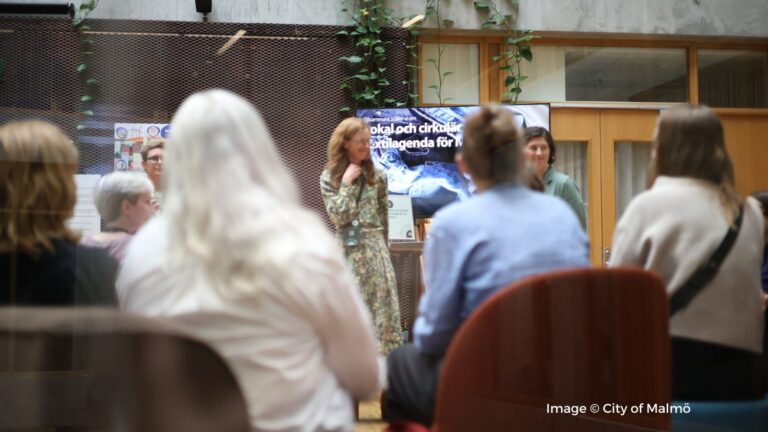
Cities overcoming institutional barriers: Socially just climate action across municipal departments
This blog was written by Jannis Niethammer and co-authored by Emily West and Daniel Botha from ICLEI Europe. Climate action…
Climate action is only as effective as the communities it reaches, but too often, city programs favor those with more resources, leaving disadvantaged groups behind. Through the INCLU:DE project, ICLEI and partner cities are testing practical ways to remove barriers and make climate programs accessible and fair. The result: Higher uptake of climate solutions and more resilient, trusted local governance.
Who owns the land, and who gets to decide how it’s used? These questions are not just about property—they are about power, rights, and justice. Explore the vital connections between urban and rural areas and the role of gender justice in sustainable land management.
The Malmö Commitment pioneers are exploring how targeted energy efficiency measures can support energy equity, demonstrating how these measures can contribute significantly to making housing more affordable for everyone.
In Izmir’s Pazaryeri and Imariye neighborhoods, women are on the frontlines of climate resilience, navigating floods, heatwaves, and economic challenges while leading solutions that strengthen entire communities.
To ensure climate policies are more socially balanced, particularly in addressing the needs and participation of structurally disadvantaged populations, the INCLU:DE project promotes a shift in focus from incentivizing to enabling. How do cities design local climate actions that speak to all different realities?
The Malmö Commitment pledges social equity as the core of sustainable urban development, building a network of pioneer local and regional governments working together on inclusive approaches. At the Daring Cities 2024 Virtual Forum, Santa Fe, Argentina; Pittsburgh, USA; and Turku, Finland, took center stage, showcasing how they are adopting equity-focused strategies for an inclusive transition—setting a path for other cities to follow suit.
Placing people at the heart of development policies is crucial, especially in the Global South. In this panel, leaders discussed balancing human rights, biodiversity, and resilience amid urbanization and climate change.
Integrating equity into climate mitigation is essential for creating sustainable cities that serve all residents, particularly marginalized communities. Initiatives like the INCLU:DE project and the Malmö Commitment on Inclusive and Equitable Communities exemplify successful strategies, promoting inclusive planning, inner-city collaboration, and equity-based methodologies.
This piece was written by Olga Horn, Senior Officer, ICLEI World Secretariat & Daniel Botha, Expert Justice, Equity and Democracy,…
The foundational topic of inequality was raised throughout COP28, but is most deeply felt in the day-to-day work of subnational…
What if Glasgow had less puddles? Imagine being a child living in a rainy city and you only have two…