Eight signs 2026 isn’t business as usual for urban sustainability agendas

Eight signs 2026 isn’t business as usual for urban sustainability agendas

For better or worse, the year ahead brings a mix of reforms, political shifts and global milestones that will shape how urban sustainability agendas are governed and delivered. Here’s what local and regional governments should be on the lookout for this year.
Cities and regions address opportunities and needs on key environmental issues at UN Environment Assembly

Cities and regions address opportunities and needs on key environmental issues at UN Environment Assembly

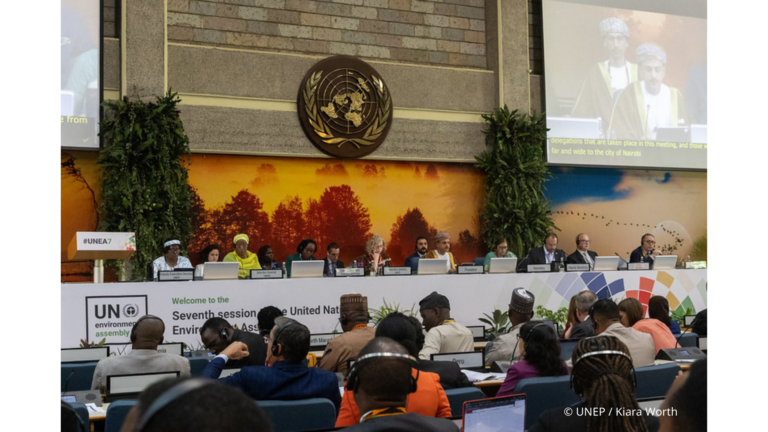
As co-focal point of the Local Authorities Major Group, ICLEI ensures cities’ and regions’ voices are represented in the UNEA process, with subnationals calling for stronger synergies with the Rio Conventions and other Multilateral Environmental Agreements.

A new chapter for climate federalism in Brazil: Lessons and legacy from the LGMA National Coordination Group for COP30

A new chapter for climate federalism in Brazil: Lessons and legacy from the LGMA National Coordination Group for COP30

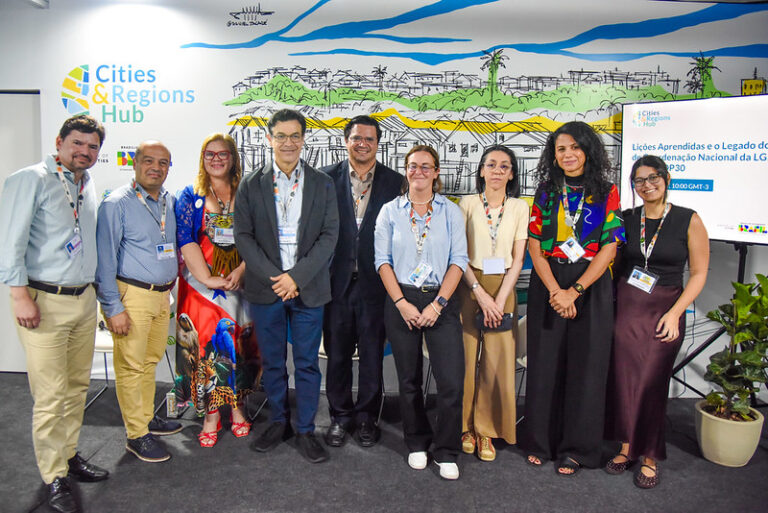
Brazil’s pioneering multilevel coordination effort is reshaping multilevel governance and collaboration at home and inspiring global pathways. From the beginning, the intention of this group was to bring climate federalism to life: National, state, and local actors aligning positions, sharing knowledge, and building a unified narrative that could travel from the streets of Brazilian cities to the negotiation rooms of the UNFCCC.

Cities, climate, and convergence: What the first Annual Review on the Rio Conventions tells us

Cities, climate, and convergence: What the first Annual Review on the Rio Conventions tells us

Born from the 1992 Earth Summit in Rio de Janeiro, these three multilateral environmental agreements have shaped how the international community approaches global environmental challenges.

All levels, one goal: Scaling ambition ahead of COP30

All levels, one goal: Scaling ambition ahead of COP30

Every year, the Bonn Climate Talks – formally the sessions of the UNFCCC Subsidiary Bodies (SBs) – serve as the mid-year checkpoint on the road to the annual COP. With over 6,000 national delegates and civil society representatives expected, the SB62 (16-26 June 2025) is far from routine.

Global sustainability agendas: 10 things we’re watching for in 2025

Global sustainability agendas: 10 things we’re watching for in 2025

As we begin a pivotal year, many global north countries are facing elections and leadership changes, testing the world’s commitment to sustainable development. Last year, we witnessed several key global processes needing to continue into 2025 – like the biodiversity negotiations and the Plastics Treaty – or delivering a disappointing lack of ambition, such as the climate COP. Here are the ten things we’re watching for in 2025 regarding the global sustainability agendas.

From Daring Cities to Town Hall COPs, how ICLEI is taking on local-to-global climate action

From Daring Cities to Town Hall COPs, how ICLEI is taking on local-to-global climate action

Throughout 2024, Daring Cities spotlighted the Town Hall COPs initiative as an innovative mechanism linking local climate emergency action to national and global efforts. How do the Town Hall COPs fit into the current global climate arena? We brought this discussion to COP29.

“Why should my Mayor attend global sustainability events?”

“Why should my Mayor attend global sustainability events?”

In recent years, more and more local and regional government leaders are traveling to international environmental conferences, like the annual Climate COPs or the ICLEI World Congress. These meetings provide the opportunity to discuss solutions to global and local challenges. But at the same time, the concrete value of elected leaders’ engagement can at times be difficult to grasp. What is the value for such in-person meetings? How does the community back home benefit?