SB64 showed the cost of slow progress – yet local and regional governments can map the way forward
Written by Karishma Asaporta with contributions from Maryke van Staden, edited by Matteo Bizzotto
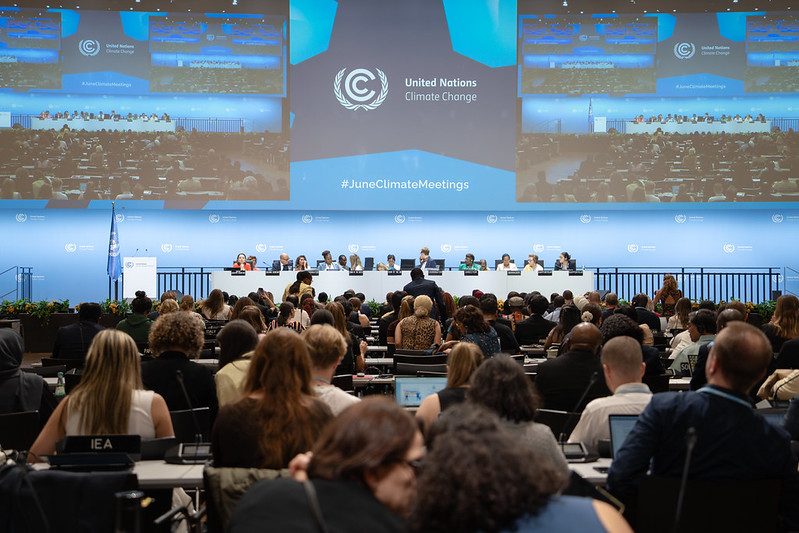
Despite opening with a swift adoption of the agenda and substantive negotiations launched on the first day, the June 2026 Bonn Climate Conference (SB64) closed with an uncomfortable feeling.
On several of the most important issues, national governments left Bonn without much progress. In some cases there was not even agreement on language to carry their deliberations forward to the next session.
National positions on questions like finance, climate change mitigation, and the means of implementation remain far apart. This distance slowed the negotiation talks.
Observer organizations such as ICLEI watched these dynamics with increasing frustration, as the clock is ticking. We expect more disasters to happen, and need to build capacity in subnational governments to plan for integrated climate action, by enhancing resilience, adapting to inevitable climate impacts and avoiding/reducing emissions at an accelerated tempo.
Through the Local Governments and Municipal Authorities (LGMA) Constituency and its members, with ICLEI serving as the focal point organization, local and subnational governments take on the role of being messengers from the frontlines – showing what works with success stories, with clear asks and recommendations on what is needed to accelerate climate action.
ICLEI’s message to the Parties is a constructive one: We know what implementation means. Delivery is already under way, so let’s join forces in-country to step up collectively. Use multilevel governance as an enabler, and multilevel action to ensure progress is made. National governments, your partners are those local and regional governments already leading.
In this decisive decade for keeping the world on a 1.5–2°C pathway under the Paris Agreement, implementation is key. This means action, delivering on the many climate targets that have been set, tracking results, evaluating outcomes, and redirecting efforts where necessary.
As countries begin to implement their Nationally Determined Contributions (NDCs), the central question is no longer how ambitious the goals are, but how to attain them.
What ICLEI called for at SB64
ICLEI’s engagement at SB64 focused on five priorities, each aimed squarely at accelerating delivery:
- Accelerate the transition away from fossil fuels.
- Scale sustainable electrification for all, and look at energy more holistically.
- Invest in climate-resilient cities and communities.
- Advance zero waste solutions.
- Protect oceans and strengthen coastal resilience.
Running through all these was a single, practical point: Local and regional governments need to be consulted meaningfully, not informed after the fact. Decisions about energy systems and resilient infrastructure need to fit the context and be localized, with implementation at the local level. In-country planning and action can speed up by being inclusive of key delivery partners: including local and regional governments, residents, youth, as well as the private sector.
Cities brought the proof
At the Bonn Talks, the ICLEI network showed what implementation already looks like on the ground.
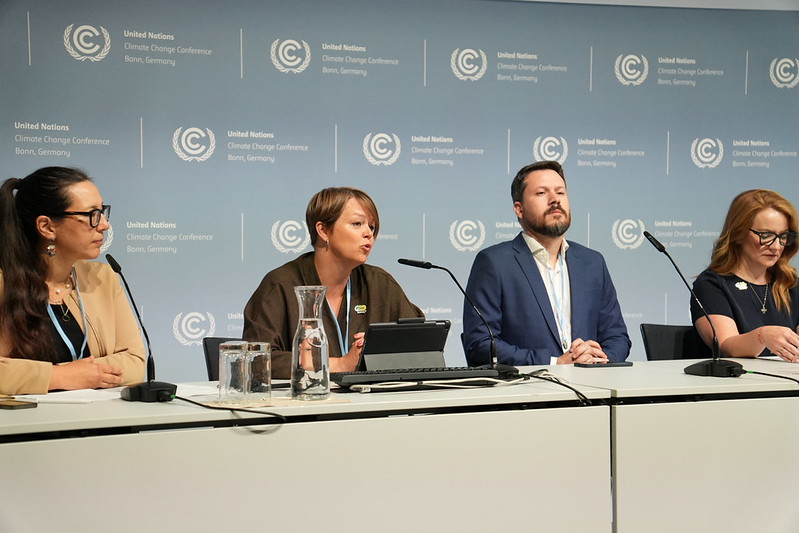
In Malmö, Sweden, the focus is electrification and partnership. ICLEI President Mayor Katrin Stjernfeldt Jammeh, speaking at a press conference held by the LGMA Constituency, set out a clear position: “Malmö is committed to becoming climate neutral by 2030. We have the political decisions in place, the will, and the determination to achieve this.”
She described a city that has electrified and expanded its commuting systems, invested heavily in cycling so that one quarter of all trips are now made by bicycle, and signed more than 100 climate contracts with companies and organizations. Her closing point spoke directly to the SB64 gap: Cities worldwide are leading the transition, but they need support from national governments and global systems, and they need a role in shaping policy, not only in implementing it.
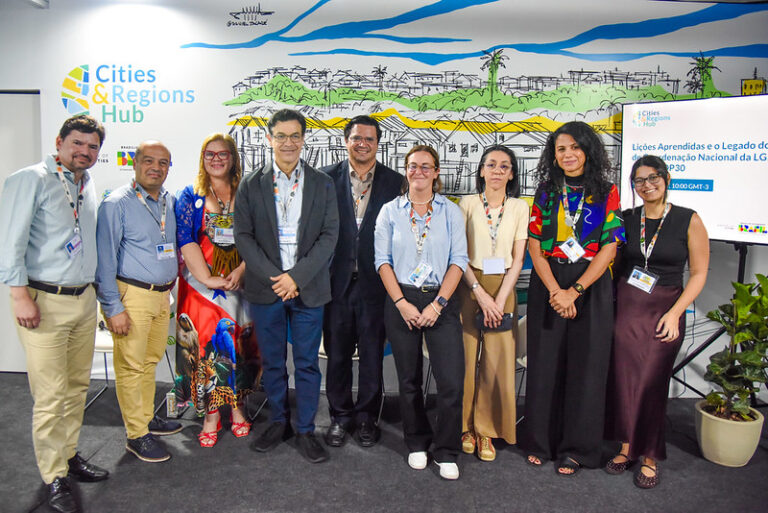
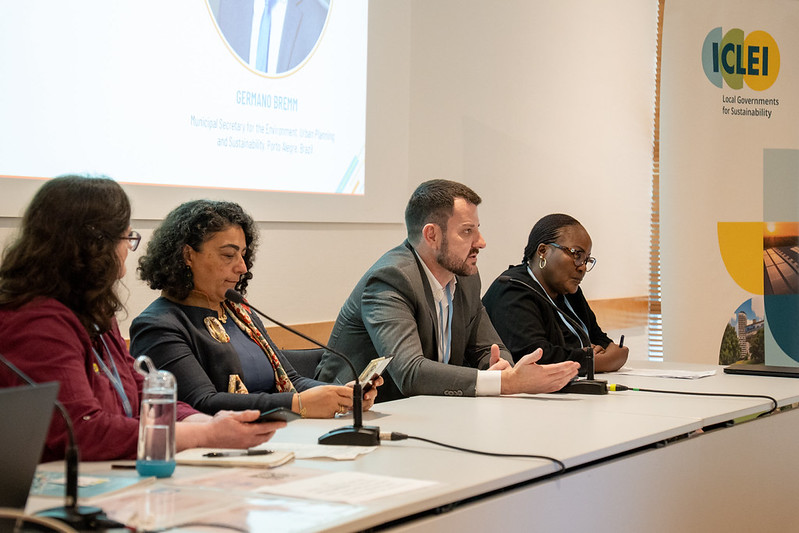
Resilience was the theme from Porto Alegre, Brazil. At the ICLEI SB64 side event co-led by UN-Habitat, Municipal Secretary Germano Bremm described how the city responded to the worst climate disaster in its history. “The flood did not find Porto Alegre standing still. It found a city that was already moving”. That tragedy, he explained, “opened an important window to put climate adaptation at the center of the public agenda. We structured projects, sought technical cooperation, and built a portfolio of more than 7 billion reals, around 1.3 billion USD, to invest in city protection. This is multilevel governance in projects, because a city alone cannot face a challenge of this scale”.
Porto Alegre, has set up a continuous monitoring center, a real-time warning system, and strengthened civil defense, treating adaptation as financed, organized public policy rather than a technical afterthought. His conclusion went to the heart of the matter: “If we want to see NDC implementation, if we want cities to implement climate action, financial resources need to reach the local level.”
In Turku, Finland, this early-mover city is tackling the last and hardest stretch of its energy transition. After two decades of council-adopted climate planning, Turku already meets more than 95 percent of its heating and cooling needs and around 90 percent of its electricity demand from non-fossil sources. It has cut transport emissions by 40 percent against 1990 levels. Presenting at Daring Cities 2026, the city pointed to green financing and system integration as key tools for the final push, and to resident and youth engagement as the next frontier.
From Lusaka, Zambia, came the clearest statement of the implementation argument. Also speaking at ICLEI’s side event, Chilando Chitangala, Chairperson of ICLEI Africa RexCom and a regional mayoral leader, put it plainly: “Today, the greatest challenge is no longer ambition. It is implementation.”
She described how Lusaka integrates climate priorities into local area plans and community programs through participatory planning, engaging young people as innovators and implementers rather than only beneficiaries. Her message to national governments was that NDCs are ultimately implementation agendas, and that cities must be recognized as key implementation partners, with predictable, flexible, and direct access to finance.
In New Taipei City, Chinese Taipei, political determination has driven a coal-free transition. Presenting at Daring Cities 2026 Bonn Dialogues, Deputy Mayor Her-Ran Liou described becoming coal-free in 2022, cutting fine particulate (PM2.5) emissions by around 44 percent, and working toward a 30 percent reduction by 2030. The city’s approach pairs values-based engagement with businesses and neighborhood-level outreach with AI-based monitoring and disaster-prevention tools, a reminder that net zero pathways are built step by step.
Newcastle, Australia, brought a hard truth about delivery. Speaking at the Daring Cities session addressing the upcoming IPCC Special Report on Cities and Climate Change, Councillor Elizabeth Adamczyk noted that many residents do not trust messages from the government, a serious obstacle in the world’s largest coal-exporting port, where climate action can be framed as a threat to livelihoods. In response, the city built a program that trains residents, businesses, and universities to carry climate messages to their peers.
“Cities need help making climate action usable and trusted,” Adamczyk said. If earning local buy-in is hard for a city that knows its residents well, it is harder still for a national government acting from a distance. This is precisely why local and regional governments have an essential role to play.
Approaches that work
Cities, towns and regions are the territories where emissions are cut and resilience is built: Energy, buildings, transport, water, waste, land use, to name a few sectors. How can national governments enable action? By unpacking the investments needed into NDC-integrated investment plans. By ensuring there is a clear definition of mandates, roles and responsibilities – which do not overlap. By taking responsibility to ensure the necessary finance is accessible. By supporting reporting and using the data and science to inform decision-making.
A model for national-local collaboration that speeds up implementation exists – the Coalition for High Ambition Multilevel Partnerships (CHAMP) for Climate Action, through which national governments commit to working with their local and regional governments on climate planning and delivery.
ICLEI appreciates the nearly 80 national governments that have endorsed CHAMP. We urge these national governments to proactively explore mechanisms to become even more effective with vertically-coordinated climate action, jointly identifying and implementing these to scale up the tempo and scale of positive subnational impactful action.
We have a very good idea of what works, and now need stamina for acceleration. ICLEI’s carbonn Climate Center outlines opportunities for making implementation a reality – through ICLEI’s GreenClimateCities Program and science-informed decision-making, reporting to CDP-ICLEI Track, and exploring project preparation and investment needs through the TAP infrastructure project portfolio.
At SB64, local and regional governments showed how they are critical partners in delivery. As we look to secure more positive outcomes at COP31 than the mid-year talks could deliver, we will be there, reminding Parties that the implementation decade needs implementers.
Featured photo: Photo: UN Climate Change | Lara Murillo