
One curriculum transformed Izmir’s climate training, and created an emergency team
At the end of a flood preparedness session, something unexpected happened. Around 100 community members turned to the trainers and said: “We want to be your emergency team.” Today, that community has one.
That moment was not planned. It was the result of something more deliberate: a decision by four municipal departments in Izmir, Türkiye, to stop working in silos and build a shared curriculum on climate resilience together — one designed not just to inform communities, but to genuinely engage them.
The problem with working in silos
Before this project, each of Izmir’s departments had its own approach to community outreach — its own handbooks, its own training formats, its own schedule. Communities were invited to multiple separate training sessions, sometimes with overlapping content delivered by different teams. The result was training fatigue: Community members were asked to give their time repeatedly for information that was at times fragmented and disconnected from their daily lives.
“You cannot work in silos,” says Prof. Dr. Pınar Okyay, Deputy Secretary General of Izmir Metropolitan Municipality. “You have to face life as life really is.”
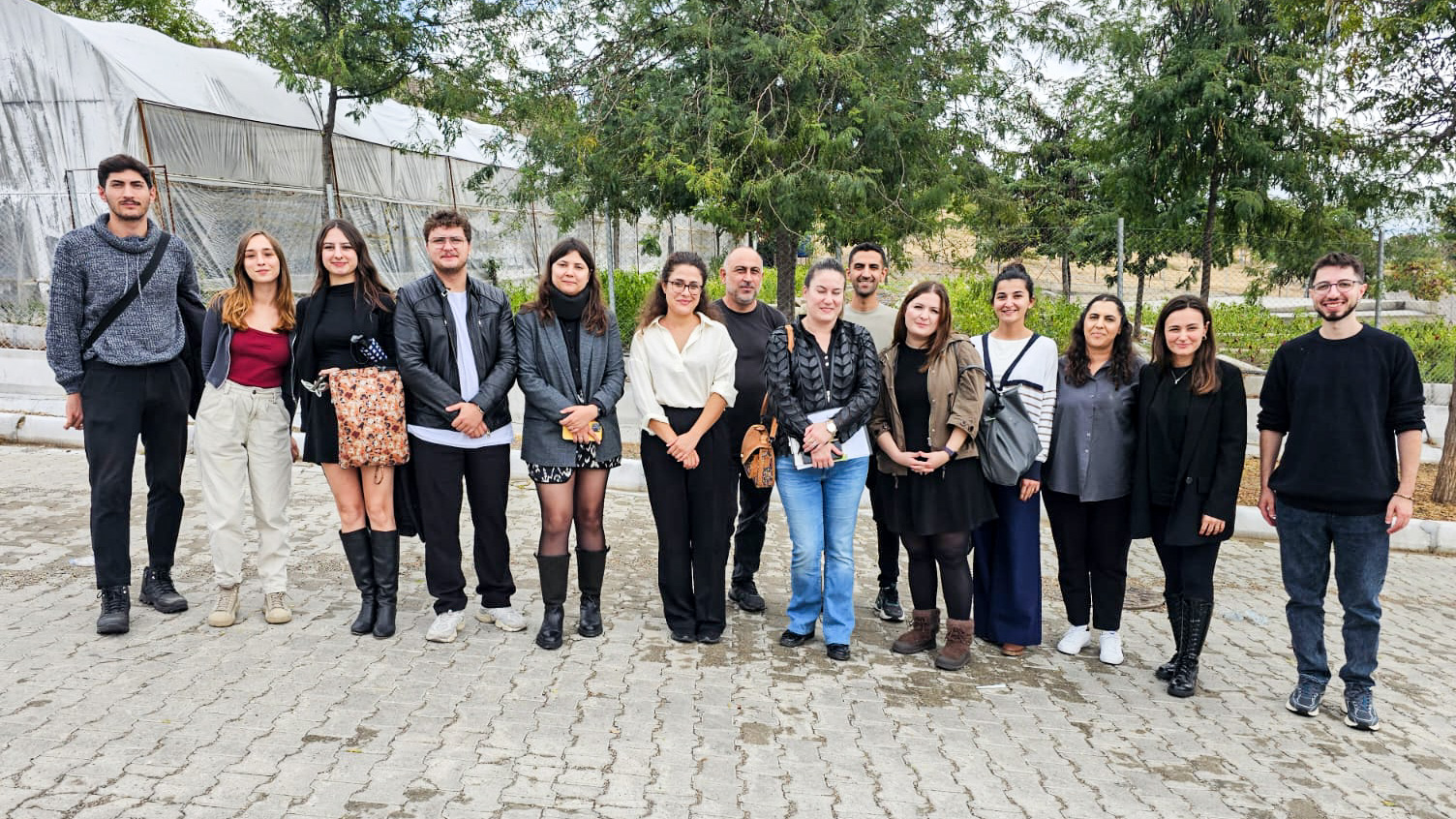
As part of the Climate Resilience for Communities (CRC) project, implemented by ICLEI, the Izmir Metropolitan Municipality, Z Zurich Foundation, and Zurich Insurance Group Türkiye, four municipal departments came together to do something they had never done before: Design a shared curriculum on climate resilience to train local communities. The four departments were Agriculture Services, Health Services, Women and Family Services, and Climate Change and Zero Waste.
It was the first time they had worked so closely together. And the results went beyond what any of them could have achieved alone.
A curriculum built from four perspectives
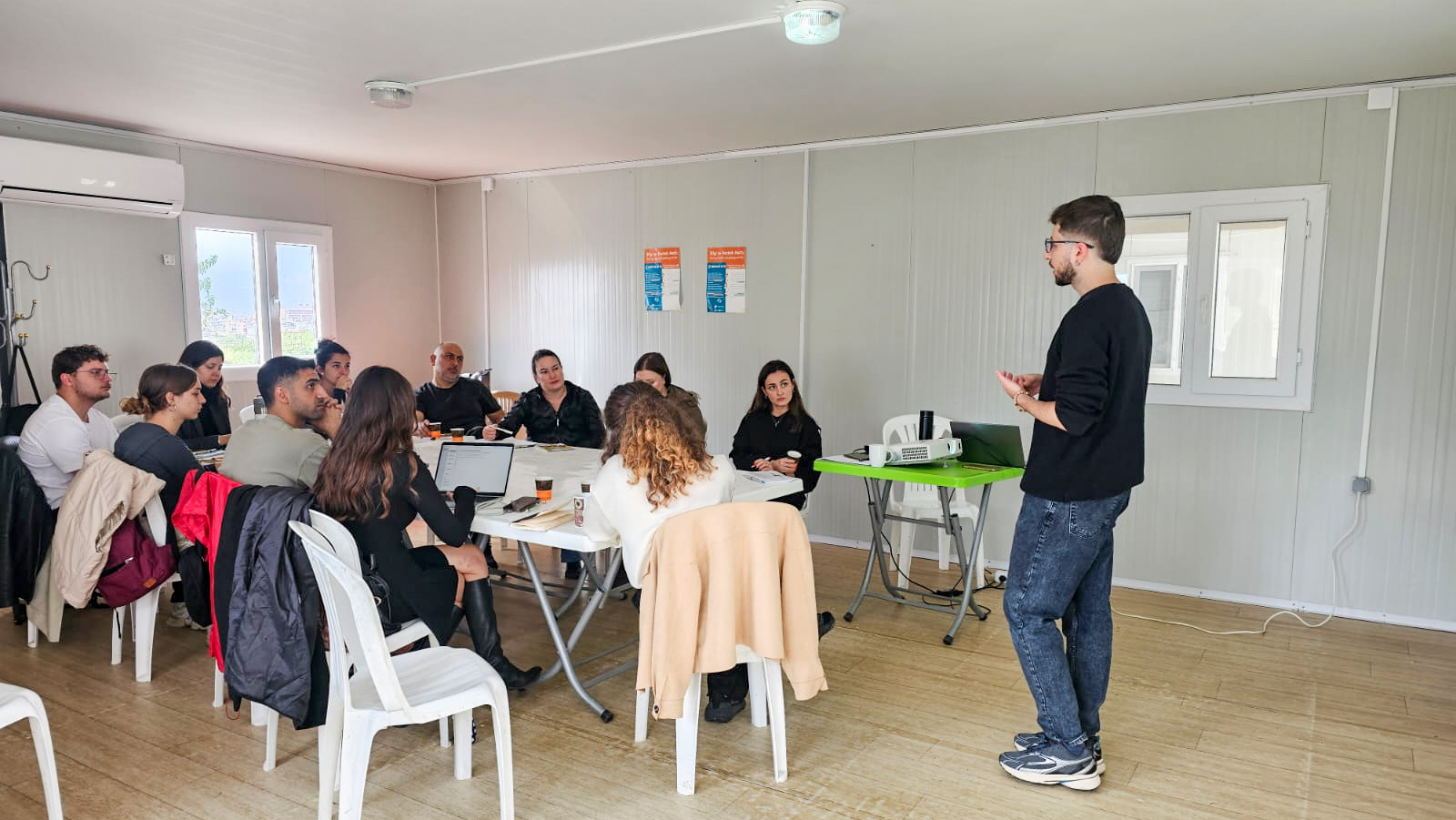
The curriculum covers three core areas, each drawing on the expertise of a different combination of departments.
The first module introduces climate change not through scientific definitions but through the everyday realities of people’s lives, using concrete local examples and participatory activities designed to make the training engaging rather than passive. That design choice was deliberate: The curriculum was built around the climate risks that communities in Izmir actually face, in language they could connect to their own experience.
The second module explores the intersection of climate change and public health. It addresses questions that communities increasingly face but rarely connect to climate: Why extreme heat can affect mood and mental well-being; how poor indoor conditions during heatwaves pose real physical risks; why floods and standing water increase the risk of disease. By naming these as climate impacts rather than personal misfortune, the curriculum helps people understand what is happening to them and why. Participants described the training as connecting climate risks to things they already knew: their health, their food, their homes.
This health dimension was a deliberate choice. “Climate issues are health issues: That is the heart of both the problems and the solutions,” says Okyay. “Health professionals already have close relationships with communities, which means we can bring climate risk into a truly holistic approach.”
The third module looks at agriculture and food resilience: What Izmir’s agricultural environment looks like, what climate pressures it faces, what the Municipality is doing in response, and what communities can do. It connects global climate risk to something as immediate and local as where food comes from.
From pilot to practice
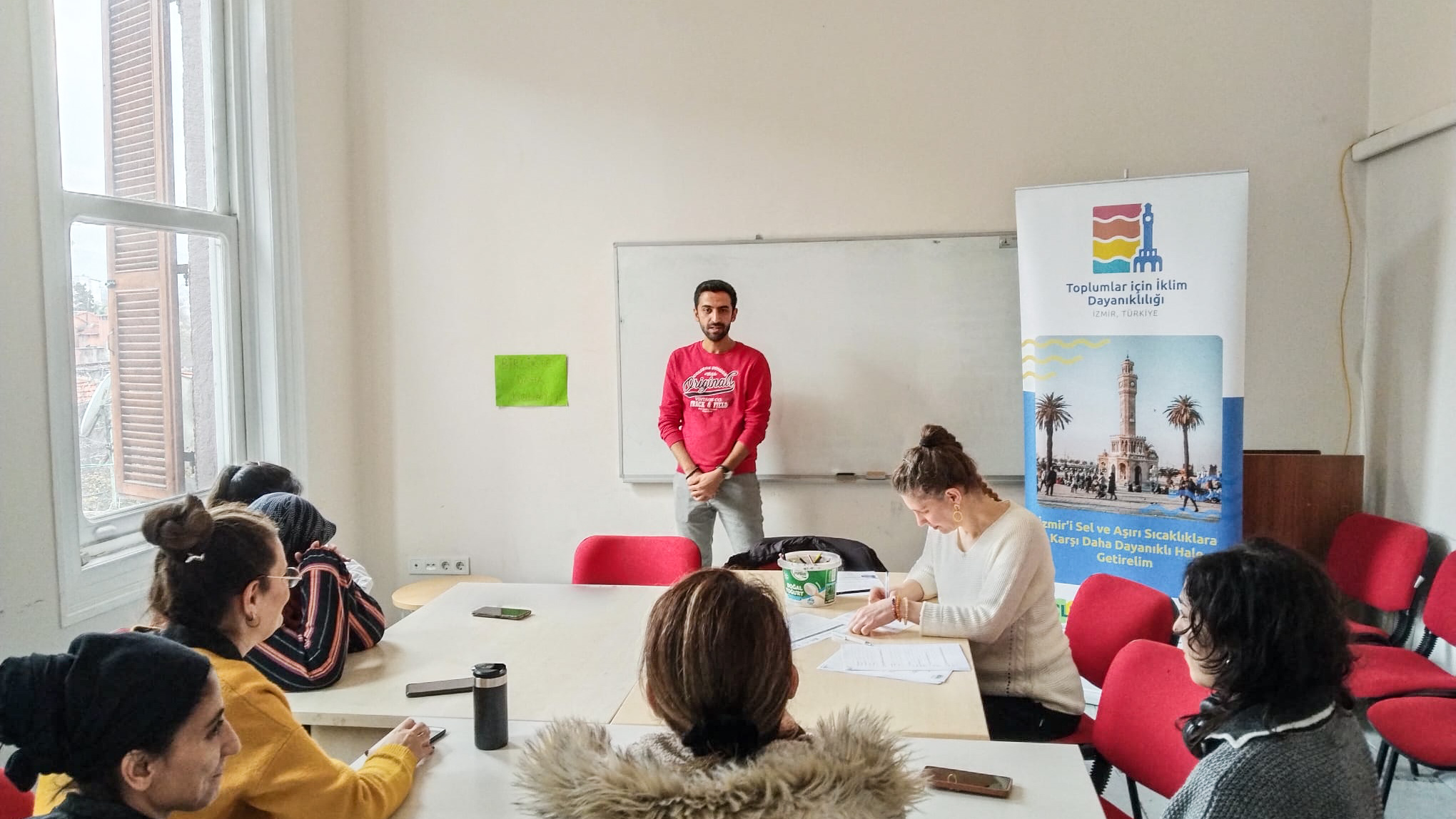
The training is designed to be flexible. It can be delivered in a single session or spread across multiple days or weeks, depending on the availability and preferences of each community group; meeting people where they are rather than imposing a rigid structure.
“At the end of the flood session, approximately 100 community members told us: ‘We want to be your emergency team,'” recalls Okyay. “Today, that community has its own climate emergency team.”
The curriculum was piloted during the project and is now being rolled out across other community centers managed by the Municipality. Rather than remaining a one-off project output, it has been embedded into how the Municipality operates, marking a lasting change in how departments engage with communities on climate.
To date, the curriculum has reached over 1000 people, both children and adults in Izmir and is continuing to roll out across community centers managed by the Municipality.
A new way of working
What makes this story significant is not just the curriculum itself. It is what the process of creating it revealed: that four departments with distinct mandates, different vocabularies, and no prior tradition of collaboration could find common ground and produce something none of them would have built on their own.
Reducing community training fatigue was the immediate goal. But the deeper outcome was institutional: new working relationships, a shared understanding of climate risk across departments, and a model that other cities could follow.
“Communities should not be seen as just beneficiaries,” says Okyay. “They want to be partners. When you work with them through co-creation, the solutions you find together are more sustainable.”
That shift, from passive recipients to active partners, is at the heart of what the CRC project set out to achieve. And in Izmir, it is already taking root.
The Climate Resilience for Communities project in Izmir, Türkiye, is implemented by ICLEI – Local Governments for Sustainability in partnership with Izmir Metropolitan Municipality, Zurich Insurance Group Türkiye and Z Zurich Foundation.
Featured photo credit: ICLEI – Local Governments for Sustainability.


