Cities are in the plans. Are they getting the support to deliver them?
COP30 has come and gone. NDCs 3.0 are on the table. The global community has made its commitments. The question now is whether and how those commitments will actually be delivered.
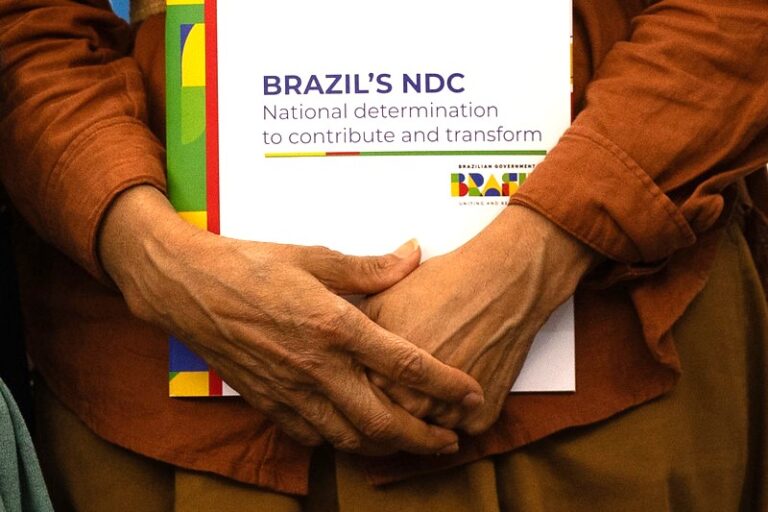
According to the latest review of NDCs 3.0 by Un-Habitat, 80% of submitted national climate plans now contain well-developed urban content, up from 49% in the previous round. Cities are increasingly reflected across sectors such as energy, transport, housing, waste, and water.
Yet recognition alone does not guarantee implementation.
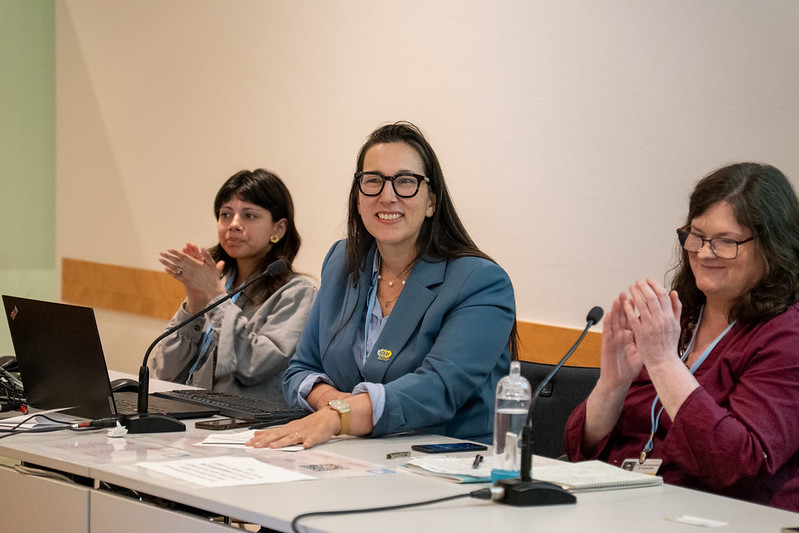
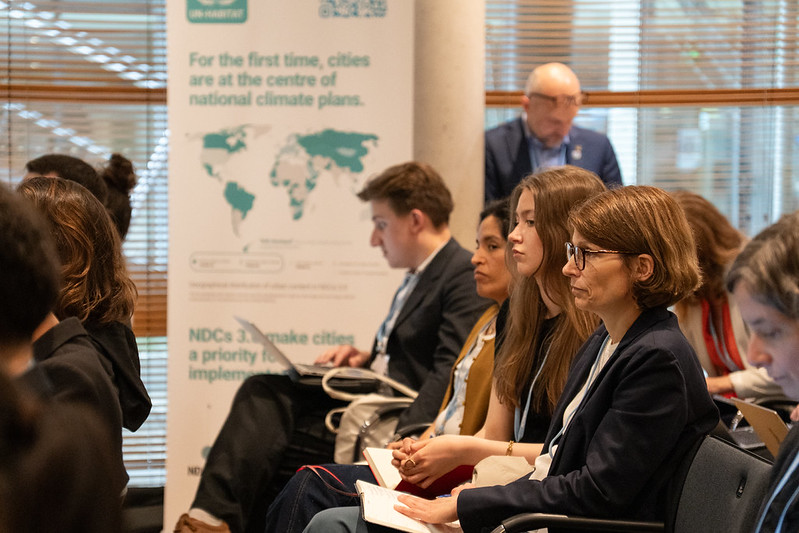
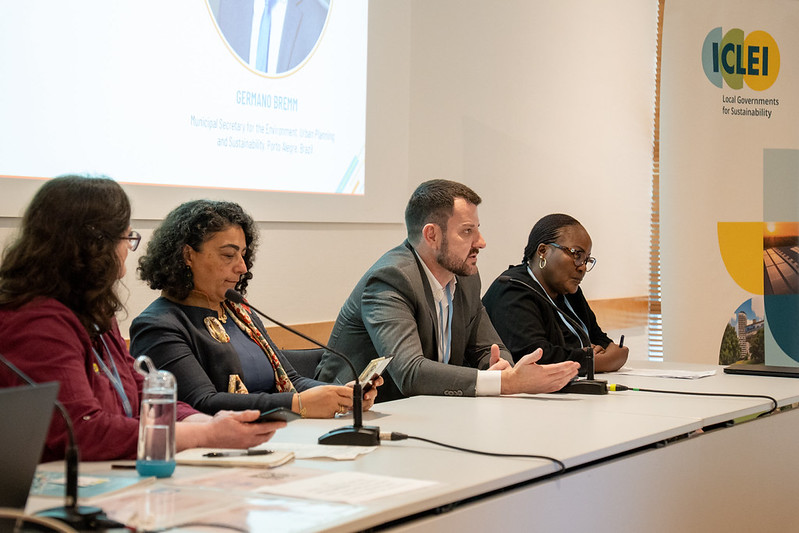
This statement was at the heart of discussions during the side event Implementing NDCs in cities: Showcasing local leadership for equitable and multilevel climate action, at the Bonn Climate Talks (SB64) on 12 June. Held under the Daring Cities 2026 Bonn Dialogues and co-organized by ICLEI – Local Governments for Sustainability and UN-Habitat, the session explored what it will take to translate national climate commitments into tangible results.
Are cities receiving the governance support, financing, and partnerships they need to make it happen?
The implementation challenge
“We often speak about NDCs as national commitments, but ultimately NDCs are implementation agendas, and implementation happens at the local level,” said Mayor of Lusaka, Chilando Chitangala, Chairperson of the ICLEI Africa Regional Executive Committee and Vice-Chairperson of the Covenant of Mayors in Sub-Saharan Africa Regional Mayors Forum.
Cities are increasingly reflected in national climate plans, yet turning commitments into action remains uneven. Governance gaps, limited capacity, fragmented financing, and weak coordination continue to slow progress.
The latest review of NDCs 3.0 suggests countries are increasingly thinking beyond targets. More plans are identifying the specific risks cities face, the sectors where action is needed, and the actors responsible for delivery.
“The biggest shift we have seen between NDCs 2.0 and NDCs 3.0 is that NDCs 3.0 are looking into multilevel governance and the need for capacity building at the local level,” said Lea Ranalder, Programme Management Officer for Multilevel Climate Action at UN-Habitat.
This shift matters because climate action ultimately happens through decisions taken every day in cities and regions. Transport systems, housing, land-use planning, waste management, public infrastructure, and resilience measures are largely delivered at the local level.
Why multilevel governance offers an answer
Climate action depends on coordination between governments operating at different scales and often under different political realities. Housing, transport, infrastructure, public services, resilience planning, and land use rarely fall under the responsibility of a single institution.
This is where the concept of Brazil’s climate federalism becomes particularly relevant.
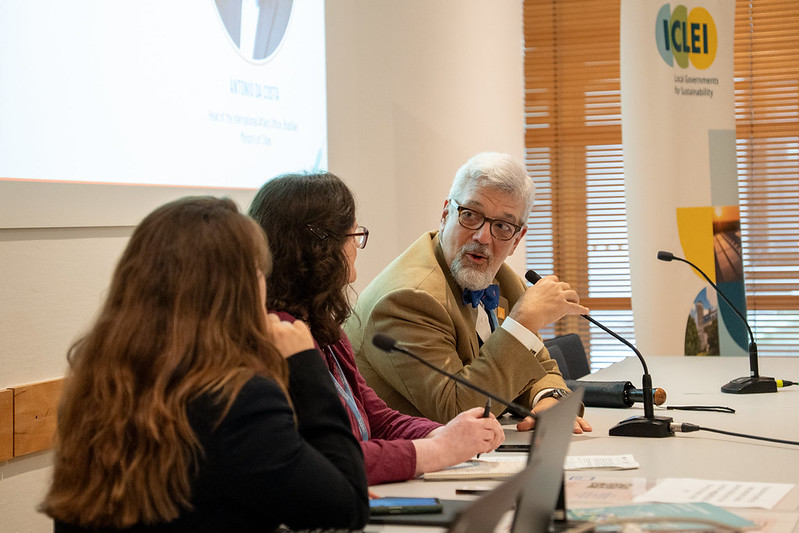
“For us, ‘national’ also means states and cities,” said António Da Costa, Head of the International Affairs Office at Brazil’s Ministry of Cities and Co-Chair of the CHAMP Steering Committee.
The approach challenges the idea that local and regional governments are merely implementers of national policy. Instead, it recognizes them as part of the national climate effort itself. “It’s not vertical, top-down or bottom-up; it is simply horizontal among these three levels, working together,” explained Da Costa.
This governance mechanism reflects one possible avenue of what the Coalition for High Ambition Multilevel Partnerships (CHAMP) aims for: Strengthen collaboration between national and subnational governments and ensure that local realities help shape climate action from the outset. Endorsed by 77 nations and the EU since launching at COP28 in Dubai, the initiative is positioning subnational governments as partners in climate action.
Beyond implementation, the discussion highlighted the political value of multilevel governance. In an increasingly fragmented geopolitical context, empowering cities and regions can help sustain climate momentum even when national political priorities shift. “This makes multilevel action a source of resilience for the climate agenda itself,” concluded Da Costa.
Finance is a blocker and an enabler
Multilevel governance alone, however, cannot deliver climate action.
“Cities require predictable, flexible, and direct financing mechanisms; without these, climate action cannot scale. Blended finance and stronger partnerships between national and local governments are critical,” said Mayor Chitangala.
Municipalities often face significant differences in technical capacity, staffing, and access to financial instruments. Smaller cities and towns may struggle to access funding altogether, even when climate needs are urgent.
“What we need goes beyond bankable projects. It has to do with projects; it has to do with capacity building; but it also has to do with us understanding how to use the financial instruments that we have effectively,” said Da Costa, pointing to a challenge often overlooked in national climate planning – financing NDCs and financing NAPs (National Adaptation Plans) for cities may look separate for national governments.
“But when you go to the territorial level, cities experience mitigation, adaptation, and just transition simultaneously; they are all intertwined and must be addressed in an integrated way,” he added.
This integrated approach becomes particularly visible when climate impacts reach communities. In Porto Alegre, Brazil, catastrophic floods in 2024 displaced more than 160,000 people and affected nearly a third of the city’s territory, underscoring how adaptation, resilience, and social protection cannot be separated.
“Reconstruction is not only a technical mission. It is a human agenda. It is a question of dignity,” reflected Germano Bremm, Municipal Secretary for Environment, Urban Planning, and Sustainability. The city’s reconstruction efforts reinforced a broader lesson: Climate finance is ultimately about protecting people and strengthening resilience where they live.
The same principle applies to Nature-based Solutions. According to Mirey Atallah, Head of the Adaptation and Resilience Branch at UNEP, “We need coherent approaches: Cities don’t have the resources or time to build a nature plan, a climate plan, a desertification plan. This is where we really see the power of synergies playing out, because it is really about implementation.” She added, “We also need the subnational, national, and global levels to talk to each other, to see what is feasible, how to spread responsibility, and how to allocate resources.”
In light of this reality, speakers argued that the next step after NDCs 3.0 is the development of NDC investment plans and financing mechanisms capable of supporting integrated local implementation rather than isolated interventions. “This way, finance becomes an enabler, not a blocker,” reflected Maryke van Staden, Director of the ICLEI carbonn Climate Center.
From Bonn to Antalya and beyond
If NDCs 3.0 marked the moment when cities entered national climate plans, the next challenge is ensuring they are fully reflected in the governance systems, financing mechanisms, and partnerships that drive implementation.
This is what the Local Governments and Municipal Authorities (LGMA) Constituency has been strongly pushing for. As the voice of local and other subnational governments to the UNFCCC, the Constituency is bringing these local realities to the negotiations table at SB64 and towards COP31 in Antalya, Türkiye. “NDCs with local and subnational governments at the center mean better, faster implementation, and that we really have to be central throughout the process,” said Ariel Dekovic, LGMA focal point.
“I’m hoping we’ll see 100 percent urban content in NDCs 4.0,” said Ranalder.
Da Costa shared a similar ambition. “What we want to achieve is fully urban, fully multilevel NDCs when we get to 4.0.”
That vision extends beyond the next round of climate plans – it points toward a future where cities are not only recognized in national climate commitments, but fully supported in delivering them.