COP31: Putting local governments at the heart of sustainable transport and climate action
From testing new public transport technologies in Buenos Aires to connecting urban development with sustainable mobility in Beijing and strengthening transport resilience in Sonoma County, local governments are demonstrating how climate ambitions can translate into practical action.
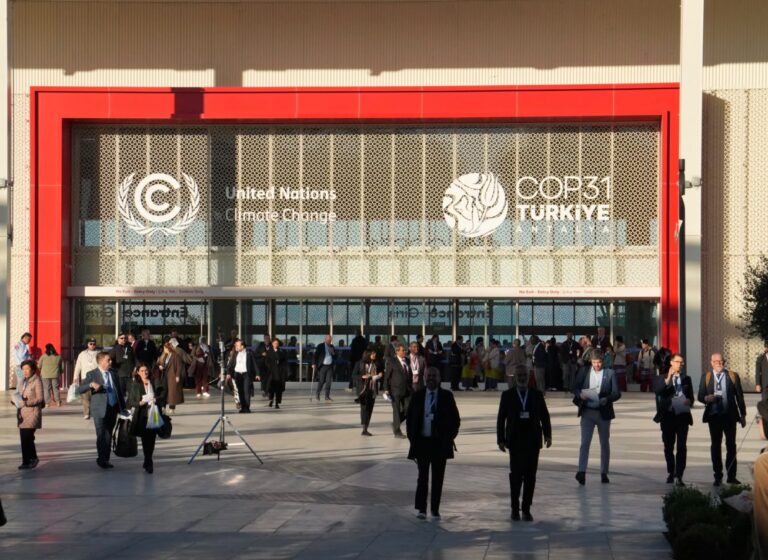
At COP31 in Antalya, Türkiye, ICLEI – Local Governments for Sustainability brought the local government perspective to international discussions on sustainable transport, highlighting opportunities to accelerate implementation through integrated planning, innovation, climate finance and multilevel governance.
Across these discussions, a common message emerged: Delivering the sustainable transport transition requires not only technological solutions but also the institutional capacity, financing and partnerships that enable local governments to act at scale.
From urban mobility innovation to implementation
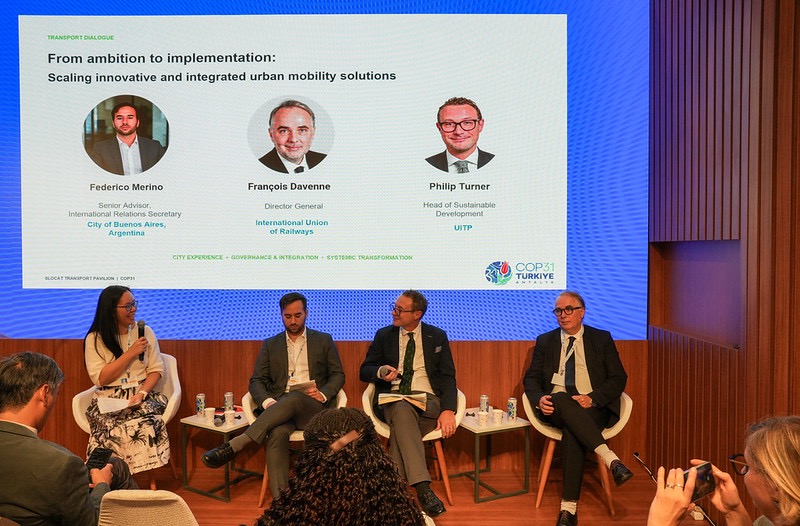
At the SLOCAT Transport Pavilion, the session Accelerating Climate Action Through Innovative and Integrated Urban Transport Solutions, brought together representatives from UN-Habitat, UNEP, the City of Buenos Aires, the International Union of Railways (UIC) and the International Association of Public Transport (UITP).
The discussion explored how cities can leverage innovation and digitalization to improve transport services, strengthen multimodal connectivity and advance climate objectives.
Federico Merino from the City of Buenos Aires, Argentina, brought the local government perspective through two recent initiatives, eBUS and TramBUS. These initiatives illustrate the importance of using pilot projects to test technologies, learn from their implementation and inform future investment and policy decisions.
Buenos Aires’ work on operational data to support transport planning and decision-making, alongside smart charging through the eBRT2030 project and the ACCESS project, offers further examples of how innovation can support the transition towards sustainable urban mobility.
The session also addressed opportunities to better connect urban and regional rail with other transport modes, integrate formal and informal public transport services, and harness digital tools to accelerate sustainable urban mobility. Insights were also drawn from the UNEP-led ACCESS project, funded by Germany’s International Climate Initiative (IKI) and implemented by a consortium of partners, including ICLEI.
While innovation can accelerate the transition, technology alone cannot address the challenges facing urban mobility systems. Effective policies, institutional coordination and sustained investment are essential to scaling solutions that respond to people’s everyday mobility needs.
Connecting housing, public transport and climate action
Where people live influences how they travel, how much they spend on mobility and their access to employment and essential services. Yet housing, transport and land-use policies are frequently developed in isolation.
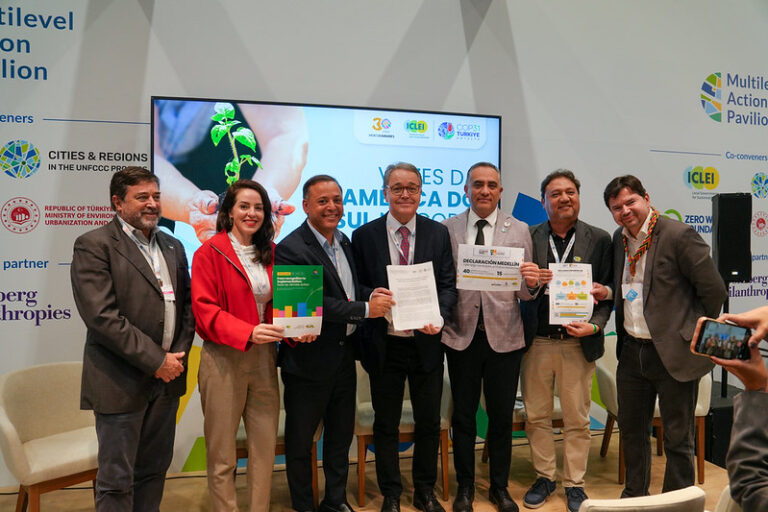
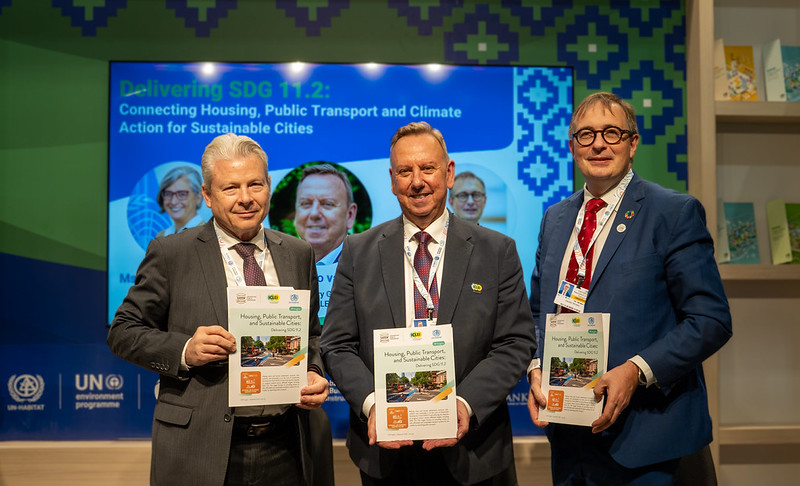
On 10 November, ICLEI, UN-Habitat and UITP launched their joint publication on housing, public transport and sustainable cities during the session Delivering SDG 11.2: Connecting Housing, Public Transport and Climate Action for Sustainable Cities.
With nearly 40% of the world’s urban population still lacking convenient access to public transport, the publication highlights the importance of connecting housing and mobility policies to advance more inclusive and sustainable urban development.
Wang Ruixian from the Beijing Municipal Ecology and Environment Bureau shared Beijing’s experience in integrating low-carbon urban development with sustainable transport.
The Beijing Municipal Administrative Center, developed to accommodate functions relocated from central urban areas, prioritizes proximity between housing and employment alongside energy-efficient buildings and renewable energy deployment.
Beijing has also made substantial investments in public transport, walking and cycling. According to the figures presented, green trips account for 76.5% of journeys in the central urban area, the city’s rail transit network extends across 909 kilometres, and shared bicycles serve more than three million trips daily.
These experiences illustrate how decisions about urban development, transport infrastructure and energy systems can reinforce one another in advancing climate objectives.
ICLEI emphasized that integrated planning must be accompanied by stronger implementation capacity and financing arrangements that enable cities to deliver on their existing commitments.
Recognizing public transport as critical climate resilience infrastructure
Climate change is increasingly exposing transport systems to extreme weather, infrastructure disruptions and risks to service continuity. Public transport has an important role not only in reducing emissions but also in strengthening community resilience.
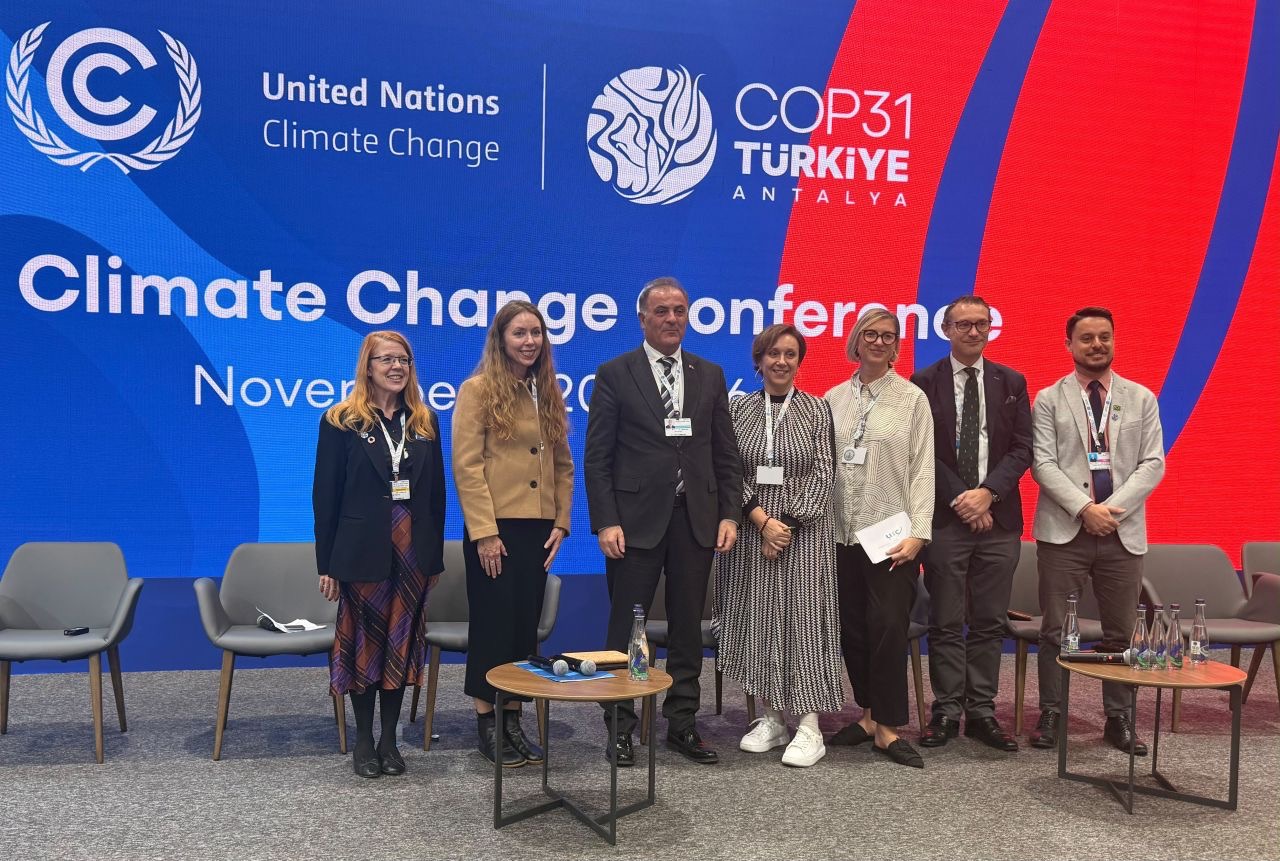
During a panel discussion on sustainable transport and urban resilience, Supervisor Linda Hopkins from Sonoma County, California, an ICLEI Member, shared the county’s experience in addressing climate mitigation and adaptation together.
With transport accounting for approximately 60% of its greenhouse gas emissions in 2018, Sonoma County has set a target of achieving carbon neutrality by 2030. Shifting journeys from private vehicles towards public transport, walking and cycling is an important part of this effort.
At the same time, recurring wildfires and floods have underscored the role of public transport as critical emergency infrastructure. Hopkins highlighted how buses and bus drivers serve as first responders during evacuations, reinforcing the need to integrate transit agencies into emergency planning and strengthen infrastructure against extreme weather.
Sonoma County is also exploring how clean mobility infrastructure can support disaster preparedness. Its ARCs in Parks initiative uses self-contained, solar-powered electric vehicle charging units, while mobile charging solutions can provide backup power during emergencies and support clean mobility under normal conditions.
Institutional integration has been another important step. By bringing its regional climate protection and transportation authorities together under the Sonoma County Transportation and Climate Authorities (SCTCA), the county has more closely aligned transport delivery, emissions reduction and climate adaptation.
Sonoma County’s experience demonstrates why transport resilience must be considered alongside decarbonization, from infrastructure design and energy supply to governance and emergency preparedness.
Making climate finance work for local governments
Many cities have ambitious mobility and climate strategies but face significant barriers in translating them into investment and implementation.
ICLEI highlighted the need to address both sides of this challenge: Strengthening local governments’ capacity to prepare and deliver projects, while making financing systems more responsive to local needs and fiscal realities.
Collaborative procurement offers one practical opportunity. In India, aggregating demand for electric buses across cities has demonstrated the potential to achieve economies of scale. In Europe, the Big Buyers initiative supports public authorities in sharing procurement expertise and engaging with suppliers.
Integrated transport and land-use planning can also open opportunities to mobilize local resources. In Brazil, São Paulo’s experience with development rights illustrates how urban planning instruments can generate municipal revenue, provide appropriate safeguards, protect affordability and ensure that benefits are shared.
Sonoma County offered further examples of innovative local financing approaches. These include directing regulatory fines collected from major polluters towards zero-emission buses and charging infrastructure, as well as using developer fees and density bonuses to support walking and cycling infrastructure.
Such approaches demonstrate the potential to connect transport financing with wider environmental and urban development objectives.
However, local resources alone are insufficient. Dedicated project preparation support, financial intermediaries, concessional finance and national enabling mechanisms remain important, particularly for local governments with limited fiscal space.
Investment decisions must also recognize the wider public value of sustainable transport, including accessibility, emissions reduction, public health and climate resilience, rather than focusing solely on financial returns.
Bringing the urban dimension into regional freight corridors
Regional and cross-border freight corridors play an important role in economic connectivity, but their development also has significant implications for the cities along these routes.
Cities are not simply transit points. They are critical logistics nodes where goods are consolidated, distributed and consumed, and where many of the environmental impacts of freight transport become visible.
ICLEI highlighted the importance of connecting regional freight corridor planning with local mobility, logistics and land-use strategies.
Cleaner freight vehicles, charging infrastructure, urban consolidation and sustainable last-mile delivery offer opportunities to reduce emissions at the urban node level. Equally important is ensuring that local governments participate in corridor planning, investment and governance.
City networks such as ICLEI can help bridge regional infrastructure planning and local implementation, facilitating cooperation and knowledge exchange between urban nodes across countries.
Putting accessibility at the center of transport infrastructure
Transport infrastructure should ultimately enable people to reach employment, education, healthcare and other essential services safely, affordably and reliably.
ICLEI called for closer coordination between national road agencies, local governments and transport authorities to address first- and last-mile connectivity gaps, particularly in underserved urban, peri-urban and rural communities.
This means planning roads as part of wider mobility networks, incorporating safe walking and cycling infrastructure, accessible public transport stops, feeder services and shared mobility.
Accessibility, road safety and climate resilience should be embedded in infrastructure appraisal, financing, design standards, procurement and maintenance from the outset.
Moving beyond conventional indicators such as traffic volumes and kilometres of roads constructed can help ensure that infrastructure investments deliver meaningful improvements in people’s everyday mobility.
Scaling up sustainable transport in the next decade
The UN Decade of Sustainable Transport (2026–2035) provides an opportunity to strengthen the connection between international climate commitments and local transport action.
The experiences shared by Buenos Aires, Beijing and Sonoma County and many other cities and regions illustrate different dimensions of this transition: Testing and scaling innovation, integrating urban development with sustainable mobility, and connecting transport decarbonization with climate resilience.
Advancing these approaches requires stronger recognition of local governments in national transport strategies, Nationally Determined Contributions (NDCs) and National Adaptation Plans (NAPs), alongside the financial resources and institutional frameworks needed for implementation.
Through its global network and partnerships, ICLEI continues to work with local and regional governments to advance integrated mobility planning, strengthen implementation capacity and facilitate the exchange of sustainable transport solutions.
The next phase of climate action must focus on delivering existing commitments at scale, ensuring that transport systems not only reduce emissions but also connect communities, withstand climate risks and improve people’s quality of life.