Advancing NDC targets through locally led climate action and multilevel partnerships
This blog was written by Seulji Jeon, Senior Program Officer, ICLEI Korea.
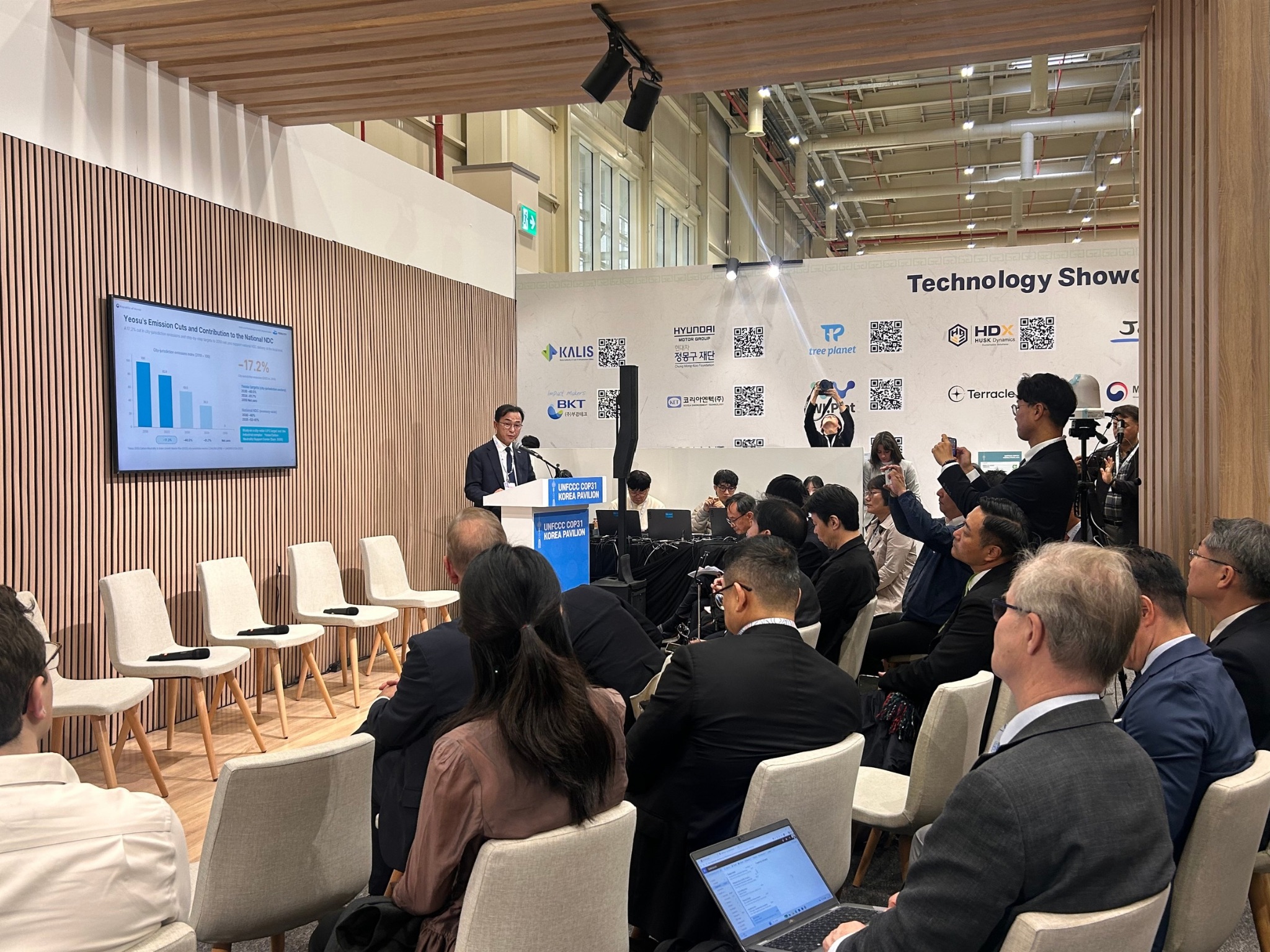
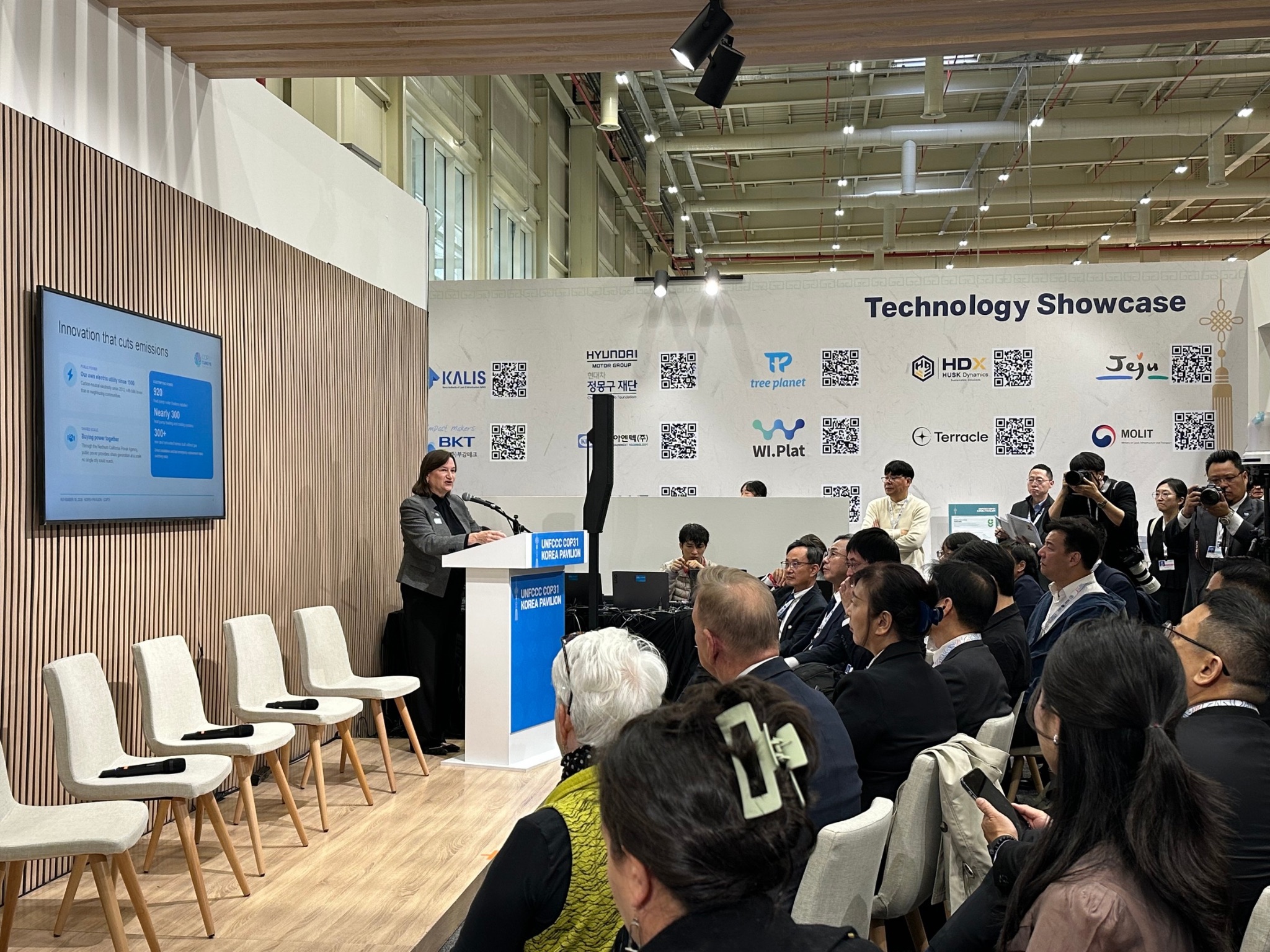
National climate targets are only as strong as their implementation on the ground, and much of that implementation happens in cities. This was the focus of “Local Climate Actions to achieve NDC,” a session held on 10 November at the Korea Pavilion at COP31. Co-organized by the Presidential Commission on Climate Crisis Response (PCCCR),
ICLEI Korea Office, and Local Energy & Climate Action Partnership Doyak, the session brought together leaders from the Government of the Republic of Korea, Incheon Metropolitan City, Yeosu City, Tokyo Metropolitan Government, and the City of Palo Alto to share how multilevel partnerships help deliver Nationally Determined Contributions (NDCs).
Korea’s 2035 NDC: two pathways to carbon neutrality
The Republic of Korea’s 2035 NDC target sets a 53 to 61 percent reduction in net greenhouse gas (GHG) emissions by 2035 compared to the 2018 level.
Under its vision of “2050 Carbon Neutrality,” Korea has set this target despite its high dependence on manufacturing industries. The 53 percent target represents a linear pathway from the base year toward carbon neutrality by 2050. The 61 percent target reflects a more ambitious pathway driven by technological innovation, industrial transformation, and strengthened government efforts.
Strengthening locally led climate action and national-local cooperation
In line with COP31’s priority of “Acceleration of Implementation,” the Korean government increasingly recognizes the role of local governments in achieving national climate targets. It has restructured locally led implementation strategies and strengthened multilevel governance in key sectors, including energy, waste, transportation, and buildings. National support includes guidelines for local climate action planning, technical consultations, capacity-building programs, and access to climate finance. Recognizing that national targets can only be met through effective implementation on the ground, the government is placing greater emphasis on strengthening local governments’ capacity and fostering collaboration across levels of government.
Cities in action: Sharing stories of multilevel partnerships
In the Republic of Korea, Incheon Metropolitan City, plays a key role in connecting national climate ambitions with local action, bridging the central government, district and county governments, and civil society. It brings local data, practical experience, and research-based recommendations into national policymaking, while coordinating climate efforts among local governments and engaging civil society. Within the metropolitan area, Incheon acts as an enabler for its districts and counties, strengthening their capacity through tailored training, technical consulting, and support for developing and reviewing carbon neutrality plans. By providing GHG inventory data and monitoring tools, facilitating intergovernmental cooperation, and supporting joint projects, Incheon helps turn shared climate ambitions into coordinated action.
Meanwhile, Yeosu City, shows how multilevel partnerships can drive climate action beyond local government jurisdiction, engaging government, businesses, academia, and civil society, including stakeholders in its industrial complex. Through the Yeosu City Climate Change Public-Private-Industry-Academia Council, established in 2013, stakeholder proposals have become concrete policy actions. For example, the Council’s proposal to assess the carbon sequestration potential of local tidal flats led to blue carbon research, a dedicated forum, and a Yeosu Blue Carbon Map in 2025. Building on this local governance, Yeosu has expanded its climate leadership internationally by reporting to the Global Covenant of Mayors for Climate & Energy (GCoM) and working with ICLEI, including co-hosting international forums. These efforts led to Yeosu hosting the first UNFCCC Climate Week in the Republic of Korea in 2026, connecting local climate action with the global climate agenda.
Tokyo Metropolitan Government, Japan, combines local regulation with private-sector engagement to diversify its energy mix and drive decarbonization. In 2010, Tokyo launched the world’s first city-level mandatory cap-and-trade program, which sets GHG reduction targets for large facilities and allows emissions trading to meet compliance obligations. By 2024, emissions from covered facilities had fallen about 31 percent below base-year levels. Because the city is dense and land is limited, it introduced a solar installation mandate in April 2025, requiring major housing suppliers to meet solar installation requirements for newly built homes. Tokyo also encourages private-sector participation through incentives for solar panels, battery energy storage systems, and residential insulation upgrades. Looking ahead, the city is exploring gigawatt-scale floating offshore wind farms around the Izu Islands and promoting Air Solar, a lightweight, thin, and flexible solar cell technology developed in Japan, with a deployment target of about 1 gigawatt by 2035.
Palo Alto, United States, shows how local governments can lead climate action through collective efforts, particularly since the United States’ withdrawal from the Paris Agreement took effect in January 2026. The city aims to reach carbon neutrality by 2030 and had cut its emissions by 49.5 percent by 2025, despite a 20.5 percent increase in population. Its public power model is a key driver: Palo Alto has operated its own publicly owned electric utility since 1900, has provided carbon-neutral electricity since 2013, and shares electricity generation resources with other cities. At the regional level, the Bay Area Air District brings together more than 100 cities across nine counties and over 35 agencies and organizations to develop and implement the region’s first climate plan, supporting the shift from fossil fuels to clean electricity. State funding and vehicle registration fees support electric vehicles and charging infrastructure, while Zero-NOx appliance rules encourage the switch from gas to electric heating. Penalties collected under these rules help fund electrification projects in public buildings, affordable housing, and schools.
From commitments to action
Following the new round of NDCs submitted ahead of COP30, COP31 has placed strong emphasis on turning climate commitments into concrete action. The examples shared at the session show that local governments, working with diverse stakeholders, can translate national climate ambitions into tangible results. By adapting innovative practices to local contexts and strengthening multilevel partnerships, successful local initiatives can be scaled up to drive broader climate action and help countries achieve their NDC targets.
Looking ahead: ICLEI World Congress 2027 in Pohang, Republic of Korea
The conversation continues at the ICLEI World Congress in Pohang from 12-15 October 2027. Co-hosted by ICLEI and Pohang City, in close collaboration with the provincial government of Gyeongsangbuk-do and the Republic of Korea’s Ministry of Climate, Energy and Environment, the Congress itself reflects the multilevel partnerships discussed at COP31. It will bring together governments at all levels and cities worldwide to exchange strategies for tackling the climate crisis and strengthening urban sustainability.
Learn more about the ICLEI World Congress 2027 here.