From best to next practices: Six city approaches for climate-neutral, flourishing urban futures
Across the Kaohsiung–ICLEI Climate Neutral and Smart Cities Community of Practice, cities are turning peer learning into policy, finance and implementation. A new Good Practice Series shows why climate neutrality works best when innovation is integrated, people-centered and designed to improve everyday life.
Climate neutrality is often communicated through a target year. In practice, it is built through thousands of choices about land use, mobility, buildings, finance, data, business support and public participation. The difficult question is not only what cities should decarbonize, but how they can reorganize institutions, investment and innovation so that climate action also produces healthier, more connected, resilient and prosperous urban life.
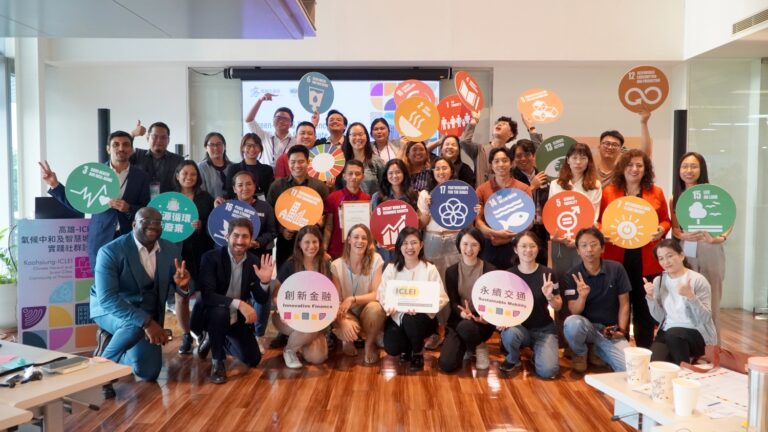
The Kaohsiung–ICLEI Climate Neutral and Smart Cities Community of Practice (ComP) was created for this implementation challenge. Chaired by the City of Kaohsiung and supported by the ICLEI World Secretariat and ICLEI Kaohsiung Capacity Center, it brings together 15 cities and regions for a two-year peer-learning program from March 2025 to December 2026. The cohort works across research and innovation, circular development, sustainable mobility, innovative finance, sustainable energy and climate action. Its ambition is not simply to circulate examples, but to co-create “next practices”: Approaches that cities can test, adapt and scale in their own contexts.
The Good Practice Series is one outcome of that exchange. The first six case studies make concrete implementation mechanisms visible: Incentives, codes, governance arrangements, pilots, data systems, financing models and planning frameworks. They are not templates to copy wholesale. Their value is to reveal the enabling conditions behind action, so another city can ask what is transferable, what must be adapted and what new practice could come next.
| The common thread is a shift from climate action as a collection of sector projects to climate action as integrated urban transformation – designed around human needs, enabled by innovation and built to improve everyday life. |
A wider lens on urban innovation
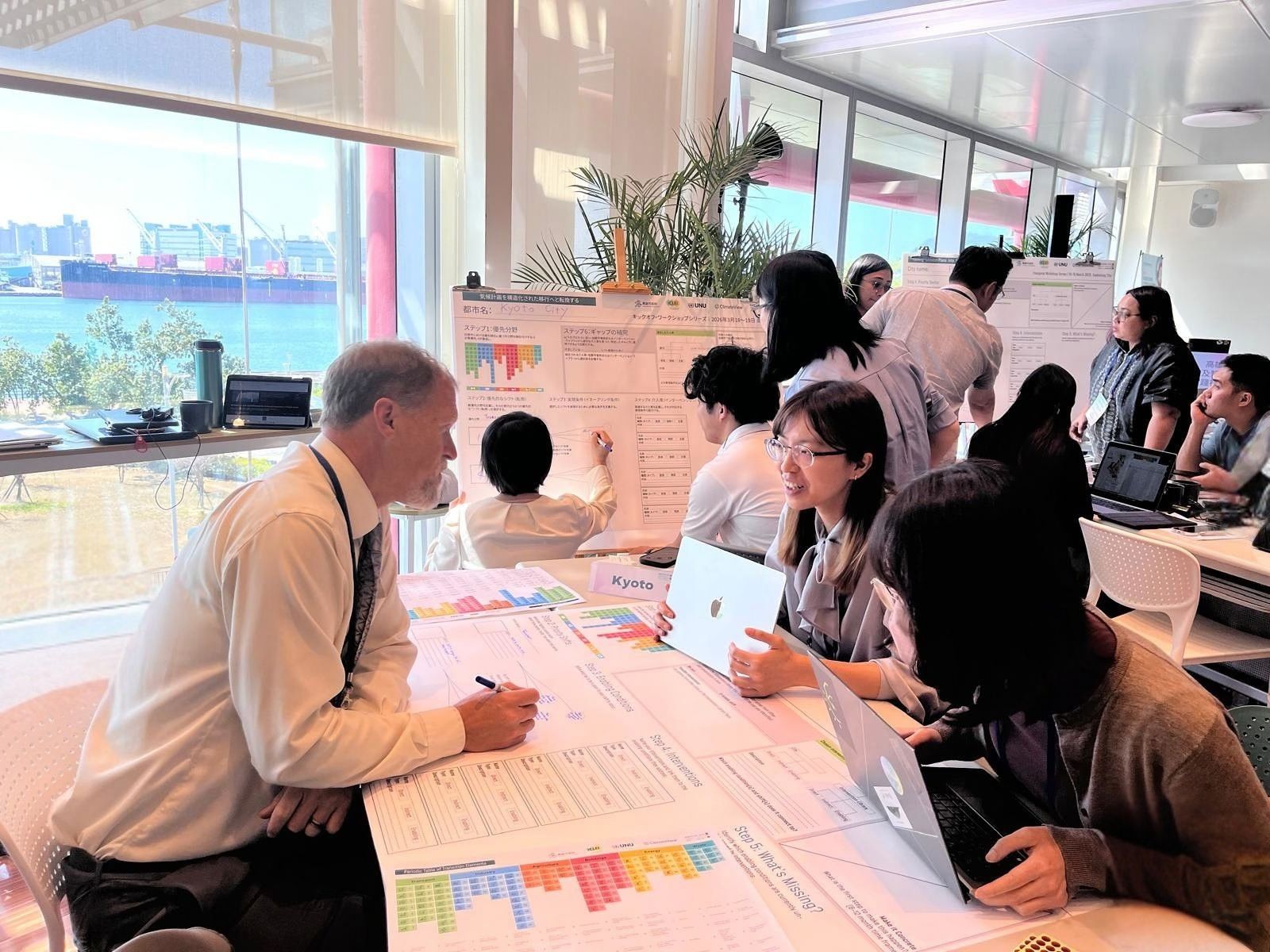
This wider lens has been present in the ComP from the beginning. At the first in-person workshop series in Kaohsiung on 18–19 March 2025, participating cities explored agenda-serving innovation and the Expanded Climate and Innovation Agenda for Cities and Regions (ECIA). The premise is important: Urban innovation is not synonymous with technology. It can be a new policy instrument, a financing structure, a governance mechanism, a business model, a way of using data, or a new relationship between a city and its residents. Innovation becomes meaningful when it serves a long-term social, environmental and economic agenda.
The ECIA adds a “dynamic solution” perspective to the traditional task of reducing emissions from existing sectors. It asks cities not only to become less carbon-intensive, but also to become places where globally sustainable solutions are developed, demonstrated, refined and shared. This thinking is further articulated through Flourishing Lives 4 All (FL4ALL), which starts from a positive question: What do people need in order to flourish, and how can those needs be met in ways that are compatible with a flourishing planet?
That shift does not weaken the need for rapid emissions reductions. It strengthens the case for them by connecting climate action to the things people experience directly: Access, thermal comfort, affordability, health, mobility, safety, social connection, opportunity, resilience and quality of place. It also changes the role of a city. A local government is not only a regulator or asset owner; it can be an ecosystem convener, a risk reducer, a testbed, a market shaper and a solution provider.
Newcastle: Peer learning entering a formal climate plan
Newcastle, Australia, offers a particularly clear illustration of how ideas exchanged through a Community of Practice can enter formal urban planning. Newcastle participated in the inaugural ComP workshop series in March 2025, where the expanded climate and innovation agenda and human-needs-oriented approaches were part of the discussion. In June 2026, the City of Newcastle adopted its Climate Action Plan 2026–2030 (CAP 2030), a roadmap to net zero emissions from municipal operations by 2030 and a Newcastle-wide transition to net zero by 2040.
The evolution of CAP 2030 makes the learning pathway visible. Following public consultation, the City of Newcastle strengthened the plan’s alignment with FL4ALL and the expanded climate and innovation agenda. Its Engagement and Public Exhibition Report records several concrete changes: An “enable” role was added alongside “deliver”, “partner” and “advocate”; the city’s role as a solution provider was strengthened; human-needs categories were incorporated into the action framework; and the plan committed to developing climate-linked flourishing-lives indicators, including measures related to shade and nature, walkability, public transport access, energy affordability and social connectedness.
For a city with a heavy industrial and fossil-fuel legacy, the plan also reframes the transition as an innovation opportunity. Industrial transition, port-city decarbonization, community energy, electrification, just transition and climate and economic resilience are treated not only as local challenges, but as areas where Newcastle can test and share approaches relevant to other places. This is the deeper value of peer learning: Not simply transferring a “best practice,” but helping a city reinterpret its own assets, challenges and role in the transition.
Six good practices, viewed as one urban transformation
Read individually, the Good Practices are sector-specific. Read together, they describe a much more integrated operating model for climate-neutral and smart urban development.
| CITY / GOOD PRACTICE | WHAT THE PRACTICE MAKES VISIBLE |
| Yokohama, Japan Building circular futures: How Yokohama supports local business ecosystems | Circularity is embedded in economic development. The city uses existing SME support, R&D incentives, capacity building and district-level experimentation to reduce risk and make circular business models easier to adopt. |
| Quezon City, Philippines Accelerating the energy transition: Quezon City’s Green Buildings Ordinance | A phased, tiered building code combines minimum requirements, incentives, monitoring and institutional capacity across new and existing buildings. The report also draws on examples from fellow ComP cities Gwangmyeong, Republic of Korea, and Oakland, USA. |
| Kyoto, Japan Public-enabled financing to revitalize traditional housing: Kyoto’s Kyo-machiya | The city uses grants, adaptive reuse and institutional coordination to reduce investment barriers around living heritage. Public finance is used strategically to de-risk action rather than replace private investment. |
| Goyang, Republic of Korea AI-enabled and people-centered smart mobility: How Goyang is rethinking urban mobility | AI, real-time data and future-mobility technologies are treated as tools, not ends in themselves. Residents are partners, pilots precede scaling, and technology is judged by whether it helps solve real mobility needs and supports the climate transition. |
| Pune, India Transit-Oriented Development (TOD) in a rapidly growing city: How Pune is integrating mobility and urban growth | Transit-oriented development is treated as a land-use, mobility and public-space challenge together. Density around transit is paired with walkability, mixed use, first- and last-mile access and context-sensitive neighborhood planning. |
| Newcastle, Australia Integrating Flourishing Lives 4 All and the Expanded Climate and Innovation Agenda into CAP 2030 | The city’s new climate plan connects net zero with well-being, equity, civic participation and innovation, while strengthening the city’s role as an enabler and solution provider beyond its own operational boundaries. |
The shifts needed for integrated climate neutrality
The strongest insight from the series is that climate neutrality should not be managed as a collection of disconnected sector projects. It is a city transition portfolio. Six shifts emerge when the practices are read together.
1. From sector targets to human needs and flourishing
Start with the outcome the city is trying to create for people and the planet, then work backwards to the systems and technologies required. Mobility is ultimately about access; buildings about comfort, health and affordability; circularity about meeting needs with fewer resources; and urban innovation about enabling better lives within ecological limits. A human-needs lens can help cities identify co-benefits early and avoid climate interventions that reduce emissions while worsening access, affordability or trust.
2. From the climate department to whole-of-city governance
The Good Practice Series repeatedly shows that durable change is embedded in mainstream municipal functions. Yokohama connects circularity to economic development and formal budgets. Pune links land use, transport and street design. Quezon City relies on interdepartmental oversight, monitoring and capacity. Climate neutrality becomes implementable when it is reflected in budgeting, procurement, planning, asset management, economic development and service delivery – not held within one environmental team.
3. From municipal delivery to enabling ecosystems and solution providers
Cities rarely control all the systems they need to transform. Their power often lies in creating conditions for others to act. Newcastle’s “deliver, partner, advocate and enable” framing captures this well; Yokohama’s role as an ecosystem orchestrator does the same in the circular economy. Multilevel government, businesses, finance institutions, universities, innovators and communities all become part of the delivery architecture. The ECIA pushes this one step further: Cities can use local implementation to develop and share scalable solutions beyond their own boundaries.
4. From isolated pilots to learning portfolios with a path to scale
Pilots are useful when they generate evidence for a decision. Goyang prototypes new mobility technologies and engages residents before scaling. Yokohama uses targeted sectors and districts to refine circular-economy support. Quezon City phases requirements across building types and timelines. The transferable lesson is to design pilots with learning loops: Define what success looks like, collect the right data, build staff capability, identify operating costs, and decide in advance what evidence will trigger adaptation, expansion or discontinuation.
5. From funding projects to shaping the risk–reward equation
The transition will not be financed by municipal budgets alone. Kyoto shows how relatively targeted public support can lower uncertainty and unlock private renovation of difficult assets. Yokohama combines incentives with advice and capacity building for SMEs. Quezon City pairs standards with incentives and finance access, while Pune demonstrates how land-value mechanisms can help connect urban development with transport investment. The public sector’s financial role is often catalytic: Make investment feasible, reduce avoidable risk, align incentives and provide policy certainty – while safeguarding equity and long-term affordability.
6. From counting activities to measuring outcomes, adapting and sharing
A smart or climate-neutral city is not defined by the number of sensors installed, grants awarded or pilots launched. Data becomes valuable when it helps a city understand whether lives and systems are improving. Emissions remain essential, but they can be complemented by measures of accessibility, energy stress, public-space quality, safety, resilience, resource efficiency and social connection. Newcastle’s move toward climate-linked flourishing-lives indicators is one example. Monitoring should feed back into decisions, and the lessons – including what did not work – should be shared through networks such as the ComP so that other cities can move faster.
A Community of Practice is itself part of the solution
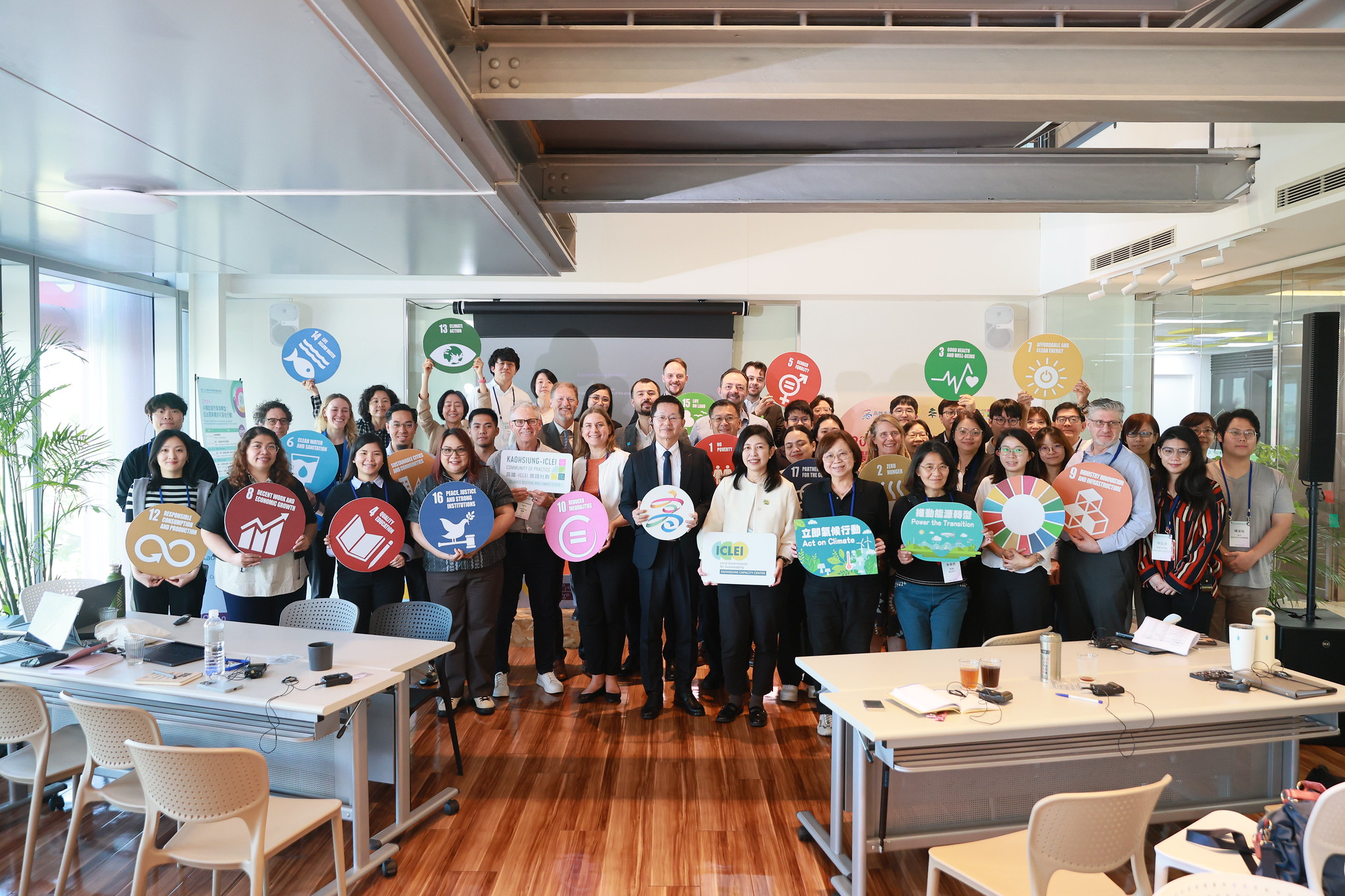
Good practice is not a destination, and “best practice” is rarely universal. What works in one city is shaped by its institutions, markets, urban form, culture and powers. The purpose of peer learning is therefore not to create a league table of cities, but to shorten the learning cycle: Make implementation mechanisms visible, understand why they work, adapt them to a new context and contribute the next iteration back to the community.
That is what these Good Practices collectively show. Climate neutrality is not a separate environmental agenda layered on top of urban development. It is a way of planning, financing and governing urban transformation so that lower emissions, resilience, economic opportunity, inclusion and flourishing lives reinforce each other. Urban innovation is the connective tissue – not only new technology, but the policies, financing models, institutions, partnerships and learning processes that allow better solutions to emerge and scale.
As the ComP moves toward the end of its 2025–2026 cycle, these cases provide a foundation for the next phase of exchange. Explore the Good Practice Series, borrow the mechanisms that fit your context, and use them as a starting point for the next practice your city can contribute. The transition accelerates when cities do not only learn from one another, but also become solution providers for one another.
Explore the Good Practice Series here.