Planning from above 1.5°C: What UNEP’s Overshoot Report means for urban climate action
UNEP’s new Overshoot Report, launched on 2 September 2026, confronts a difficult reality: Sustained exceedance of 1.5°C is now expected. But how high temperatures rise, how long they stay there, and how much harm becomes irreversible still depend on choices made now, making urban mitigation, adaptation, finance and multilevel governance more consequential, not less.
Overshoot is not an off-ramp: What exceeding 1.5°C means for cities
The United Nations Environment Programme published Limiting Overshoot: Navigating exceedance of 1.5°C and pathways towards return. Its starting point is uncomfortable but important: Under current trajectories, sustained exceedance of 1.5°C is now expected. The question is no longer only how to prevent crossing the threshold, but how to limit how far and for how long the world goes above it while preserving the possibility of bringing temperatures back down.
That does not make the 1.5°C goal obsolete. Nor is a single year above 1.5°C what UNEP means by overshoot. The report uses a multi-decadal warming level and distinguishes four stages in an “overshoot, peak and decline” pathway: Exceedance, a peak or plateau, decline, and eventual stabilization at or below 1.5°C.
This matters politically. If “overshoot” is heard as permission to relax near-term mitigation because future carbon removal will repair the problem later, it becomes a recipe for deeper warming. The report argues the opposite: Exceedance narrows the room for manoeuvre, making every additional fraction of warming and every additional year above 1.5°C more consequential.
A slide in Professor Debra Roberts’s launch presentation captured the point: “While exceeding 1.5°C is unavoidable, how high we go and for how long it lasts is still in our hands.”
A return to 1.5°C is not a rewind
The physics of stopping warming and reversing it are different. Reaching net-zero CO₂ is a necessary milestone because it allows us to slow and stop the rate of global warming. Bringing temperatures down after the peak requires sustained net-negative CO₂ emissions: Removals must exceed remaining CO₂ emissions, alongside deep reductions in methane and other short-lived greenhouse gases.
That makes carbon dioxide removal (CDR) unavoidable – but not an alternative to rapid emissions cuts. UNEP stresses limits around scale, permanence, resources, governance and public legitimacy. It estimates that roughly 220 billion tonnes of cumulative net-negative CO₂ would be needed to reduce global temperature by about 0.1°C. A return within this century becomes increasingly challenging if peak warming rises beyond roughly 1.8°C.
A falling global mean temperature would also not restore the world that existed before temperatures exceeded 1.5°C. Sea levels can continue rising for centuries to millenia. Some glacier, ecosystem and biodiversity losses can persist. Regional rainfall and extremes may not retrace the same path during cooling. People may already have moved; livelihoods may have changed; infrastructure may have been abandoned or redesigned. Reversal would reduce long-term risk, but temperature reversal and impact reversal are not the same thing.
For cities, overshoot changes the planning baseline
The report does not treat cities as a footnote. It warns that overshoot intensifies heatwaves, flooding, energy demand and consumer costs, pressures on public health systems, and risks to urban economies and infrastructure. These burdens fall disproportionately on low-income communities and informal settlements. Urban heat compounds global warming through the heat-island effect, while some nature-based solutions, including urban forests, may themselves become less reliable as climatic conditions shift. The urban implication is therefore not simply “do more adaptation.” It is to plan for a climate pathway that is dynamic rather than one-directional.
For mitigation, local governments should keep driving down avoidable emissions from systems they can influence – buildings, transport, waste, land use, municipal operations and procurement – while avoiding long-lived carbon lock-in. The report explicitly warns that investment in long-lived, high-emission infrastructure constrains future reductions and increases lock-in. Future CDR should therefore complement action on genuinely residual emissions, not justify deferring retrofits, clean mobility, efficient cooling, renewable energy or methane reductions. Urban ecosystems can contribute removals and co-benefits, but not replace emissions avoidance.
For adaptation, cities need to move from plans calibrated to historical conditions toward iterative pathways. UNEP’s infrastructure guidance is unusually practical: Stress-test assets against forward-looking risk; build in safety margins; prioritize reversible and low-regret measures; identify thresholds that trigger further investment; and preserve options for retreat or reconfiguration. Around peak warming, the priority shifts toward preventing cascading failures across energy, water, transport, communications and health systems. During a later decline, planners may need to rebaseline rather than restore – updating land-use rules and design standards for permanently altered conditions.
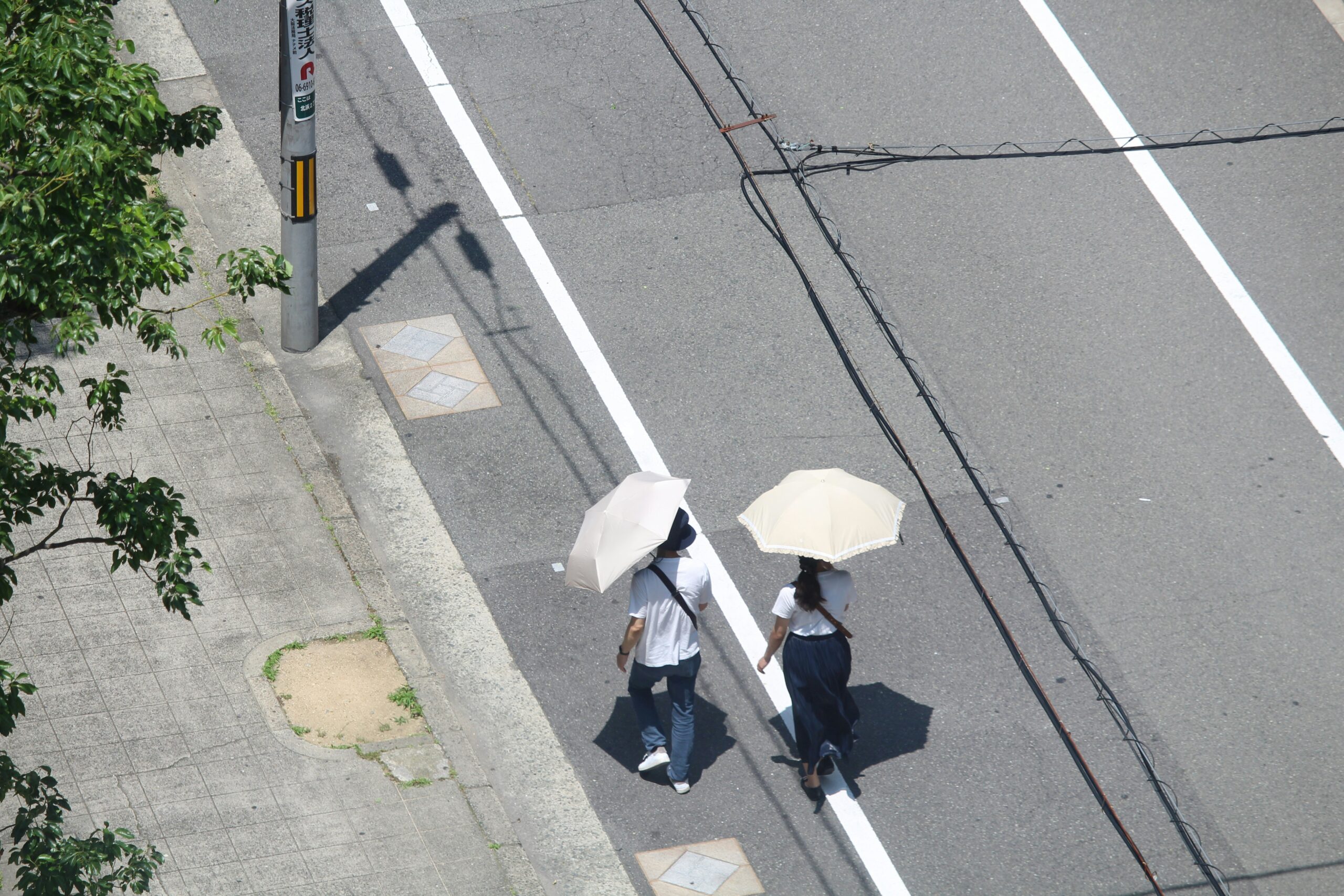
Urban heat planning illustrates the shift. Heat-action plans, early warning, public cooling, passive design, shade and tree canopy can reduce mortality now, but they should be tested against hotter conditions, changing water availability and the possibility that today’s vegetation choices may not remain viable. Adaptation that works today cannot simply be assumed to work at a higher peak temperature.
Finance also has to become anticipatory. Repeated disasters can crowd out investments needed to reduce future risk and emissions. UNEP warns that insurance withdrawal, declining property values and weakened tax bases can erode local fiscal capacity. Roberts’ launch presentation reinforces the link: Stronger adaptation can preserve political and social support for mitigation, while weak adaptation diverts resources toward crisis response. This strengthens the case for pre-arranged finance, resilient capital planning and climate-informed asset management.
Equity cannot be treated as a later adjustment. Decisions about cooling, flood protection, infrastructure triage, relocation or land use determine who is protected, who pays and whose options are closed off. Overshoot raises the stakes for participatory planning, social protection and protection of communities with the least capacity to absorb repeated shocks. The report itself warns, for example, that poorly designed coastal defences can protect valuable assets while shifting risks onto lower-income communities and closing off later adaptation choices.
Overshoot makes multilevel governance more – not less – important
Here the connection is not merely an urban interpretation. The report explicitly calls for “flexible, multi-level governance,” particularly for adaptation, and argues that rigid and static institutions will not be adequate for the changing risks of exceedance, peak and decline. Chapter 4 goes further: Adaptation is implemented primarily at local and regional scales, while effective responses require planning and governance across scales, and “cross-level cooperation” in place of siloed responses.
Cities can revise zoning and infrastructure plans where they have authority, strengthen heat-health systems, improve municipal assets, reduce waste emissions, engage communities and build project pipelines. But they cannot independently decarbonize a national electricity grid, set national fossil-fuel policy, create sovereign fiscal space, regulate long-duration geological carbon storage, redesign insurance markets or capitalize international loss-and-damage mechanisms.
UNEP points to this mismatch directly: In some Caribbean cities, adaptation responsibilities are increasingly devolved to local governments without the fiscal authority required to respond at the scale of sea-level rise. Overshoot would magnify such gaps.
A credible urban response therefore needs vertically aligned climate policy: Local plans linked to national strategies; predictable intergovernmental finance; access to affordable capital; shared data and risk standards; supportive legal frameworks; and international finance, technology and capacity. Multilevel governance is not an institutional add-on. It is part of whether implementation remains possible as risks intensify.
The international climate agenda cannot treat overshoot as a new target
The most dangerous political reading would be to replace 1.5°C with a higher, more convenient number. UNEP instead makes the case for stronger near-term mitigation, faster implementation, anticipatory adaptation, and institutions capable of sustaining action through net zero and into net-negative emissions.
Future removals also require governance on durability, monitoring, equity, land and resource impacts, and long-term responsibility so that CDR does not become a justification for delayed cuts – a risk the report explicitly identifies as mitigation deterrence. Adaptation and loss-and-damage finance likewise need to strengthen before peak conditions further narrow fiscal and political space. The report’s broader argument is that the institutions required to navigate overshoot have to be built before crisis conditions make cooperation, financing and long-term planning harder.
Two major assessments, one critical implementation window
The timing matters for the global urban climate agenda. The Intergovernmental Panel on Climate Change (IPCC) is preparing its Special Report on Climate Change and Cities, scheduled for approval and publication in March 2027. It is being developed under the joint scientific leadership of the IPCC’s three Working Groups; its Second Order Draft underwent Government and Expert Review in 2026. Its findings are therefore still under development and should not be pre-empted.
But the two assessments could become highly consequential and complementary resources. UNEP’s Overshoot Report clarifies the global scientific and policy problem created by exceedance of 1.5°C: Limit the peak and duration, adapt through the overshoot, and confront the demanding conditions for temperature decline. The IPCC Special Report is designed to assess climate change specifically in relation to cities, including urban impacts and risks, adaptation and mitigation.
There is no basis to imply a formal institutional relationship between the two reports. The connection is analytical: One reframes the global temperature pathway; the other will assess the urban climate evidence. Read together once the IPCC assessment is complete, they could help cities, national governments, financial institutions and international bodies ask sharper questions about risk, responsibility, investment and implementation.
The task is to preserve options
Overshoot is not a softer version of the 1.5°C agenda. It is a more difficult operating environment created by delayed action.
For cities, the immediate task is double: reduce the emissions and lock-in they can influence while preparing people, infrastructure and institutions for risks that may become more intense, persistent and uneven. For national governments and international institutions, the task is to create the fiscal, regulatory and governance conditions that make those local actions possible – and to avoid shifting responsibility downward without shifting resources and authority with it.
The report rejects two comforting stories: That crossing 1.5°C means the target no longer matters, or that returning below it would erase the consequences of the crossing. Neither is supported by the evidence. The space for action is narrower, but it remains consequential. The sooner emissions fall, adaptation strengthens and institutions learn to work across levels, the more options remain open on the difficult path through overshoot and beyond.