Daring Cities 2026 Bonn Dialogues: What it takes to make the implementation era truly multilevel
The climate community has spent years building ambition. The next phase is about delivery. The challenge is building the conditions that allow climate action to scale.
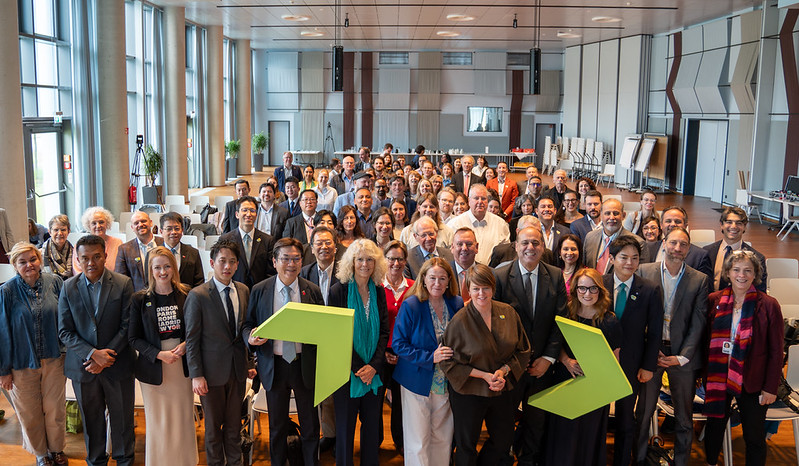
In a geopolitical landscape marked by growing uncertainty and pressure on multilateral systems, the Daring Cities 2026 Bonn Dialogues kicked off with a multilevel discussion focused on a fundamental question: What role should cities and regions play in the next chapter of climate governance?
The answer emerging is that local and regional governments are essential partners in shaping how climate action is governed, financed, and delivered.
Multilevel governance is moving from commitment to implementation
For more than a decade, local and regional governments have argued that climate action succeeds or fails at the local level. Today, that argument is increasingly reflected in national climate planning.
“Local and regional governments are no longer an afterthought in global climate action — they are becoming central to it,” said Katrin Stjernfeldt Jammeh, Mayor of Malmö, Sweden, and ICLEI President.
This shift is visible in the growing number of national climate commitments that reference multilevel governance as a pathway to implementation. It reflects a broader recognition that delivering climate targets requires coordination across national, regional, and local governments.
Ursula Sautter, Deputy Mayor of Bonn, Germany, pointed to this momentum, highlighting that more national climate plans are now recognizing the role of local governments and multilevel collaboration. As countries move from planning to implementation, she emphasized, the challenge is no longer whether cities should be involved, but how to strengthen the partnerships needed to accelerate delivery. “We are now being asked to walk the talk and speed up implementation, which cannot be done without the local level,” said.
Yet inclusion alone is not enough.
“With cities’ needs now embedded in NDCs, the question is whether they will be linked to local climate action plans. So far, we still see a gap. We need multilevel coordination so that local and national plans inform one another. The CHAMP initiative can put this into operation,” said Ingrid-Gabriela Hoven, Managing Director of GIZ.
The conversation repeatedly returned to the same conclusion: Multilevel governance is moving beyond political recognition and toward practical implementation. The challenge now is ensuring that national commitments, local plans, and investment decisions reinforce one another rather than operate in parallel.
This also requires stronger alignment across policy agendas.
“We need to coordinate action between the urban and climate agendas. We must interlink action at all levels and continue on the multilevel action agenda, creating agreements, common assessments, and values,” said Dr. Evita Schmieg of Germany’s Federal Ministry for Economic Cooperation and Development (BMZ).
Cities are ready to act. Systems need to catch up.
If the first part of the discussion focused on governance, the second focused on implementation.
Across regions, participants highlighted that cities are already developing climate plans, testing solutions, and advancing ambitious local agendas. What many continue to lack are the enabling conditions needed to bring those solutions to scale.
“Many cities already have climate action plans. What they need now, particularly in the Global South, is technical support to turn ideas into bankable projects and stronger multilevel governance to help deliver them,” said Mohamed Sefiani, Mayor of Chefchaouen, Morocco, and Vice President of ICLEI.
Finance emerged as one of the clearest examples of this challenge. While funding opportunities exist, municipalities and financial institutions often approach projects from different perspectives.
Barbara Schnell, Director for Latin America and the Caribbean at KfW Development Bank, reflected on the importance of helping cities translate local priorities into projects that meet financing requirements. Development banks, she noted, can play a critical role in bridging this gap and helping cities build the project pipelines needed to unlock investment and accelerate implementation.
Participants also shared examples of how climate resilience is already being integrated into everyday governance decisions.
In Los Angeles County, local authorities are responding to increasingly severe wildfires and extreme heat through new legislation, resilience planning, and community protection measures. County Supervisor Lindsey Horvath highlighted efforts ranging from heat protections for tenants to long-term infrastructure investments linked to upcoming global events such as the FIFA World Cup and Olympic Games. These initiatives demonstrate how climate action can strengthen communities while addressing immediate risks.
Together, these examples reinforced a common lesson: implementation is not primarily a problem of ideas. Cities have solutions. What they need are governance systems, financing mechanisms, and partnerships capable of supporting delivery at scale.
Science is a window of opportunity for cities
Looking ahead, participants identified a major opportunity on the horizon: the upcoming IPCC Special Report on Climate Change and Cities, scheduled for release in 2027.
The report is expected to provide the strongest scientific assessment yet of the role of cities in addressing climate change and could help strengthen the position of local and regional governments within global climate discussions.
“I hope the IPCC Special Report on Climate Change and Cities helps elevate the role of cities in multilateral processes. Climate action has too often been framed as a cost or a burden; we must frame it as an opportunity. Cities show that it can strengthen economies, and create more livable communities,” said Diana Ürge-Vorsatz, Vice Chair of the IPCC.
For many participants, that opportunity is already visible.
Mayor Takeharu Yamanaka of Yokohama highlighted how cities can drive behavioral change, stimulate local economies, and improve community well-being through partnerships and circular economy approaches. By working with stakeholders across sectors, cities are demonstrating that climate action can generate economic opportunities while improving quality of life.
As the discussion concluded, one idea connected all of these perspectives.
The next phase of climate action will not be defined by new commitments alone. It will be defined by how effectively governments, financial institutions, scientists, and communities work together to deliver them.
Cities are already proving what is possible. The challenge now is creating the governance, finance, and partnership frameworks that allow those solutions to scale.
In the implementation era, that may be the most important climate question of all.