
Small floods, small solutions: How a neighborhood in Izmir learned to hold back the water
In one Izmir neighborhood, it does not take a major flood to ruin a shop or damage a home. It also does not take a major intervention to prevent it. A shop owner in Pazaryeri used to know exactly what heavy rain meant. Water would come in through the door, and everything stored on the floor would be soaked. None of it could be returned or sold. It was thrown away and counted as a loss.
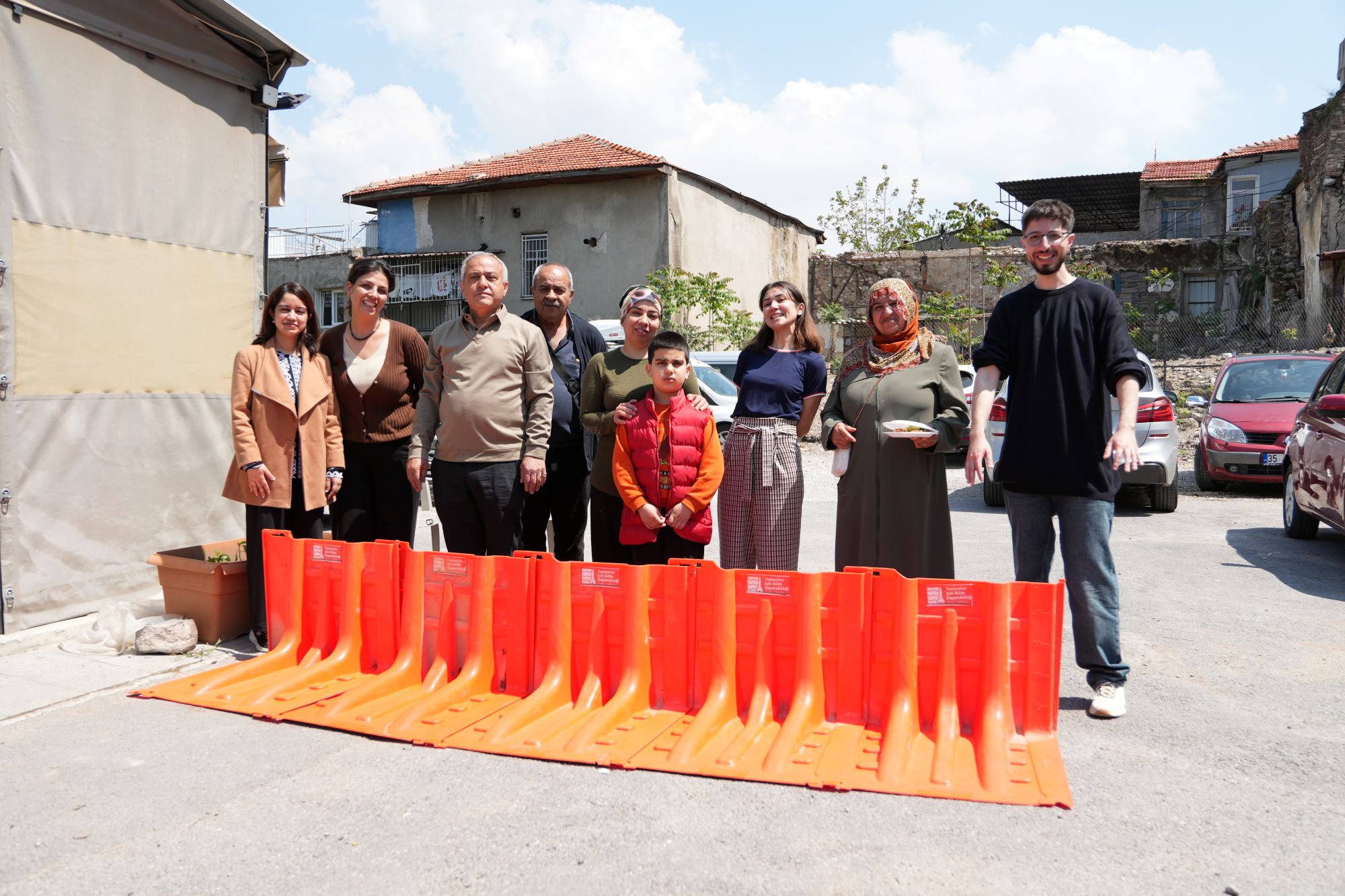
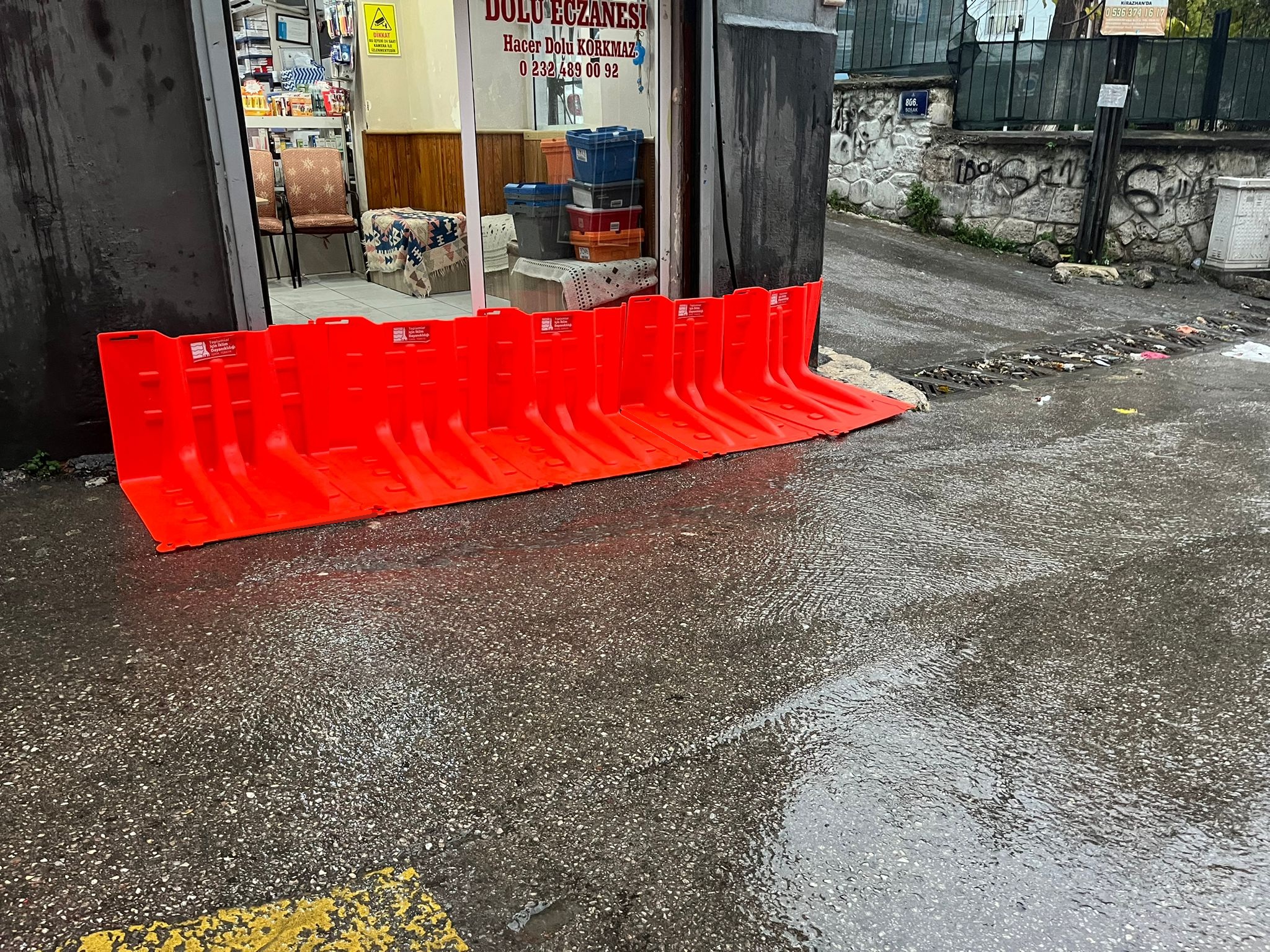
Today he has a set of modular flood barriers: Lightweight panels he can put in place himself in a few minutes. They were provided through the Climate Resilience for Communities project, which distributed them to homes, businesses and public buildings across the neighborhood, along with training on how to use them.
When the rain picks up, he goes to his storage space next door, takes the barriers out, and sets them at the point where the water turns. They redirect the flow downhill, away from his shop.
“That way our shop is protected from the flood,” he says.
A neighborhood shaped by water
Pazaryeri, in Izmir’s Konak district, sits on sloping land with almost no permeable surface and no fully functioning drainage system. When rain falls on the higher parts of the neighborhood, it runs down the streets and collects against whatever stands in its way. Two kinds of buildings are especially exposed: Those facing the steep slopes that carry run-off from above, and apartments that sit below street level.
This is why the scale of rainfall matters less here than it might elsewhere. In a neighborhood built like this one, a modest amount of water can do real damage. When the project carried out its baseline assessment, women living in the below-street-level apartments described a persistent problem: Damp and mold inside their homes. Not floodwater rushing through the door, but the lasting effect of small amounts of water finding their way in, again and again.
Targeting the risk, not the weather
Izmir, Türkiye’s third-largest city with around 4.5 million residents, faces worsening extreme rainfall. But in Pazaryeri the project team concluded early that the decisive factor was not how severe the hazard was. It was how little it took to cause harm.
“Disaster risk is a product of hazard, exposure and vulnerability,” explains Nida Bilgen, Officer for Resilient Development at ICLEI. In Pazaryeri, exposure to severe events is relatively limited, but vulnerability is high enough that even a small hazard becomes a significant risk.
So the project mapped the neighborhood building by building, using a risk and vulnerability assessment to identify which structures stood in the path of run-off and which residents had the least capacity to absorb a loss. Modular flood barriers were then distributed to 40 locations, positioned to protect the most vulnerable points while limiting the risk of pushing water into other streets.
That targeting is what makes the intervention more than an equipment purchase, according to David Jácome-Polit, Head of Resilient Development at ICLEI: “The barriers were placed based on an understanding of where flood risk is greatest, who and what is most exposed, and where protective measures can make the biggest difference.”
The logic will be familiar to anyone working in insurance. Insurers rely on data about hazard, exposure and vulnerability to judge how manageable a risk is, and when a risk is demonstrably understood and actively reduced, it becomes easier to insure. That matters in Pazaryeri, where protecting local businesses means protecting incomes, jobs and services. As Jácome-Polit notes, flood losses fall hardest on smaller businesses and on communities with the fewest resources to recover.
From equipment to capability
Handing out barriers is not the same as making a community able to use them.
The training ran in two stages. The first was open to anyone in Pazaryeri, delivered by Izmir Metropolitan Municipality and local NGO staff, and focused on general awareness of flood risk. It also identified residents willing to volunteer. Those volunteers, together with people living and working in the buildings identified as most at risk, were then invited to a practical session on emergency response: How to set the barriers up, and how to store them.
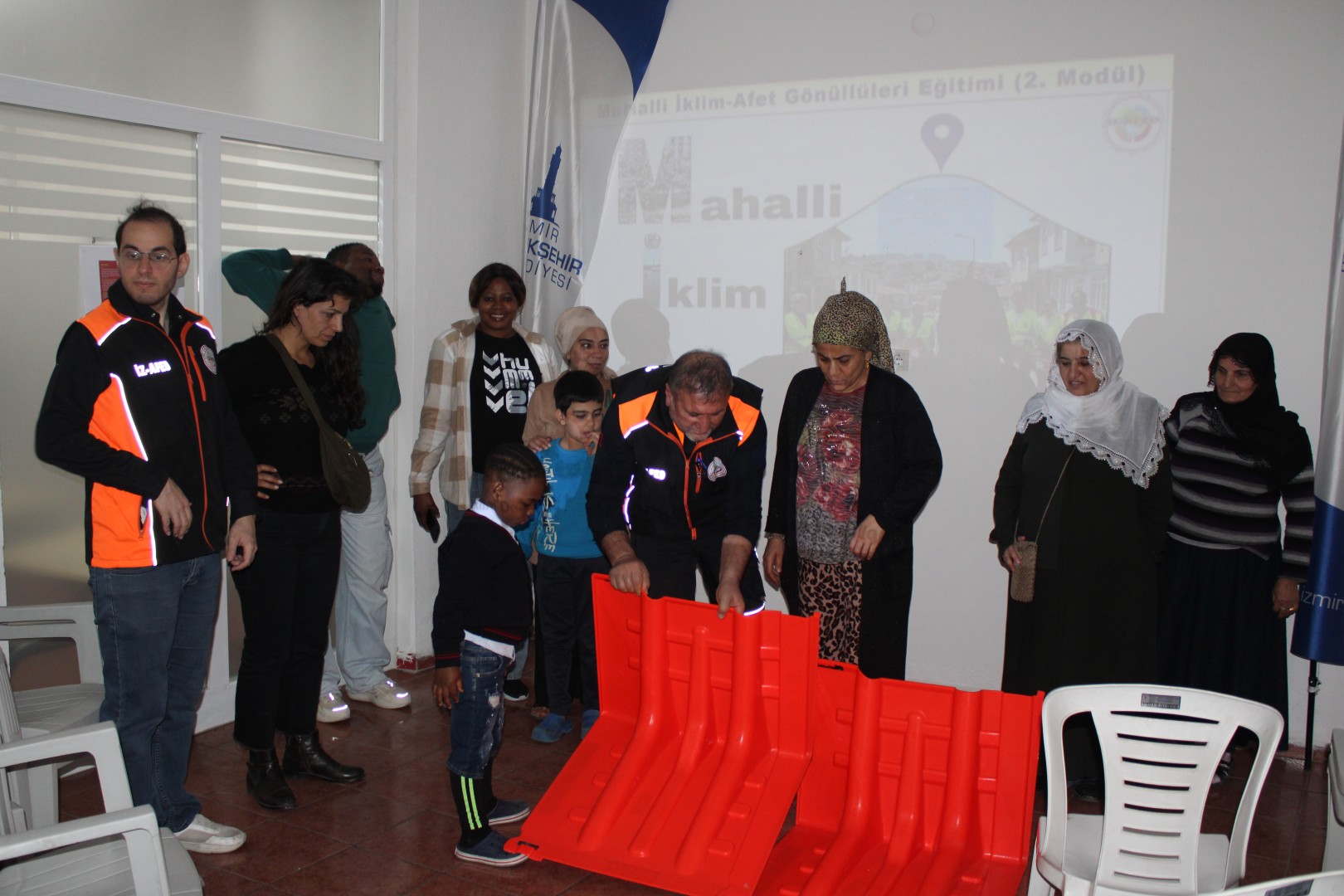
The shop owner attended both, and says the value was simple: Once you have learned it, you remember it, and you can act when it matters. He is also candid that the skill improves with practice. Setting the barriers up is straightforward, he says, and with a couple more uses, he expects to have the hang of it.
The 40 locations include homes and businesses, but also two buildings that matter to everyone in Pazaryeri: A healthcare center directly across from one of the steep streets, and a primary school. Because the healthcare center and school serve the wider neighborhood, the project estimates that more than 7,000 people benefit from those facilities staying open during and after a rainfall event. This comes in addition to the nearly 260 people directly equipped with barriers in their homes and workplaces. That is not a secondary benefit. When flooding cuts residents off from healthcare, clean water or transport, the people least able to find alternatives lose the most.
In October 2025, Izmir experienced extreme rainfall. Pazaryeri was not among the areas most severely affected, but the event gave residents their first real opportunity to use what they had been given, on their own initiative.
They used them, and they worked. The shop owner’s goods stayed dry. And the women in the below-street-level apartments, who had described damp and mold as their most persistent complaint, reported that water was no longer getting in when it rained.
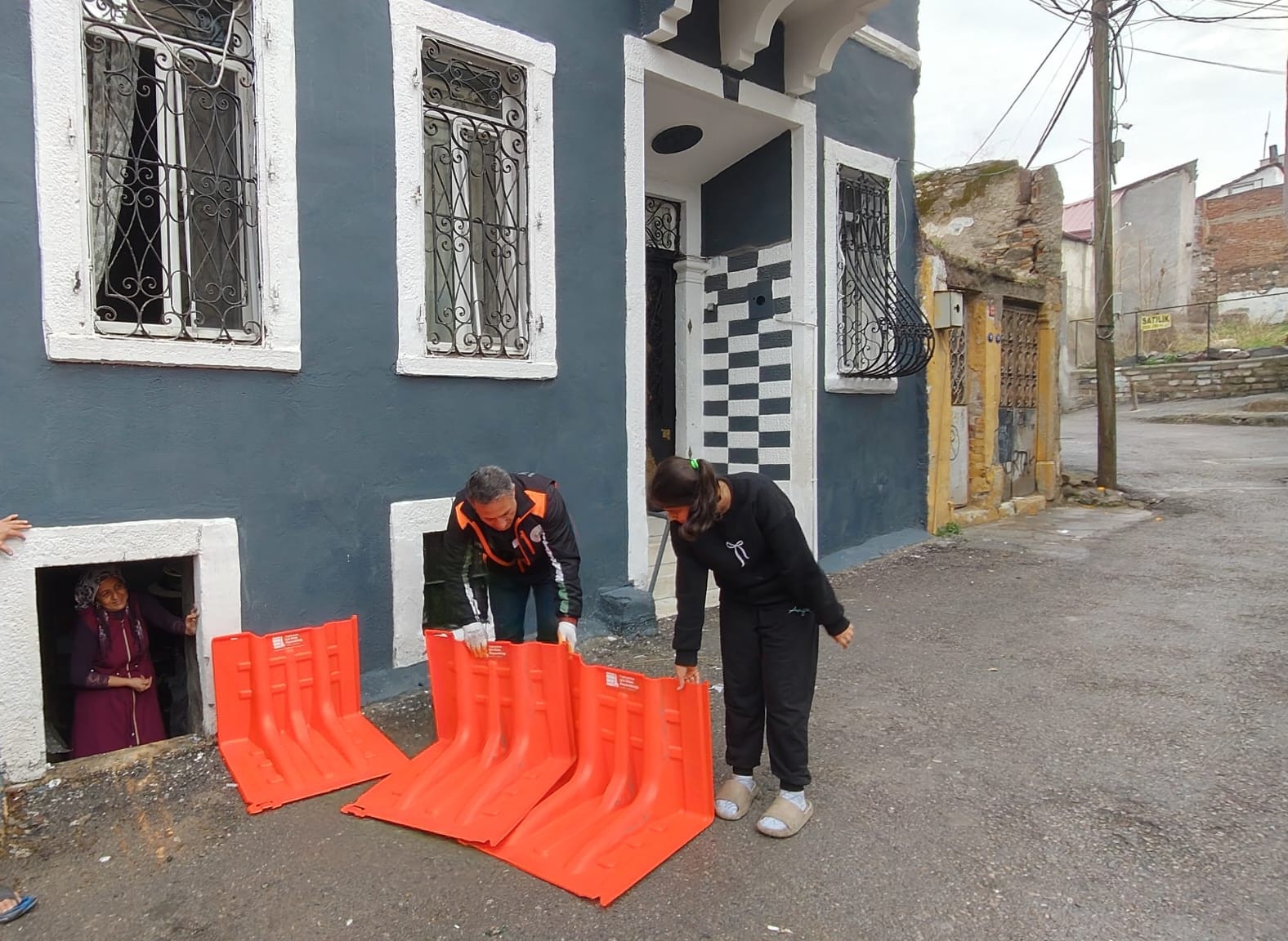
One detail stood out. Asked when he installs the barriers, the shop owner does not mention official alerts. Weather warnings do not always match what actually happens, he says, so he acts when the rain picks up.
This reflects something real about neighborhoods like Pazaryeri. Warning systems are designed around weather events crossing a certain threshold, but here the threshold for harm is lower than what qualifies for an official warning. Existing models cannot yet account for how the built environment of a specific street shapes where water goes. Having the barriers within reach, and knowing when and how to use them, is what allows residents to act on their own judgment in the meantime.
What barriers can and cannot do
Jácome-Polit is clear about the limits of this kind of measure. These barriers “cannot replace the more structural solutions that flooding requires.” Addressing flood risk fully means integrated, city-wide action as part of climate adaptation and urban planning, including improved drainage and land-use planning. But structural solutions take years, and until they are in place, targeted interventions provide protection that is available now.
Pazaryeri also now has something many communities do not: A clearly identified problem, a community actively engaged and with a sense of ownership over the solution, and a measure that has shown its value in practice. For decision-makers, Jácome-Polit suggests, that combination makes scaling up or integrating similar approaches into adaptation policy a relatively low-hanging opportunity. The lesson for other cities to take away from this is that engaging communities, understanding risk locally, and demonstrating practical solutions can generate the evidence and momentum needed to move from isolated interventions toward systemic risk management.
For the project’s private sector partner, that preventive logic is the point. Yılmaz Yıldız, CEO of Zurich Insurance Group Türkiye and member of the Board of Trustees of the Z Zurich Foundation, describes the Group’s approach as working to stop risks from materializing in the first place, rather than responding once they have.


