
One of the world’s largest urban food policy labs puts cities at the heart of the right to food
What ends up on a child’s plate at a public school; what happens to food waste at the end of the day; whether a family on the outskirts can find healthy food close to home: many of these questions are answered at city hall. It is local and regional governments that run school meals, public food procurement, street markets, food banks, community kitchens, urban gardens and composting programs, and when these actions are woven into a coherent policy rather than managed in isolation, cities become powerful drivers of food systems that are healthy for both people and the planet.
With this vision, Brazil’s Urban Food Policy Lab (Laboratório Urbano de Políticas Públicas Alimentares – LUPPA) works with municipalities across Brazil, advancing the human right to adequate food. In Brazil, the need remains pressing: According to a national household survey, 24 percent of Brazilian households, or 18.9 million homes, experienced food insecurity in 2024. Although an improvement on the 27 percent recorded in 2023, it still means that nearly one in four households live without secure access to food.
What LUPPA is and what it aims to achieve
Created in 2021 and regarded as the world’s largest food policy laboratory, LUPPA is coordinated by the Comida do Amanhã Institute and co-implemented by ICLEI South America, with support from Instituto Ibirapitanga, Itaúsa, Infinis, Porticus, and FAO Brazil. It works as a collaborative platform and a continuous learning program, helping cities develop food policies that are systemic, intersectoral, coherent and participatory, and it currently connects more than 70 Brazilian municipalities in a network of learning, exchange and technical cooperation.
LUPPA starts from the idea that running food-related initiatives is not the same as having a food policy. Many municipalities already run school meals, markets or food banks, yet lack a structured strategy capable of cutting across departments. The lab therefore encourages cities to adopt policies with clear targets, indicators and budget alignment, bringing together areas as diverse as health, education, social assistance, food supply, environment, agriculture and economic development.
This approach has earned LUPPA growing international recognition: FAO’s 2023 State of Food Security and Nutrition in the World (SOFI) report highlighted it as an example for achieving SDG 2; IPES-Food cited it as the only Global South case among city food-systems networks; the UN High Level Panel of Experts on Food Security and Nutrition featured it in 2024; and FAO included it again in its 2025 “Transforming Food and Agriculture through a Systems Approach”.
How it works: A methodology built on exchange
LUPPA is organized in annual editions, each of which begins with a public call for cities. Because the selection process prioritizes territorial diversity, 40 percent of places are reserved for municipalities in the Legal Amazon, where the presence of Indigenous communities is given particular weight.
Municipal officials and members of local food security councils are then interviewed and assessed using LUPPA’s matrix for municipal food systems, a data-collection tool that strengthens coordination across departments and feeds the LUPPA Map. From there, cities embark on a year-long learning journey that combines bimonthly online workshops with thematic seminars led by content partners and mentor organizations. In 2026, these seminars addressed public procurement, extreme weather events and dietary monotony.
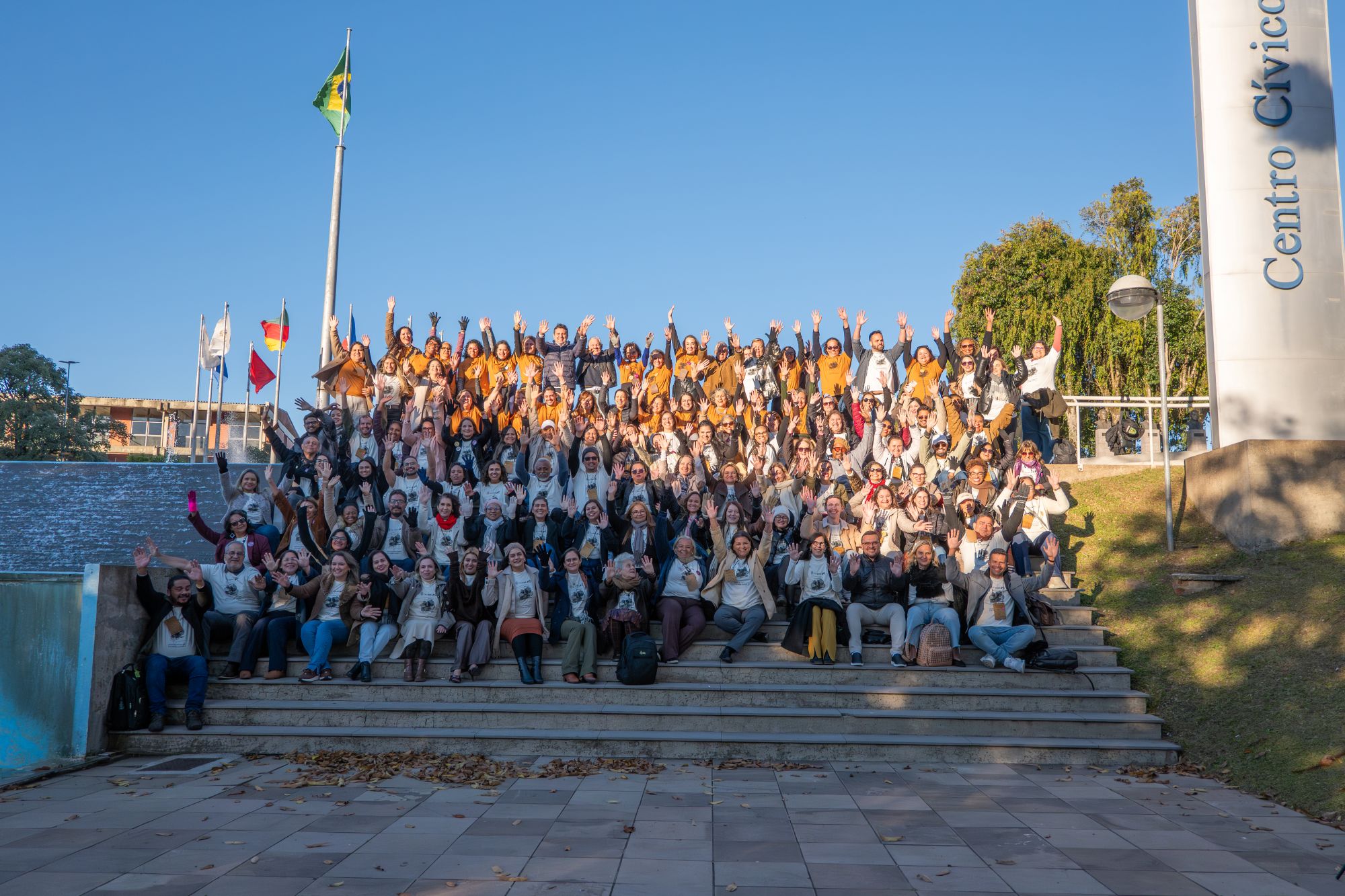
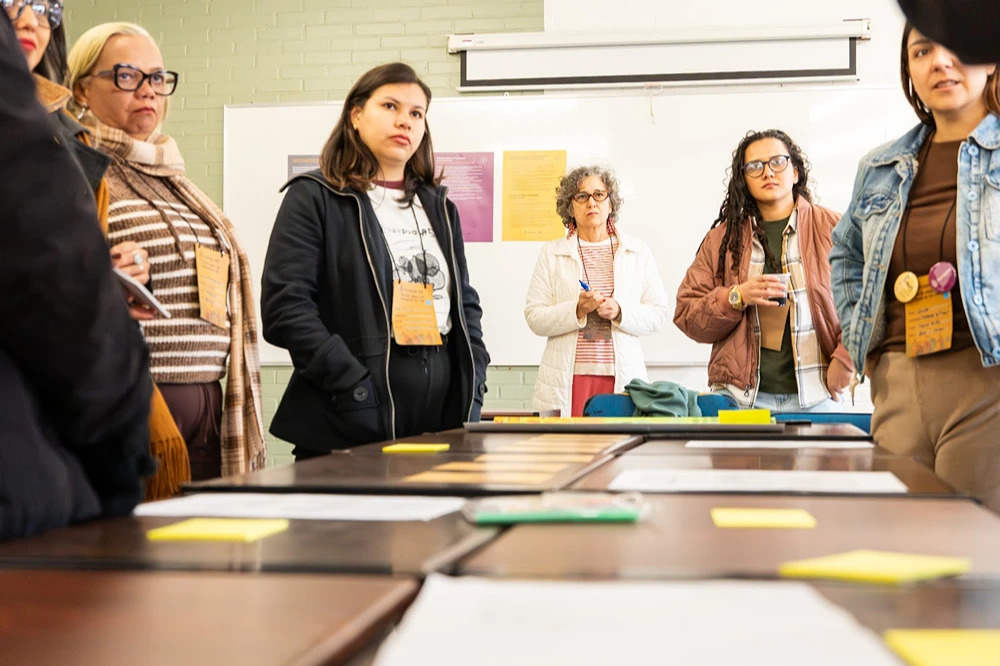
The high point of each cycle is the LUPPA LAB, a five-day in-person immersion in which city representatives share experiences, take part in technical visits and design solutions together. The fifth LAB, held in Caxias do Sul (Rio Grande do Sul) from 18 to 22 May 2026, brought together more than 100 people and 11 participating cities.
The LUPPA LAB is followed by a structured mentoring phase, during which mentor cities with established food policies work closely with participating municipalities and mentor organizations from universities and civil society. Each participating city develops an “Anchor Project” designed to create or improve a concrete action in its local food system. Each year, the program’s cycle closes with a livestreamed event that presents results and next steps, and introduces the cities joining the next round.
Beyond LUPPA LAB: sharing knowledge and recommendations
LUPPA turns these learnings into public knowledge through its journals, with lessons from each LAB. The most recent issues cover the fourth LAB and the mentor cities’ expertise with the network between 2021 and 2025. LUPPA’s public-facing dissemination is complemented by a bimonthly bulletin, a glossary and an online library of reports and videos.
The lab’s work also feeds into international debates. The position paper produced at the fifth LAB presents food systems as a way to connect the climate, biodiversity and desertification agendas, and sets out recommendations for the COPs of the UN’s three Rio Conventions – on desertification, biodiversity and climate. The paper calls for food to be built into national plans and reported under all three conventions, as well as for local governments to be treated as strategic partners with better access to finance. The paper also calls for resources to reach those who sustain resilient food systems, such as women, Indigenous peoples and family farmers.
Cristina Fabian Gregoletto, from Caxias do Sul’s Municipal Department of Agriculture, Livestock and Food Supply, says LUPPA “contributes to consolidating the food agenda as a strategic pillar of urban development, reinforcing its role in city planning and in shaping more integrated responses to today’s social, environmental and economic challenges”.
According to Armelle Cibaka, Director of ICLEI Brazil, “the continuous exchange among Brazilian cities throughout LUPPA… constitutes a unique experience in the world. It is a privilege to be able to expand the largest urban food policy laboratory with cities from the ICLEI network.”
Looking ahead: The sixth edition
Applications are now open for LUPPA’s sixth edition, which will select up to ten new Brazilian cities with between 10,000 and 1 million inhabitants, four of them in the Legal Amazon. Municipalities have until 20 October 2026 to apply, and those selected will follow the learning journey throughout 2027, with a new LUPPA LAB planned for the first half of the year.
“This edition is an invitation for more municipalities to join this collective effort and share with us – and with one another – their challenges, experiences, and pathways to transforming local food systems,” says Maria Eduarda Lemos, public policy analyst at Comida do Amanhã.


