
Malmö’s blueprint for green finance and what other cities can learn
By Kaj Embren and Matteo Bizzotto, ICLEI World Secretariat.
The Head of the Financial Department is a city official who rarely appears on conference stages; yet, they hold a powerful lever to enable cities to meet their climate commitments. This person is generally responsible for debt ratios, capital market programs, and the terms on which a city borrows; all of which hold a significant role in the green transition.
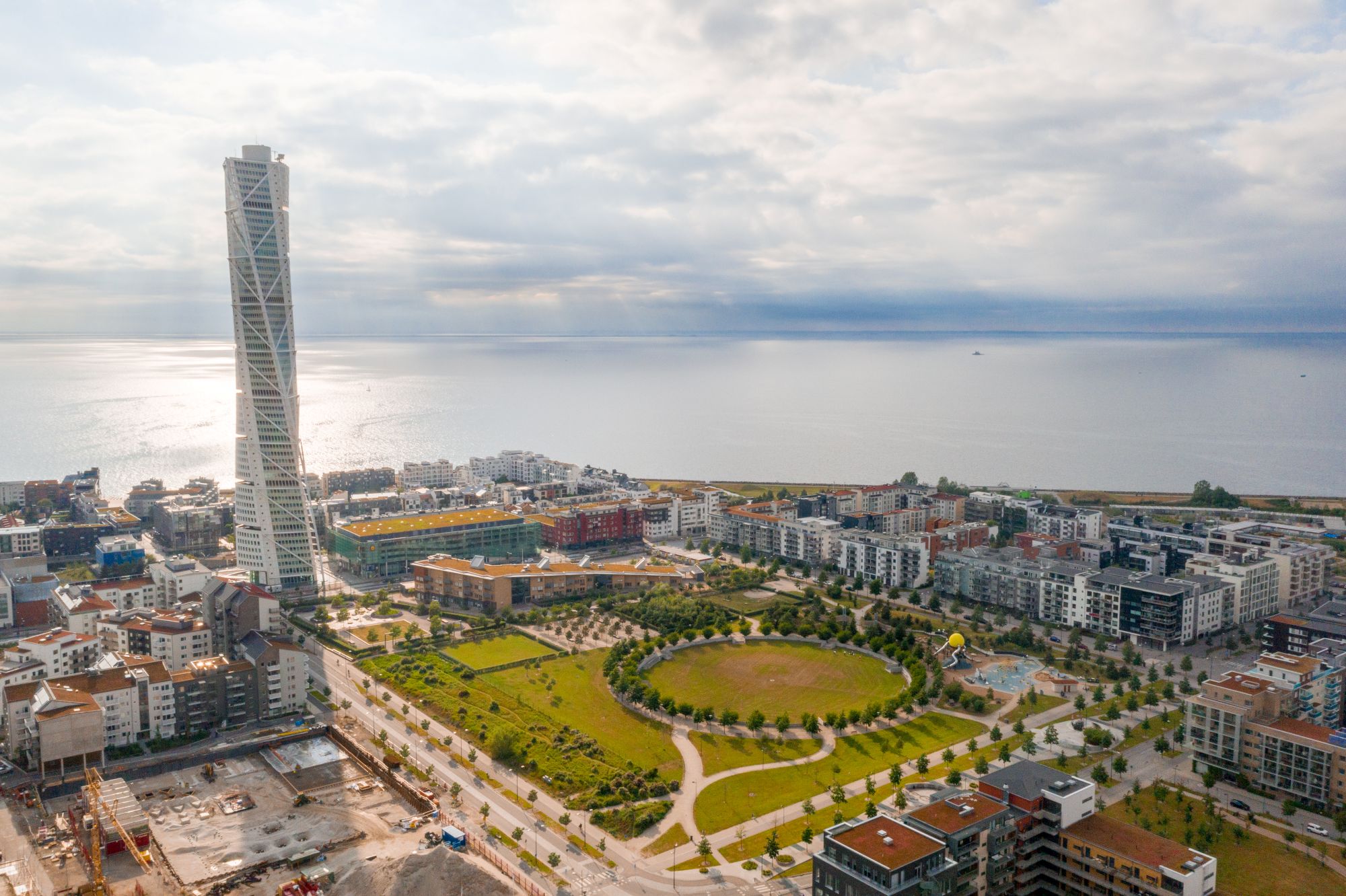
We spoke with Claes Ramel, Head of Finance for the City of Malmö, Sweden, who manages the relationship between the city’s climate ambitions and the investors who fund them – a position that has made Malmö one of Europe’s most closely watched examples of municipal green finance.
Green finance as an enabler, not a burden
Green finance includes all investments and financial services promoting sustainable development. For many finance directors, however, these sustainability mandates may feel like an additional compliance layer: More reporting, more complexity, and more compliance risk. Ramel sees it differently: “Green finance makes my life easier,” he says, “in terms of being responsible for attracting capital from the private sector to buy our green bonds.”
Rather than treating green finance as a constraint on traditional treasury management, Ramel approaches it as a tool for sharpening Malmö’s position in the market. Since 2017, the city has been issuing green bonds, building an excellent track record and investor relationships in the process. Green bonds function like traditional municipal bonds but are designated specifically to raise capital for projects with environmental benefits.
Central to this approach is Malmö’s Green Bond Framework, a structure that defines which investments qualify and gives investors transparent insight into how their capital is deployed. “By communicating with the investor groups, we can tell them about the green investments that we have in Malmö,” Ramel explains. Investor expectations, he notes, are rising: “Investors today are much more eager to learn what’s inside the bonds, what they are financing.” Malmö reports its annual impact, documenting how capital has been deployed and what measurable environmental outcomes it has generated. That accountability is what builds credibility with institutional investors like the pension funds, insurers and asset managers whose mandates now demand evidence, not just intent.
A city competing in global capital markets
Ramel describes Malmö’s position not as a passive recipient of funding, but as an active, competitive borrower. “In the capital market, we are in dialogue with investors: Pension funds, insurance companies, banks, fund companies… All kinds of investors.”
Malmö competes for capital alongside covered bond issuers, national governments, and corporate. Success requires that the city official in charge of the process understands investors’ logic in detail: What pension funds need in terms of duration and risk profile; what ESG (environmental, social, and governance) mandates are shaping insurance company allocations; what fund managers are accountable for to their own stakeholders. It is a role that demands a significantly different skill set from the traditional city treasurer.
The Nordic model: A blueprint the world needs
Malmö operates in a broader ecosystem that extends across Northern European countries: From Norway to Denmark and Finland, this so-called Nordic model is one of the most sophisticated models of collective municipal finance in the world.
The model’s core logic relies on the fact that when municipalities pool their creditworthiness through well-governed, cooperative institutional structures, the cost of climate capital falls significantly. Sovereign-backed financing vehicles extend access to deep capital markets to smaller municipalities on competitive terms.
Decades of green bond issuance, near-zero loss records, and governance architectures built on transparency and collective accountability have produced durable trust between public borrowers and private investors at scale. None of these ingredients is uniquely Nordic. Pooled credit vehicles, transparent reporting, shared governance are design choices, and they can be adopted, adapted, and rebuilt in other contexts. What matters most, many practitioners argue, is the governance design itself, as much as the financial instrument it enables. That is the part a motivated city finance team can learn, replicate, and make their own.
The ICLEI Governance Innovation Lab
Understanding the system of rules, processes, and structures that makes the Nordic Model succeed sits at the heart of the new ICLEI Governance Innovation Lab, a dedicated track within the ICLEI Green Finance Training Program that examines how cities and regions worldwide can build the institutional capacity the Nordic model requires.
The Lab is built on the recognition that the financing gap cities face is not always just a shortage of capital. Pension funds, development banks, philanthropic foundations, and responsible investors are actively seeking long-term, sustainable opportunities. The real shortage is of bankable, well-governed municipal borrowers who can meet them on equal terms.
Closing that gap requires building capacity simultaneously at four levels:
- Local and regional governments able to structure and deliver projects;
- regional frameworks that aggregate and de-risk investment;
- national policies that create enabling conditions; and
- international partnerships connecting city-level ambition to global capital flows.
The Lab is designed to work across all these levels.
Training the people who hold the lever
The Green Finance Training is a five-week hybrid program launching on 8 October 2026 in Malmö. It is designed for finance professionals like those Claes Ramel represents, whose role extends beyond stewardship of public funds to active convening of the whole investment community (philanthropic capital, pension funds, development finance, and private investors) around a shared climate agenda.
What Malmö has built over nearly a decade – the frameworks, investor relationships, reporting infrastructure, and institutional standing to compete in global capital markets – represents a well-documented case study. The question practitioners are now asking is how transferable that model is, and under what conditions other cities can replicate it.
The honest answer is that some preconditions are structural and some are within a city’s reach. A supportive national legal framework for municipal borrowing, a credible sovereign or sub-sovereign credit anchor, and enabling fiscal policy are not things a single finance director can conjure; they are the terrain a city operates on. But the governance design, the reporting discipline, the quality of investor engagement, the choice of frameworks, and the institutional credibility that comes from doing these things well over time, these are decisions, not inheritances. They can be learned, adapted, and built.
The Nordic experience does not offer a ready-made export model. Legal systems, fiscal arrangements, and political cultures differ. What it offers are adaptable principles, and a working proof that when the architecture is right, the capital follows.
The green transition will be financed city by city, deal by deal, relationship by relationship. How that financing is structured, governed, and reported may matter as much as the scale of investment itself.


