
Cities and regions address opportunities and needs on key environmental issues at UN Environment Assembly
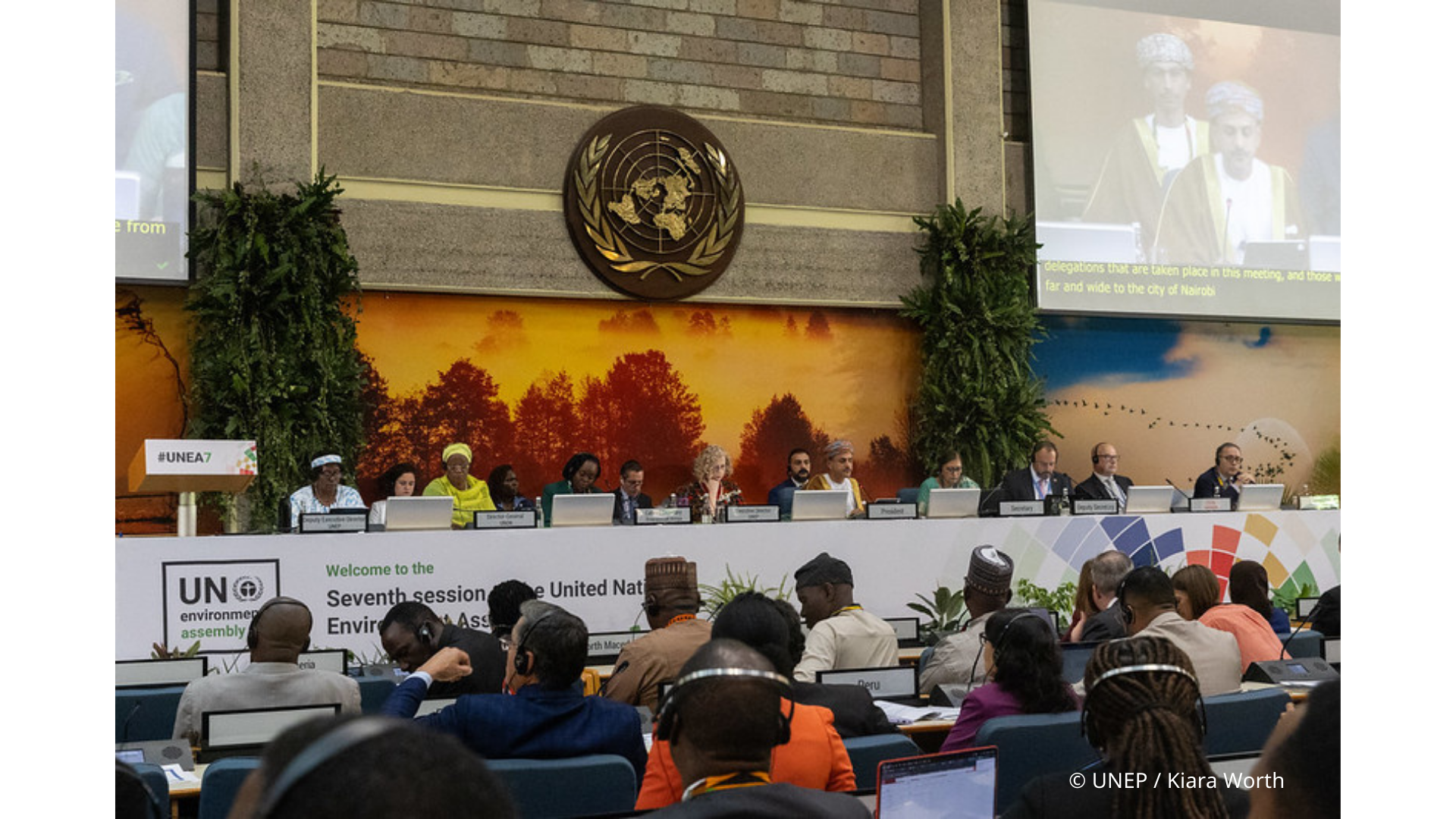
As the world’s highest environmental decision-making body, the UN Environment Assembly (UNEA) once again brings together ministers, negotiators, mayors, governors, civil society and experts to confront the triple planetary crisis of climate change, biodiversity loss and pollution.
Under the theme “Advancing Sustainable Solutions for a Resilient Planet,” UNEA-7 convenes this week, from 8-12 December at the UN Environment Programme (UNEP) Headquarters in Nairobi, Kenya.
With more than 5,000 participants expected and representatives from 193 Member States, UNEA-7 is not only a diplomatic gathering, it is also an important moment to demonstrate how multilevel governance is central to effective environmental action. As co-focal point of the Local Authorities Major Group (LAMG), ICLEI ensures that the voices of cities and regions are represented in the UNEA process.
While United Nations bodies such as UNEP and UNEA were created by and for Member States, the nine Major Groups and other Stakeholders system opens institutional space for non-state actors. Within this framework, the LAMG represents all types of government just below the national level, where environmental policies meet daily life.
This year’s gathering is expected to feature discussions on everything from countering wildfires to addressing the environmental impact of artificial intelligence, with outcomes likely to include a ministerial declaration, a set of resolutions on key environmental issues, and guidance on how multilateralism can help tackle the triple planetary crisis.
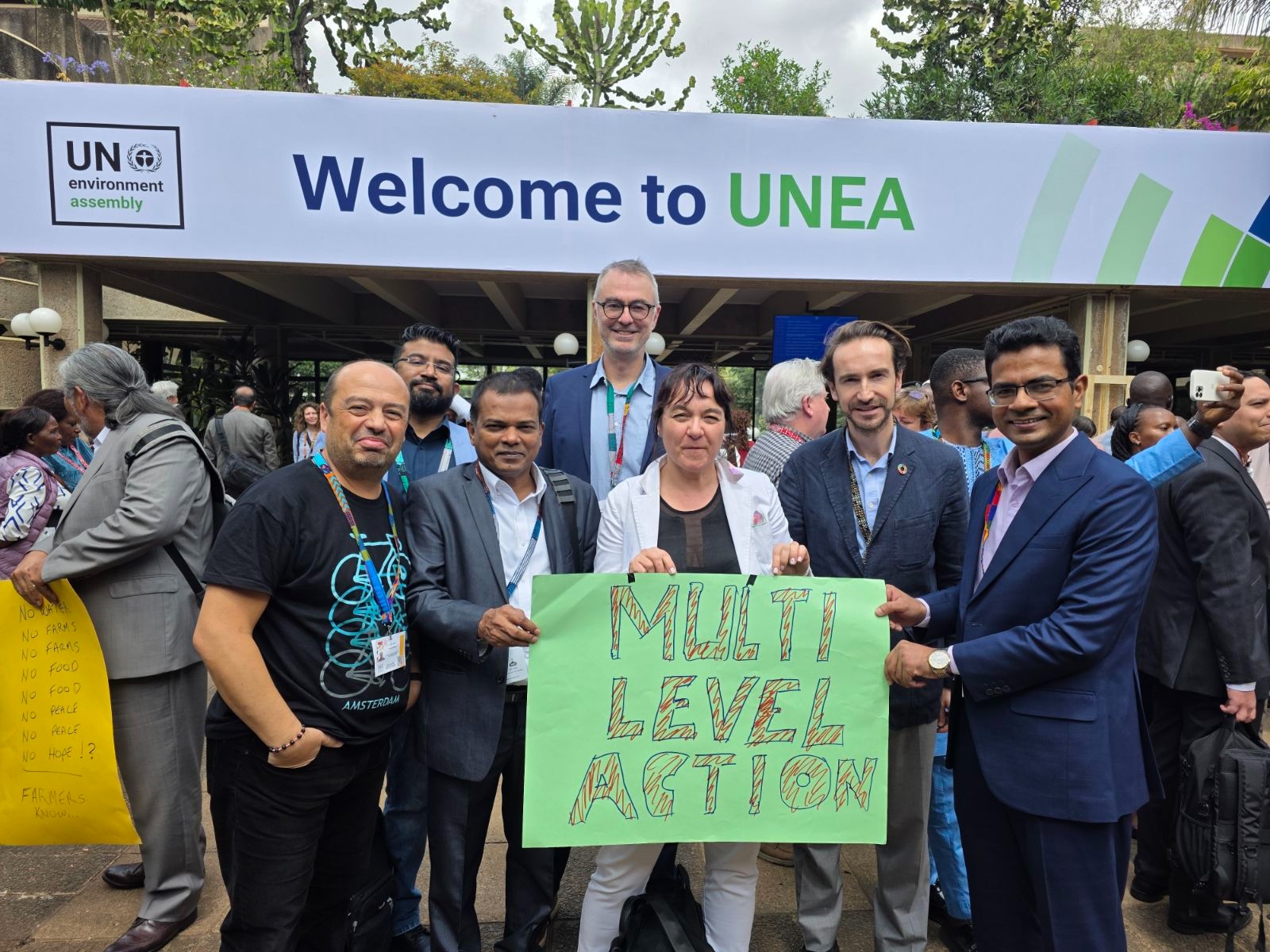
Cities and regions call for integration, not fragmentation
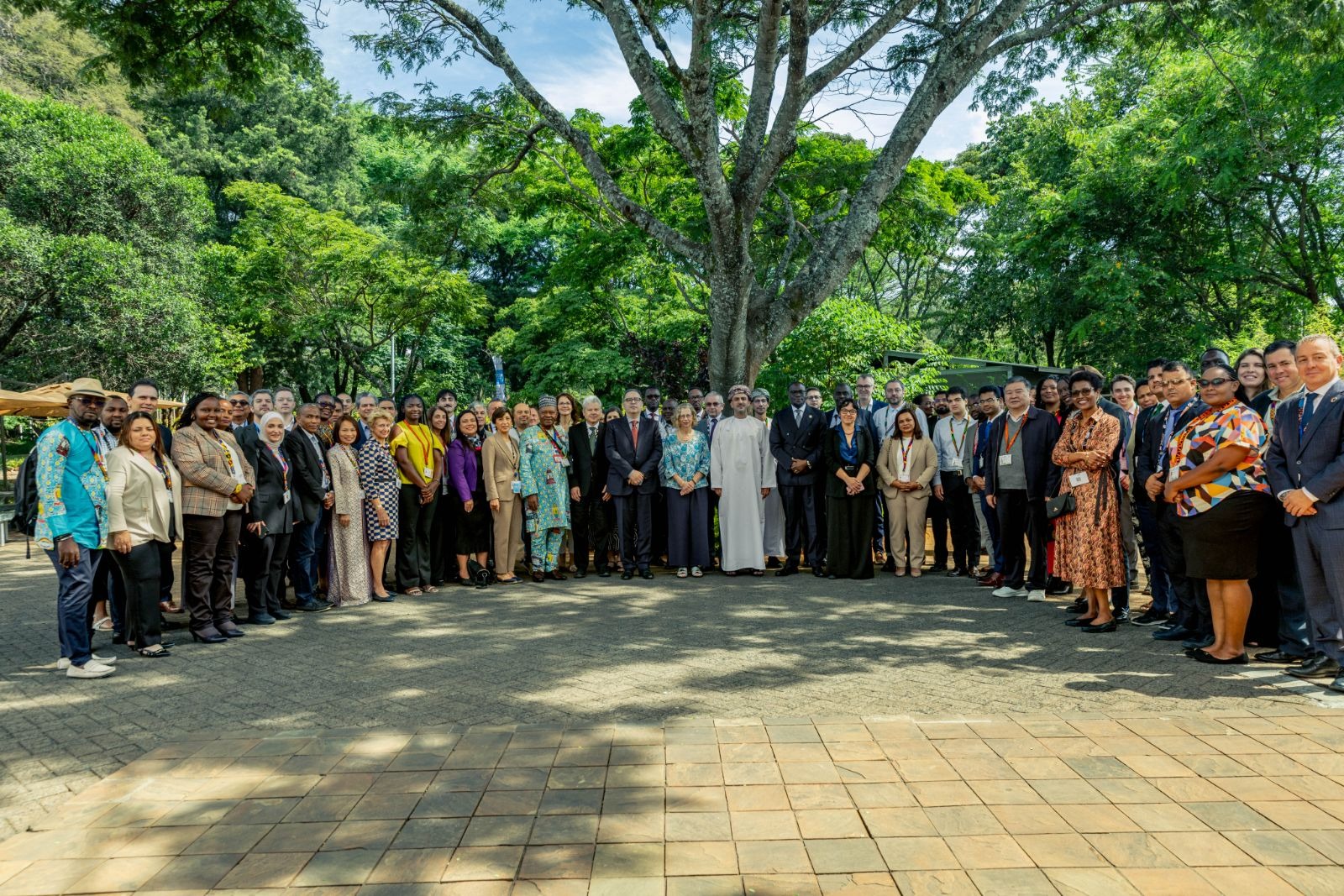
“Lonely leaves can offer no shade.” With this call for unity at the opening session of the seventh Open-Ended Committee of Permanent Representatives (OECPR-7), Chair Sultan Hajiyev of Azerbaijan set the tone for the days ahead, reminding delegates the need for concerted efforts and commitment. Preceding UNEA-7, from 1-5 December, OECPR-7 brought delegates to Nairobi to negotiate draft resolutions and declarations on nature and climate, the circular economy, pollution, chemicals and waste, and governance, which would later be forwarded to the Assembly for approval.
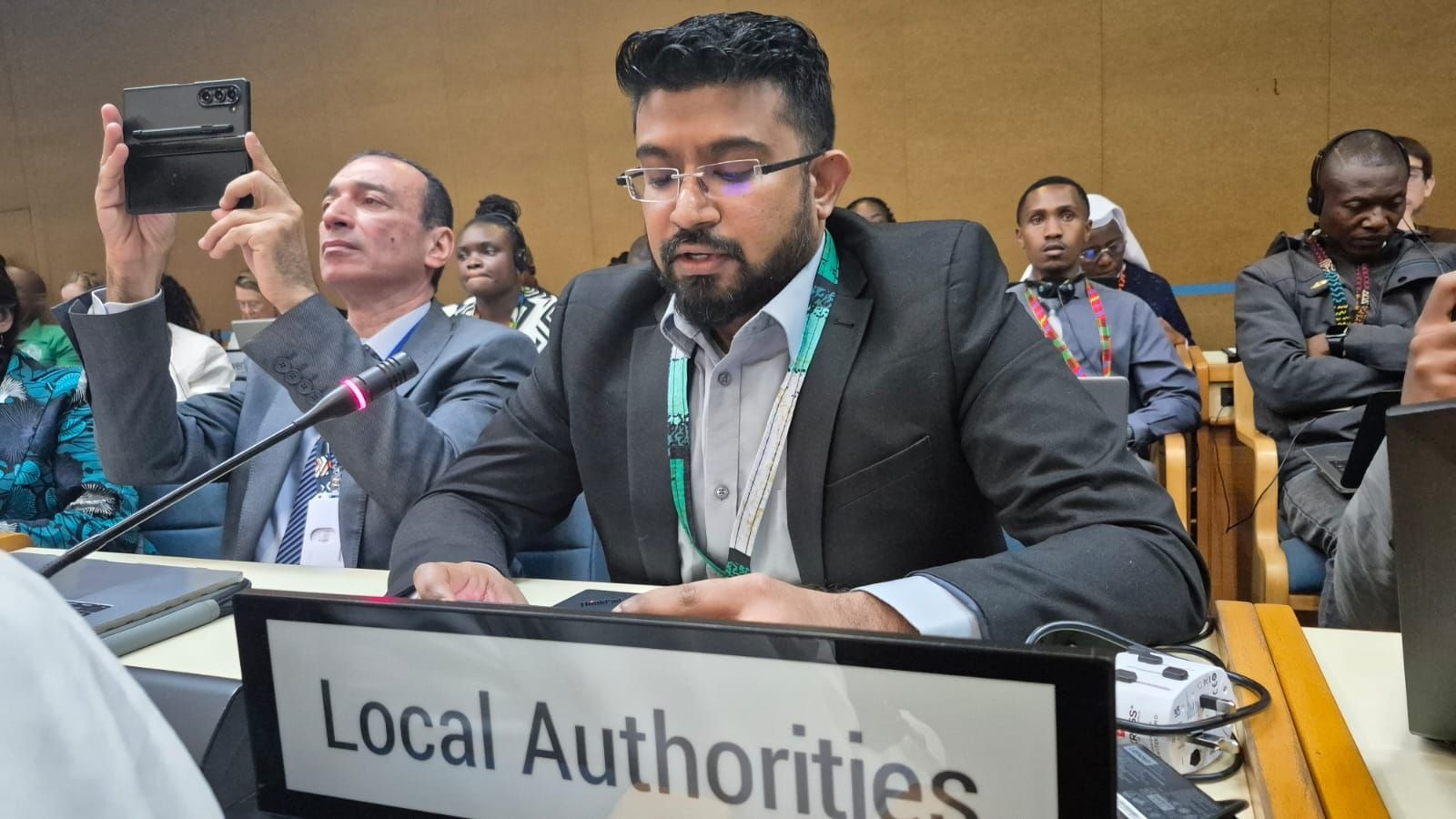
The LAMG brought the spirit of collaboration into the process. Reflecting this perspective, Magash Naidoo, LAMG Co-Chair and Head of ICLEI’s Circular Development Team, remarked at the opening session: “If Member States negotiate global texts without properly integrating the positions, expertise and operational realities of local and regional governments, it is like looking at the ground through a scope with the wrong lens — you see the landscape, but you miss the details of real life.” (Watch the LAMG intervention, from 01:38:00)
Alongside OECPR-7, ICLEI also supported the 21st Global Major Groups and Stakeholders Forum (GMGSF) on 6-7 December, reinforcing coordinated messaging ahead of the Assembly’s opening.
Cities and Regions Summit: Global ambition meets local action
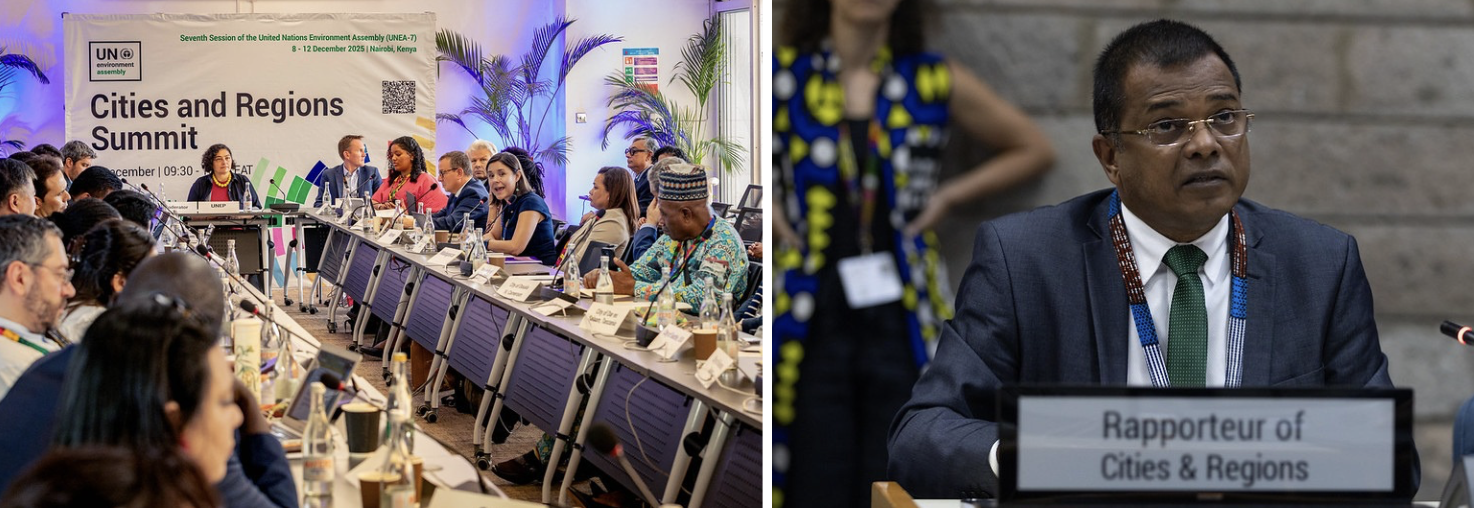
Held as an associated event to UNEA-7, on 5 December, the fourth edition of the Cities and Regions Summit, served as a key platform facilitating collaboration across various levels of government within the UNEA process. (Watch the Summit webcast)
Co-organized by UNEP and its Cities Support Unit, and supported by ICLEI as a core partner alongside other networks like UCLG, Regions4 and the Global Cities Hub, the Summit showcased how cities and regions are already delivering cross-sectoral, on-the-ground solutions that directly contribute to the objectives of Multilateral Environmental Agreements (MEAs) and the 2030 Agenda for Sustainable Development. Participants agreed that a whole-of-government approach, supported by a strong multilateral and multilevel framework, is essential to address the triple planetary crisis.
The Summit’s outcomes were formally presented at the UNEA-7 opening plenary on 8 December by Ali Nizar, Mayor of Addu City, Maldives. “As the mayor of a city in a small island state, I cannot overstate the urgency to accelerate action -the world is interconnected, and every life or dollar lost from climate impacts in any locality, ultimately impacts the world,” stated Mayor Nizar delivering a statement as the Rapporteur of the UNEA-7 Cities and Regions Summit. (Watch his intervention, from 02:11:49)
The key outcomes of the Summit were:
- When cities and regions act, real progress happens – from restoring nature to boosting climate resilience.
- Multilevel governance makes global goals deliverable – recognizing and involving local and regional governments in frameworks like the Rio Conventions.
- Local finance unlocks real action – cities need integrated funding for climate, land, biodiversity and resilience.
Speaking on behalf of the LAMG, co-focal point Carlos Mascarel Vilar, from UCLG, shared four core messages from the constituency: Institutionalize multilevel environmental governance through stronger recognition of subnational diplomacy; reform of the global financial architecture to localize environmental action; integrate climate, nature, environment and people through
place-based action; and advance a people-centered just transition.
“UNEA-7 must be a turning point — from commitment to capability, from fragmentation to cooperation, and from pilot projects to systemic transformation,” he concluded. (Watch his intervention, from 01:57:21)
Notably, a central message of the Summit was that MEAs and Member States must move beyond recognition toward enabling frameworks that empower local implementation.
What cities and regions expect: Synergies with the Rio Conventions and other Multilateral Environmental Agreements
The Summit also presented preliminary findings of the UNEP–Institute for Housing and Urban Development Studies (IHS) study on Local and Regional Governments in Multilateral Environmental Agreements. The study traces the evolution of local government engagement since the 1992 Rio Earth Summit, including the formal recognition of the LGMA Constituency in 1995 as the official voice of subnational governments in the UNFCCC process.
Assessing participation in the three Rio Conventions — climate (UNFCCC), biodiversity (CBD) and desertification (UNCCD) — the study highlights enabling conditions for more effective local engagement, including upstream participation across MEA cycles, formal recognition, finance, implementation capacity through multilevel governance, and equity in reflecting urban priorities.
Yunus Arikan, ICLEI Director of Global Advocacy and LGMA Focal Point, reflected on the systemic transformation unfolding across the global environmental governance landscape. He summed up more than thirty years of evolution in three words: “Convergence, complexity and innovation.” (Watch the full intervention, at 3.38.24)
Reflecting on the period since the Rio Earth Summit, he described how once-separate environmental agendas had progressively converged into a single, interlinked urban reality:
“Climate was once a mitigation discussion for the North. Biodiversity was only about flora and fauna in Latin America. Desertification was only an African issue. But 30 years later, every city and every region is acting on climate. Biodiversity is now nature-based adaptation. Desertification is land, food and migration. Climate is now much more holistic.” (Watch this video where Yunus Arikan refers to the future of the Rio Conventions).
Yet this convergence has also produced growing institutional complexity. Different accreditation systems, consultation mechanisms and reporting modalities across MEAs continue to burden local and regional governments. Paradoxically, the more essential cities become to implementation, the more fragmented their formal engagement remains.
At the same time, Arikan emphasized that innovation has become the true engine of local action. “Leaders… don’t spend their limited budgets by conventions or by the UN entities. They really invest in what they need to serve their residents.”
This reinforces what many cities have long practiced; often well ahead of formal global structures.
Multilevel governance also took concrete form through the launch of ICLEI’s UrbanShift Multilevel Governance for Integrated Urban Planning report launched at the Summit. Drawing on experiences from nine countries across Asia, Africa and Latin America, the report shows how National–Local Dialogues and Multilevel Governance Roadmaps can turn national ambition into coordinated urban implementation.
UNEA, COP30 and the UN80 reforms: Aligning the multilateral system
In the preamble of UNEA-7, one political message surfaced repeatedly: Global environmental governance must move faster toward coherence and synergy.
Since UNEA-6 in 2024, efforts to align UNEA outcomes with the Rio Conventions and other MEAs have intensified. In 2025, under UN80 reforms, UN Secretary-General António Guterres formally mandated UNEP and UNFCCC to lead cross-system coordination on the environment, creating a new institutional backbone for policy coherence.
These reforms intersect directly with outcomes from COP30, including, the Mutirão decision (para. 30) referencing cities and subnational governments in multilevel climate action and the Chairs’ Summary of the 4th Ministerial Meeting on Urbanization and Climate Change.
Building on this momentum, ICLEI reaffirms its commitment to scale its Town Hall COP model and continue the Annual Review of Local and Subnational Action on the Rio Conventions at future Daring Cities Forums, after convening the first ever Annual Review during Daring Cities 2025, last June in Bonn, Germany, alongside the SB sessions.
As UNEA-7 gets underway, attention is already shifting from negotiated text to the real test ahead: How cities and regions turn global agreements into tangible change for people and the planet.


