Beyond returns: How cities and companies co-create impact through innovative finance
Wrapping COP30, and as the world now moves from negotiations to implementation, the need to transform ambition into measurable, investable action has never been clearer. Cities and companies sit at the heart of this transformation. Together, they shape the systems that drive both emission reduction and solutions – and together, they hold the key to unlocking the finance that fuels transformative change.
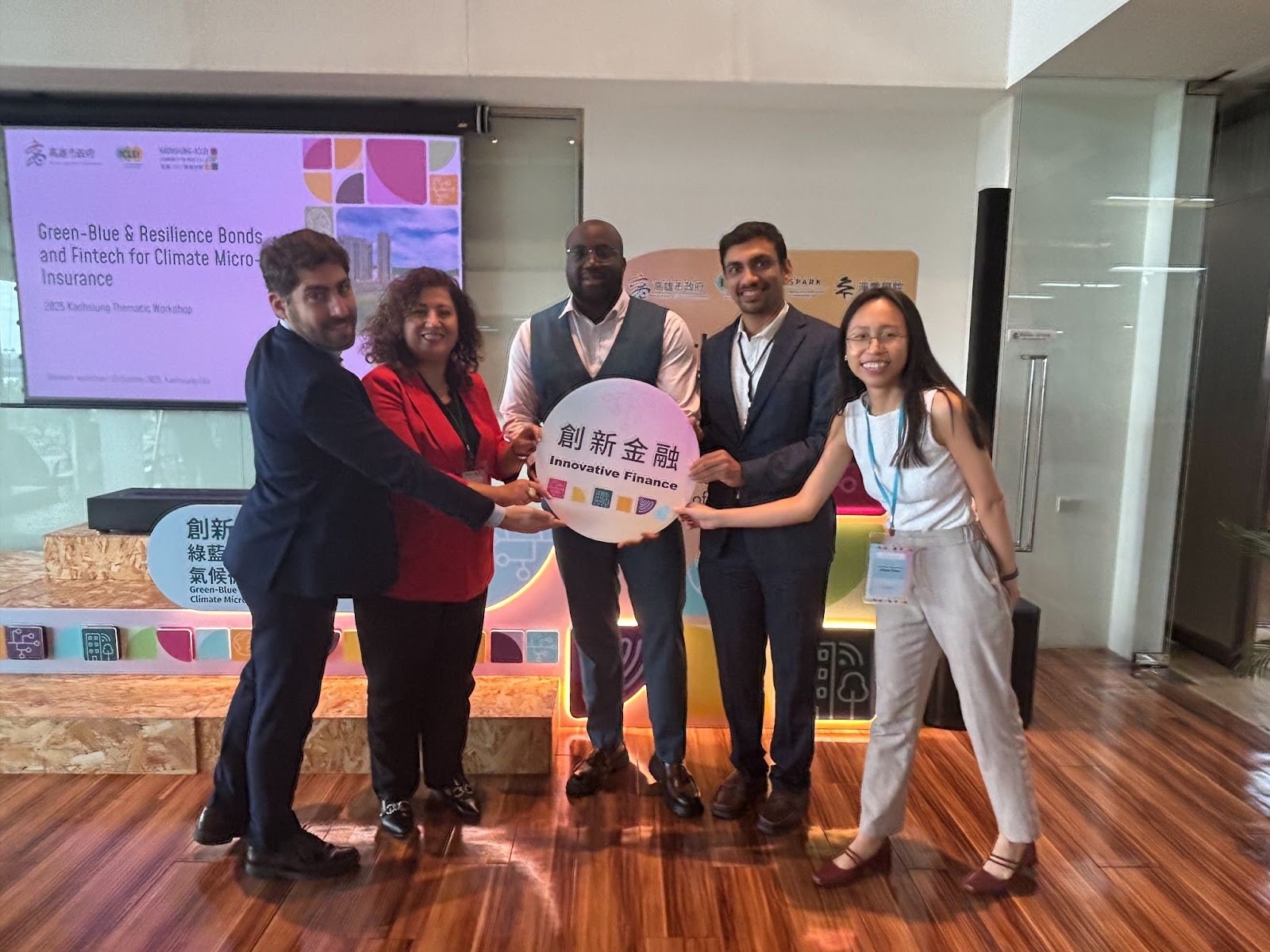
This belief underpins ICLEI’s growing effort to bridge city and corporate action through innovative finance. Last October, the second in-person thematic capacity-building workshop series of the Kaohsiung–ICLEI Climate Neutral and Smart Cities Community of Practice (ComP) delivered an in-depth workshop on innovative finance, offering a glimpse of how this collaboration works in practice and how it can evolve into a model for future city–business engagement.
From collaboration to connection
On 23 October, global expertise met local leadership amid the gentle sea breeze and harbor humidity of Kaohsiung, a city once defined by heavy industries, now defining itself through a green transition.
Speakers from Taiwan Impact Investing Association, Save the Children Global Ventures, Citi, and Springs Global Consultancy shared insights on climate finance instruments, while the Kaohsiung City Government and partners showcased the city’s determination to reach net-zero by 2050.
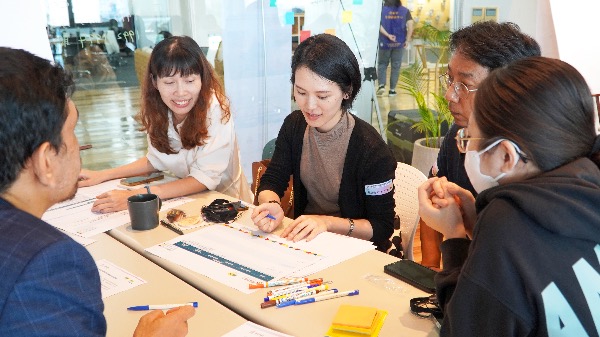
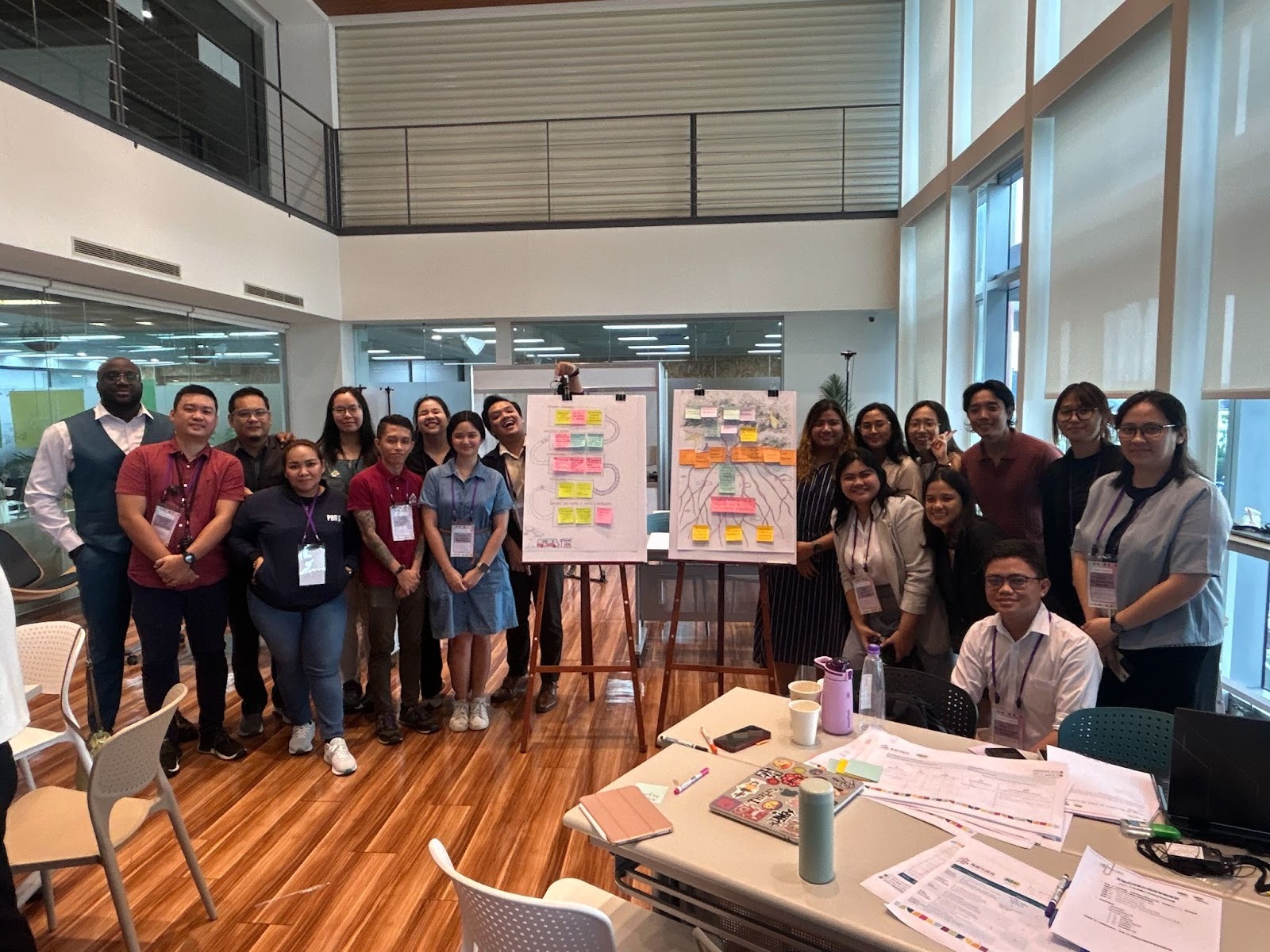
Participants from the cities of Quezon and Pasig, including delegates from the SPARK Project, contributed stories of how cities are exploring carbon credit systems and local sustainability funds. Through dedicated group work, city officials and partners co-created “storyboards” to visualize how finance could unlock real, community-based impact.
As one participant summarized during the closing reflection:
“Our projects are very different, but we are all here to use finance as an enabler – to unlock new opportunities, partnerships, and investors.”
The spirit of shared learning is what defines ICLEI’s approach – ICLEI does not just convene discussions, but helps cities and companies co-design solutions that align environmental impact with sustainable business models.
Cities as solution owners
Cities are often viewed as sites of need – places seeking investment or assistance. But as ICLEI’s experience shows, cities like Kaohsiung are also solution owners: They pilot, test, and refine climate innovations that can be replicated globally.
Kaohsiung has adopted a carbon budget targeting 50.93 million tonnes between 2025 and 2026. It has also created a Net Zero Institute that has trained over 5,600 professionals since 2023. The city’s Industry Net Zero Alliance brings together major emitters to push for decarbonization along their supply chains. These efforts have already reduced local emissions by 25% compared to 2005 levels.
Such leadership illustrates how local governments act not just as policy implementers but as market makers – shaping the ecosystem for sustainable finance instruments like sustainability-linked bonds, resilience funds, and carbon markets. For companies, partnering with cities means engaging where innovation, regulation, and impact converge.
Reframing finance: From profit to purpose
One key takeaway from the workshop discussions was that finance is not only about returns – it is about sustaining impact. In one group exercise, participants debated how a mangrove preservation project could scale its funding model. At one point, someone asked with genuine curiosity, “So how do we make more money out of this?” Another participant responded: “We don’t always need to make money out of preservation projects. It’s about the impact – and our shared value.”
That simple exchange captured the spirit of innovative finance as practiced by ICLEI and its partners. It is not about inventing new financial tools for their own sakes, but about reimagining partnerships and narratives – pitching ideas in ways that attract attention, align purpose, and mobilize collaboration for greater impact.
In this sense, everyone – from a city planner, to a banker, to a local NGO – becomes a practitioner of innovative finance.
ICLEI’s bridge: From ideas to investment
Through platforms like the Transformative Actions Program (TAP) and the forthcoming TAP4Business, ICLEI helps turn these insights into structured collaboration. The goal is simple: to align municipal ambition with private sector innovation, de-risk pilot projects, and scale successful models across regions.
The Kaohsiung workshop demonstrated how this works – combining the credibility of city leadership with the agility of private enterprise to co-create finance-ready projects. It is a preview of what is to come: ICLEI plans to organize city-business roundtables across Asia, share lessons on city bond issuance, and explore new opportunities to mobilize private capital for local sustainability goals.
Looking ahead: A collective market for sustainability
The transition to net zero is not a solo journey. It is a collective process that depends on shared ambition, aligned incentives, and mutual trust. Through its global network of more than 2,500 cities and regions, ICLEI is helping to build that trust – connecting cities that innovate with companies ready to invest in impact.
As one reflection from Kaohsiung reminded participants:
“Let us not treat this as an end, but as the beginning of new connections and future projects.”
ICLEI invites business and finance leaders to join this journey – to collaborate with cities not as beneficiaries, but as partners in creating solutions that sustain both communities and markets.
The future of innovative finance is not about maximizing profit, but maximizing purpose – and together, cities and companies can make that purpose count.