What does an eco-friendly construction site look like? Seoul is building with less dust and noise
Seoul, the capital of the Republic of Korea, is a dense, fast-moving city where construction is a constant feature of the urban landscape. In a city of nearly 10 million people, construction does not happen at the margins: Building sites sit alongside homes, businesses, sidewalks and some of the city’s busiest streets.
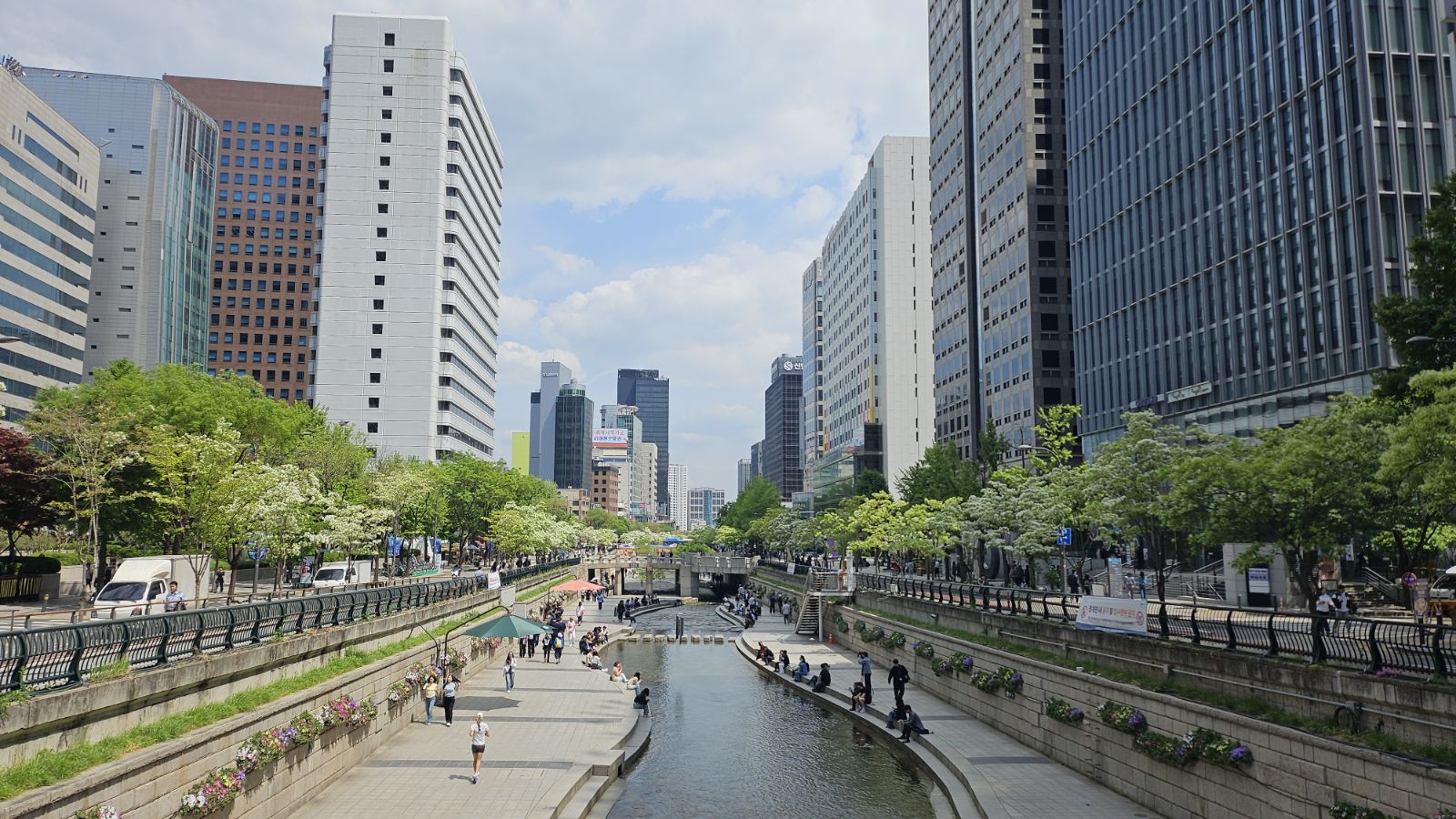
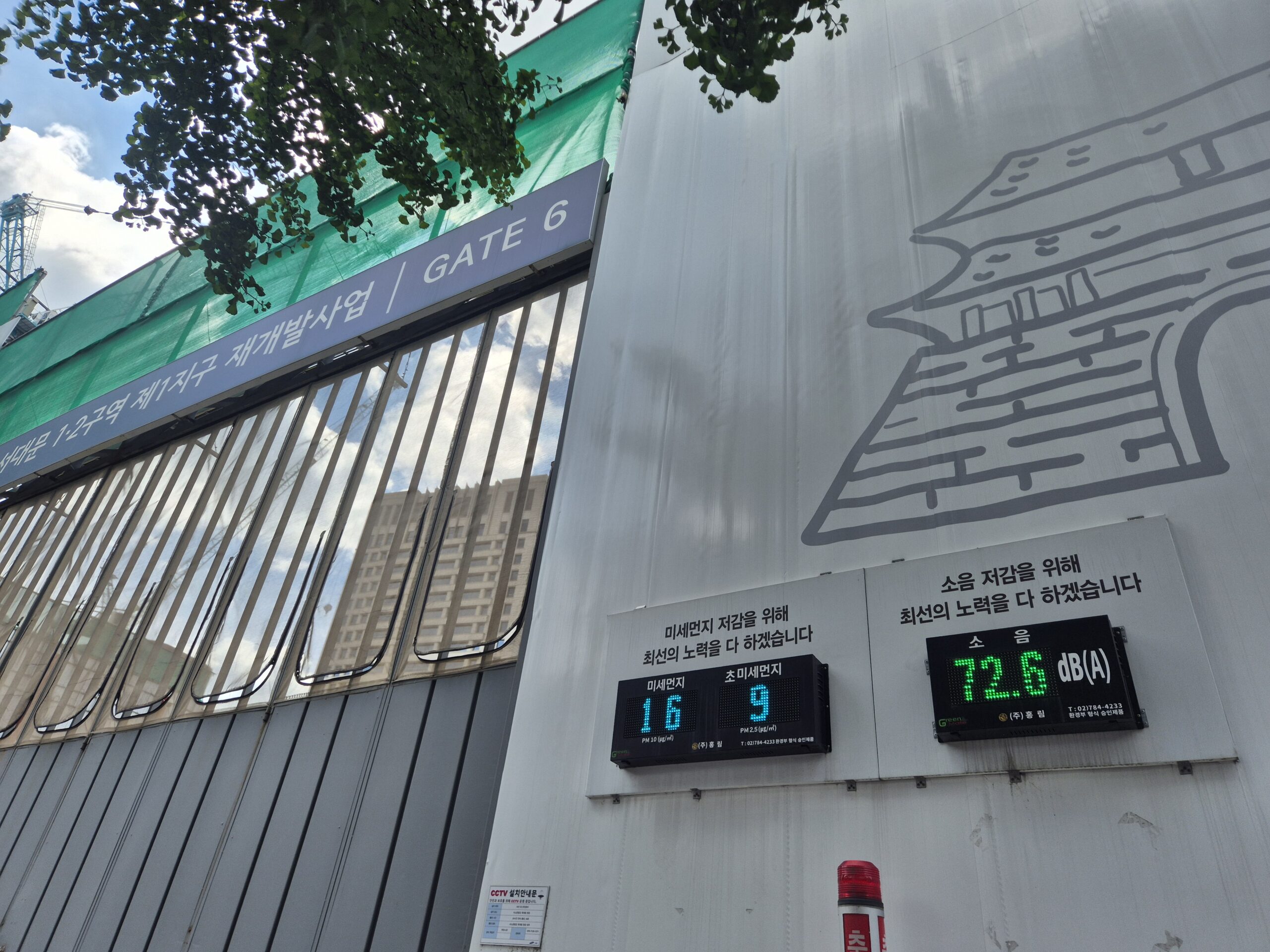
Walking through the heart of Seoul today, however, some of the construction sites that line busy streets present a noticeably different scene from what many expect from a megacity. The air is clear; there is no billowing dust or overpowering smell of concrete. Instead, tall protective walls surround each construction zone, acting as both a physical and environmental barrier. Digital displays mounted on these walls present real-time data on noise and air pollution levels, assuring passersby that careful monitoring is underway. The familiar cacophony of construction is kept at a low level, and the sidewalk remains clean and accessible. This is the face of the eco-friendly construction site—an emerging standard in Seoul’s urban landscape.
This transformation is not incidental. Construction sites have long been associated with significant environmental impacts, particularly dust and noise. In Seoul, these concerns became especially pressing when, as of 2021, 22% of the city’s ultra-fine dust was traced back to construction activities. Recognizing the need for change, the Seoul Metropolitan Government introduced in 2022 the Eco-friendly Construction Site program as part of the broader “Clearer Seoul 2030” initiative—a comprehensive clean air master plan designed to cut air pollution by half and achieve air quality on par with leading cities like London and Paris by 2030.
What makes a construction site “eco-friendly”?
The Eco-friendly Construction Site program is based on voluntary agreements between the Seoul Metropolitan Government and participating construction companies. Through these agreements, companies commit to environmental standards that go beyond those required at ordinary construction sites, including stronger dust-control measures, cleaner construction machinery and enhanced monitoring.
The city specifically targeted major construction companies like Samsung C&T, POSCO, Daewoo Engineering & Construction, and Hyundai Engineering & Construction to launch this initiative. These companies not only occupy a large share of the country’s construction sites, but also have their own responsibilities for environmental, social, and governance (ESG) practices. Participating companies have strengthened their dust suppression measures and introduced various environmental protection practices to further reduce emissions, often going beyond existing legal requirements. By adopting innovative practices and technologies, these companies are setting new benchmarks for the industry.
These commitments translate into concrete changes in how construction sites operate. Outdated machinery is strictly prohibited, and there are mandates for the use of low-emission equipment. The real-name system for vehicles ensures that every truck or heavy machine entering or exiting a site can be identified, further deterring illegal dumping or unauthorized activity. Surrounding roads, now termed “responsibility roads,” must be watered at least twice a day to suppress dust, with high-pressure mobile sprinklers installed as standard equipment. By meeting these standards, sites can be certified as Eco-friendly Construction Sites.
For example, one construction site near the Seoul train station prominently displays its measures for reducing dust, noise, and vibration on the perimeter fence of the eco-friendly construction site. This site features 9- to 11-meter-high soundproof and dust-proof walls, high-pressure water spray systems, and automatic wheel-washing machines to effectively control dust and minimize environmental impact. These measures tackle pollution at different points: Containing dust and noise within the site, suppressing airborne particles and preventing construction vehicles from carrying dust onto surrounding streets.
Similarly, another leading construction company has implemented an advanced dust and particulate monitoring system across its sites. A registration system tracks all vehicles and workers, while external sensors provide real-time data on noise and dust levels. Additionally, the company submits monthly compliance reports to the city, reinforcing transparency and accountability.

Incentives for raising construction standards
Going beyond existing requirements also comes with incentives.
By meeting these rigorous standards, construction sites gain several valuable benefits. They are permitted to conduct self-inspections in place of unscheduled city inspections, in addition to the regular quarterly checks. Participants are also eligible for support from Seoul’s IoT-based integrated monitoring system, which uses connected sensors to track environmental conditions such as dust and noise in real time. Exceptional sites may be honored with the Mayor’s Commendation, offering public recognition for their achievements.
This combination of higher standards, monitoring and incentives is designed to encourage construction companies to take greater responsibility for the environmental impacts of their sites while giving the city mechanisms to track implementation.
Scaling eco-friendly construction across Seoul
The impact of these changes is already visible. The number of certified eco-friendly construction sites in Seoul has grown from 101 in 2022 to 178 by late 2024. The city is now working to expand the program to include smaller-scale construction projects, broadening its reach and effectiveness. In 2026, the total number of Eco-friendly Construction Sites reached 259.
These eco-friendly construction initiatives are not isolated policies but are part of Seoul’s broader air quality strategy. They have contributed to a notable decline in air pollution, with the city recording a record-low annual PM2.5 concentration of 17 μg/m³ in 2024. While improvements in citywide air quality result from a much broader set of measures, tackling pollution from construction sites addresses an important source of emissions that cities can directly manage.
Seoul’s experience shows that reducing the environmental impact of construction does not depend on a single technology. It requires clear standards, cooperation with the construction industry, real-time monitoring and incentives that make better practices part of everyday site management. As these standards become more widespread, the hope is that Seoul’s air will continue to clear. For other rapidly growing and renewing cities, Seoul offers a practical example on how thoughtful planning and cooperation can transform even the most challenging urban spaces.