What does it take to build a thriving urban forest? Lessons from Kaohsiung
Nine companies brought different solutions to the Kaohsiung-ICLEI City-Business Accelerator (CiBiX), showing how better data, technology, human expertise, circularity and new partnerships can help cities build more resilient urban forests.
A digital platform that can map individual trees across a city. Climate models that identify where heat hits hardest and test how different interventions could help. Satellite imagery combined with demographic data to reveal where people have less access to shade. And new ways to turn wood from pruning and tree removal into products, materials and local jobs.
These are some of the solutions cities can draw on as they rethink how urban forests are planned, managed and maintained. Finding the right solution for a specific city challenge -and creating the conditions to put it into practice- is another question.
That is where the Kaohsiung-ICLEI City-Business Accelerator (CiBiX) comes in. CiBiX connects cities facing real-world sustainability challenges directly with companies bringing different technologies, expertise and business models to the table. For cities, it creates a unique opportunity to explore how solutions available on the market could respond to their specific needs. For companies, it offers direct insight into the realities of implementation, from existing infrastructure and limited space to budgets, maintenance, governance and community needs.
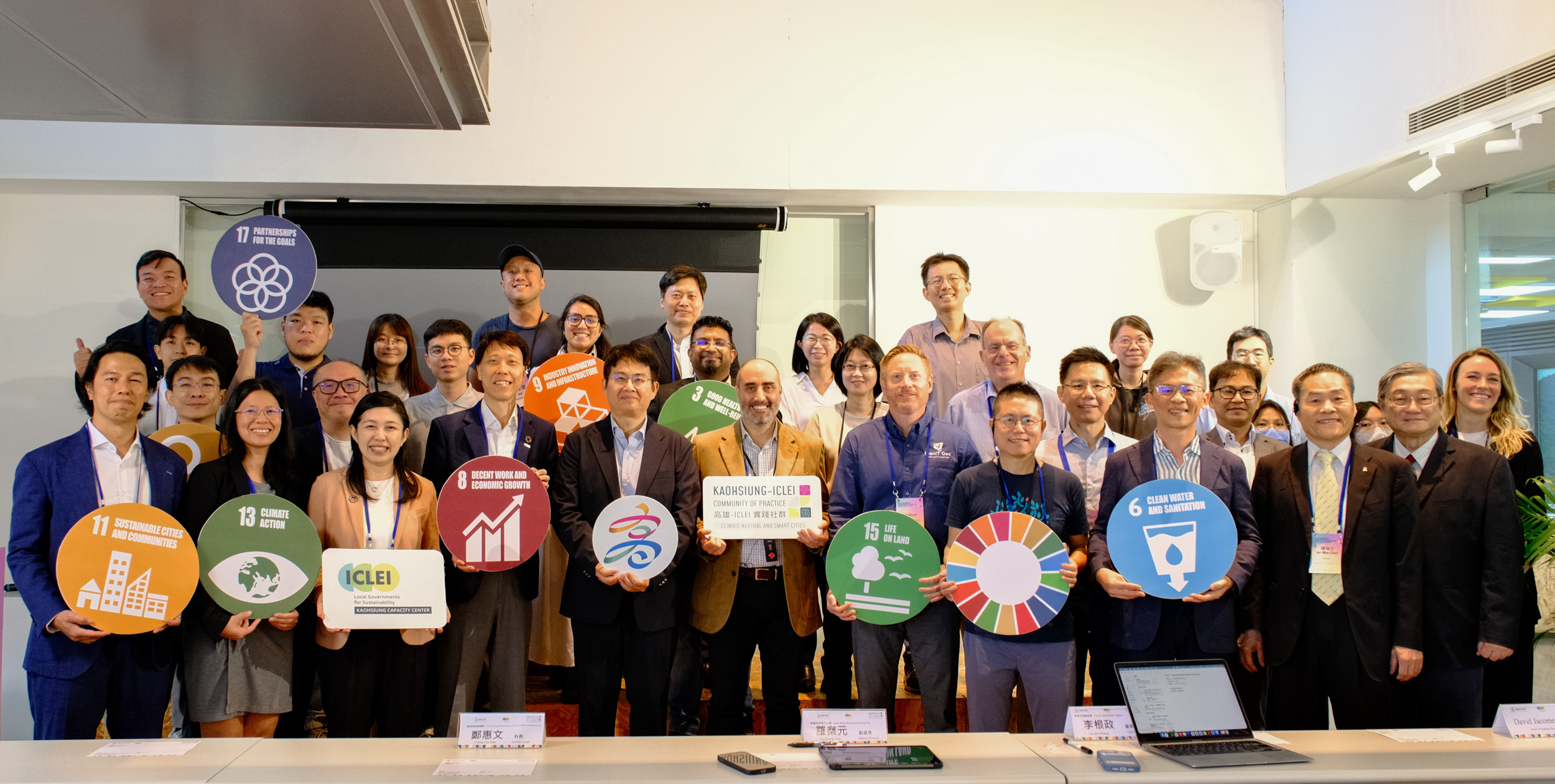
On 2 September, that exchange took place in Kaohsiung. Nine companies shortlisted through an international Call for Solutions came together with city representatives, national government and international experts to respond to “Expanding Kaohsiung’s Green Lung.” The challenge sought innovative technological and business solutions to help the city map, maintain and scale its urban forest, enhance carbon sequestration and deliver wider benefits for biodiversity, resilience and quality of life.
Through these solutions, the CiBiX workshop surfaced ideas relevant far beyond Kaohsiung: what cities need to know about their urban forests, how emerging technologies can support better decisions, and what it takes to sustain urban nature over time. For Kaohsiung, an industrial and densely populated city already experienced in private sector collaboration, the challenge offered an opportunity to explore how companies’ latest innovations could support its ambitious urban nature agenda.
Growing an urban forest for a nature-positive city
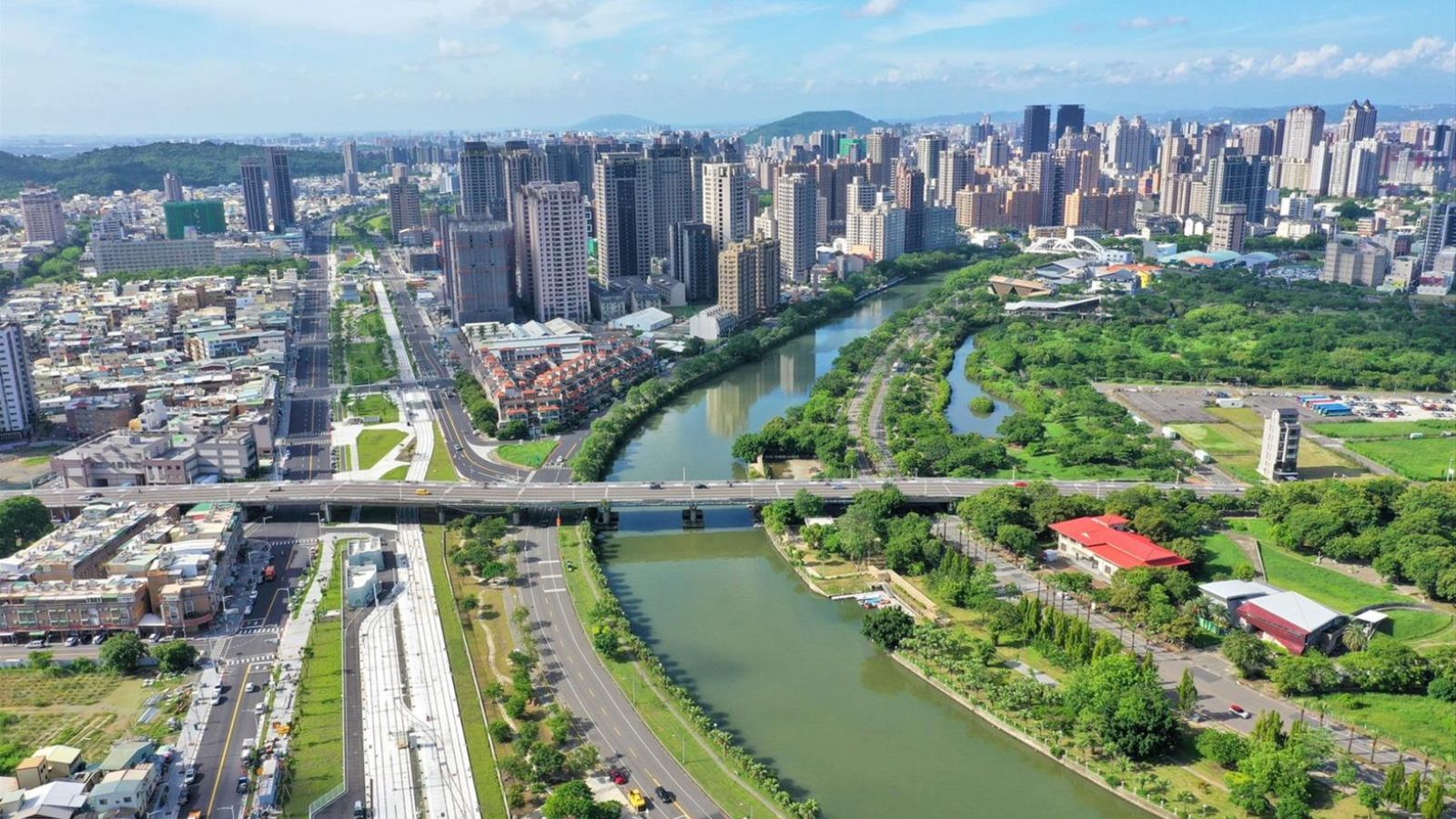
Kaohsiung already manages around 160,000 street trees and 170,000 park trees. By 2030, the city plans to distribute another 80,000 seedlings and add 10 hectares of parkland as part of its ambition to become nature-positive. Its participation in the Berlin Urban Nature Pact and alignment with the wider national canopy and climate adaptation agenda are pushing that ambition further: Toward an urban forest that can deliver more for climate resilience, biodiversity and people.
For Huang Shih-Hung, Deputy Director of the Environmental Protection Bureau of Kaohsiung City Government, this means looking closely at how the city manages both its existing and future tree assets: “Kaohsiung currently manages roughly 330,000 urban trees. These are all vital assets for the city. However, there remains room for continuous improvement across comprehensive urban forest inventories, canopy coverage mapping, hotspot identification, data integration, as well as subsequent long-term maintenance and smart management.”
The same shift is taking place at the national level. In Chinese Taipei, the new National Green Canopy Climate Adaptation Plan expands the focus of urban forestry beyond increasing tree counts to incorporate data and smart management, landscape ecology, circular economy and public participation.
As Hui-Wen Chen, Section Chief in the Adaptation and Resilience Division of the Climate Change Administration, Ministry of Environment, highlighted: “Trees are no longer simply part of the urban landscape. They are increasingly being recognized as part of the infrastructure that cities need to adapt to heat, flooding and other climate risks.”
A tree count is only the beginning
Across many of the pitches, one requirement appeared repeatedly: cities need a strong baseline to understand how their urban forests are performing and where intervention is needed.
Several companies showed just how far urban forest assessment has advanced. greehill uses high-resolution imagery and LiDAR, a remote-sensing technology that uses laser pulses to create detailed three-dimensional information, to generate tree-level intelligence on condition, risk and maintenance needs. PlanIT Geo combines mobile LiDAR and AI-supported analysis with arborist verification and field checks. ARKADIAH focuses on bringing disconnected environmental datasets together into a more accessible system.
Other solutions demonstrated the possibilities created by connecting tree information with other city data. CoCoTree Technology combines satellite imagery and digital modeling with data on heat, biodiversity and population demographics. Arup uses climate modeling and social and economic information to identify areas exposed to heat and compare different interventions before moving to pilot projects. These approaches bring urban forest data closer to decisions about health, equity and investment.
A strong baseline can therefore help cities understand tree conditions, identify where benefits are missing and determine where future investment could have the greatest impact.
High-tech tools still need human expertise
Technology alone does not determine what happens on the ground. EcoMatcher explored ways to connect people and organizations with individual trees, while Green Lab Asia incorporated community participation and environmental education into its approach to green and blue infrastructure.
This matters because urban nature decisions happen in real places. Data might identify a neighborhood with low canopy coverage, but professional and local knowledge remain essential to determine what should be planted there, how trees will interact with streets and infrastructure, and how they will be maintained.
Other proposals widened the lens further. Ding Tai linked urban greening with sponge-city approaches to rainwater management, while REWOOD explored how wood and biomass from pruning and tree removal could become materials and products that support local value chains and jobs.
These approaches showed that managing an urban forest involves connecting them with people, water, materials and the wider systems that sustain urban nature over time.
Three solutions selected to take the conversation further
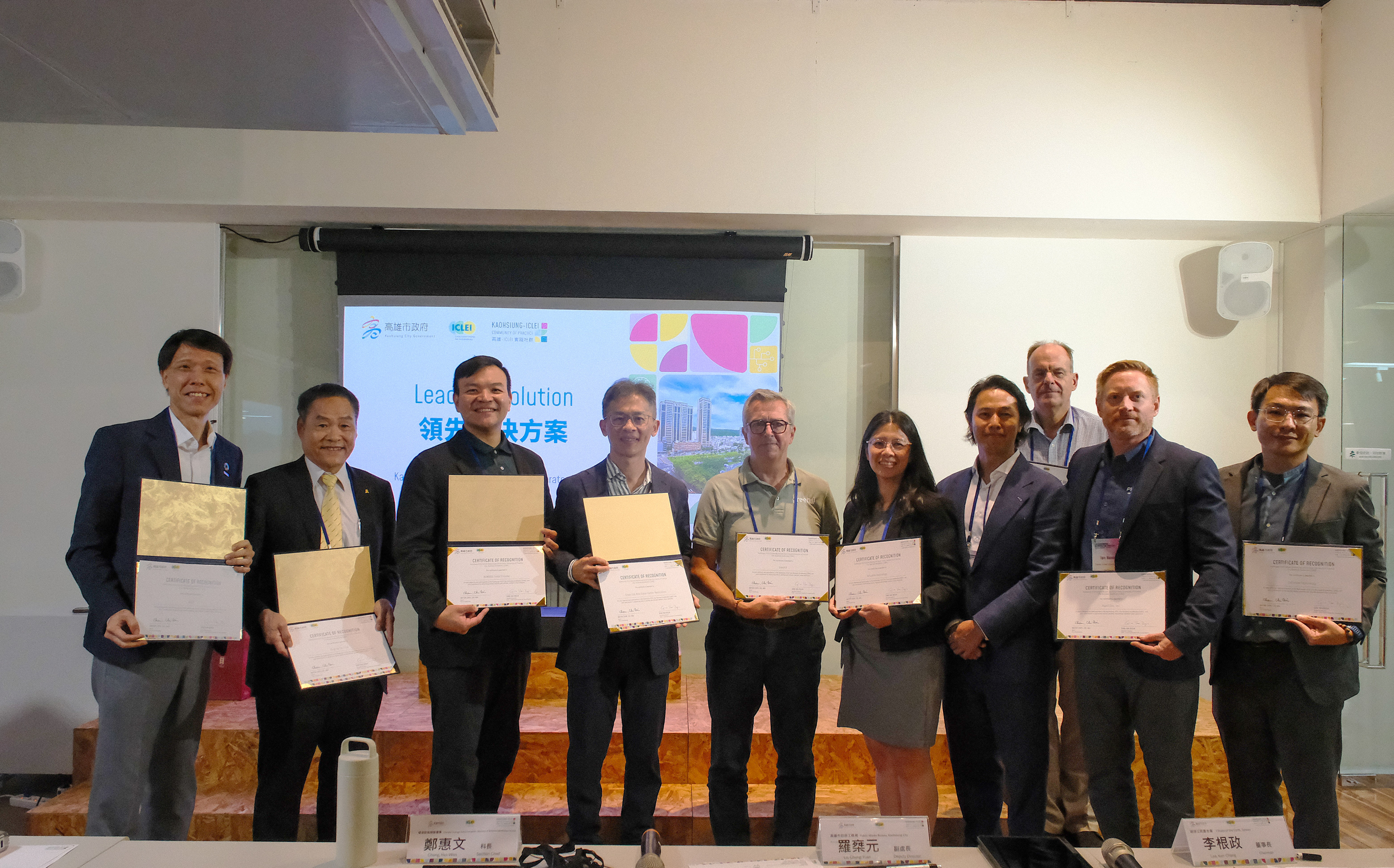
From the nine approaches presented, three solutions were recognized for their potential to advance different dimensions of Kaohsiung’s urban nature agenda.
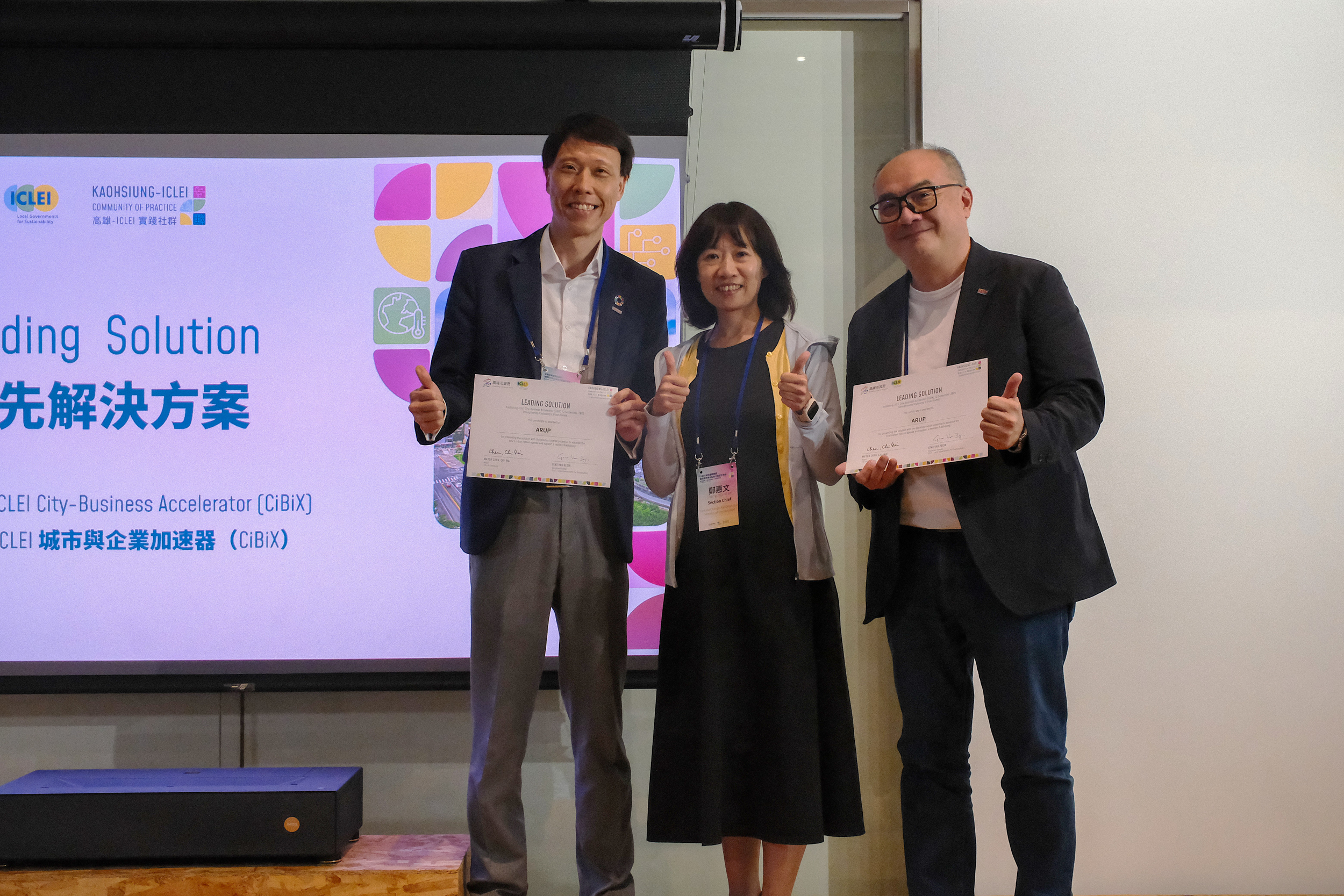
Leading Solution, ARUP: Its approach offered an integrated pathway from understanding urban heat to identifying and testing practical responses. Through its UHeat platform, climate modelling can be combined with social and economic data to identify areas most exposed to heat and compare different interventions before moving to pilot projects. By also considering the costs and benefits of different options, the approach could help Kaohsiung prioritize resources and turn climate evidence into targeted investments and action.
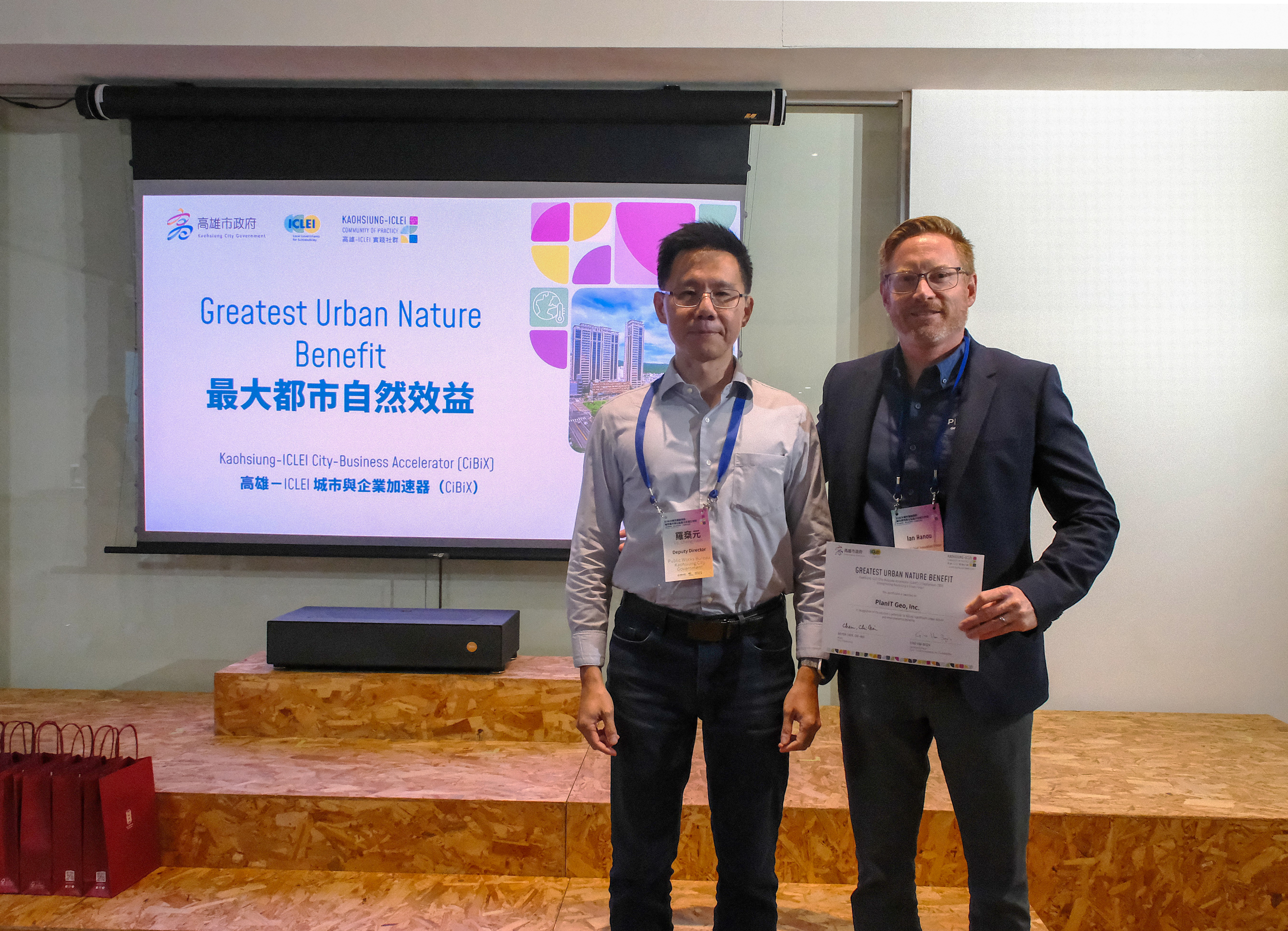
Greatest Urban Nature Benefit, PlanIT Geo: It brought together a multidisciplinary consortium covering different stages of urban forest management. Its approach combines mobile LiDAR scanning and city-wide assessment with master planning, biodiversity strategies and financial planning. Beyond understanding Kaohsiung’s existing tree assets, the proposal provides a pathway for expanding and managing the urban forest over time, while translating the 3-30-300 rule into measurable and financeable projects.
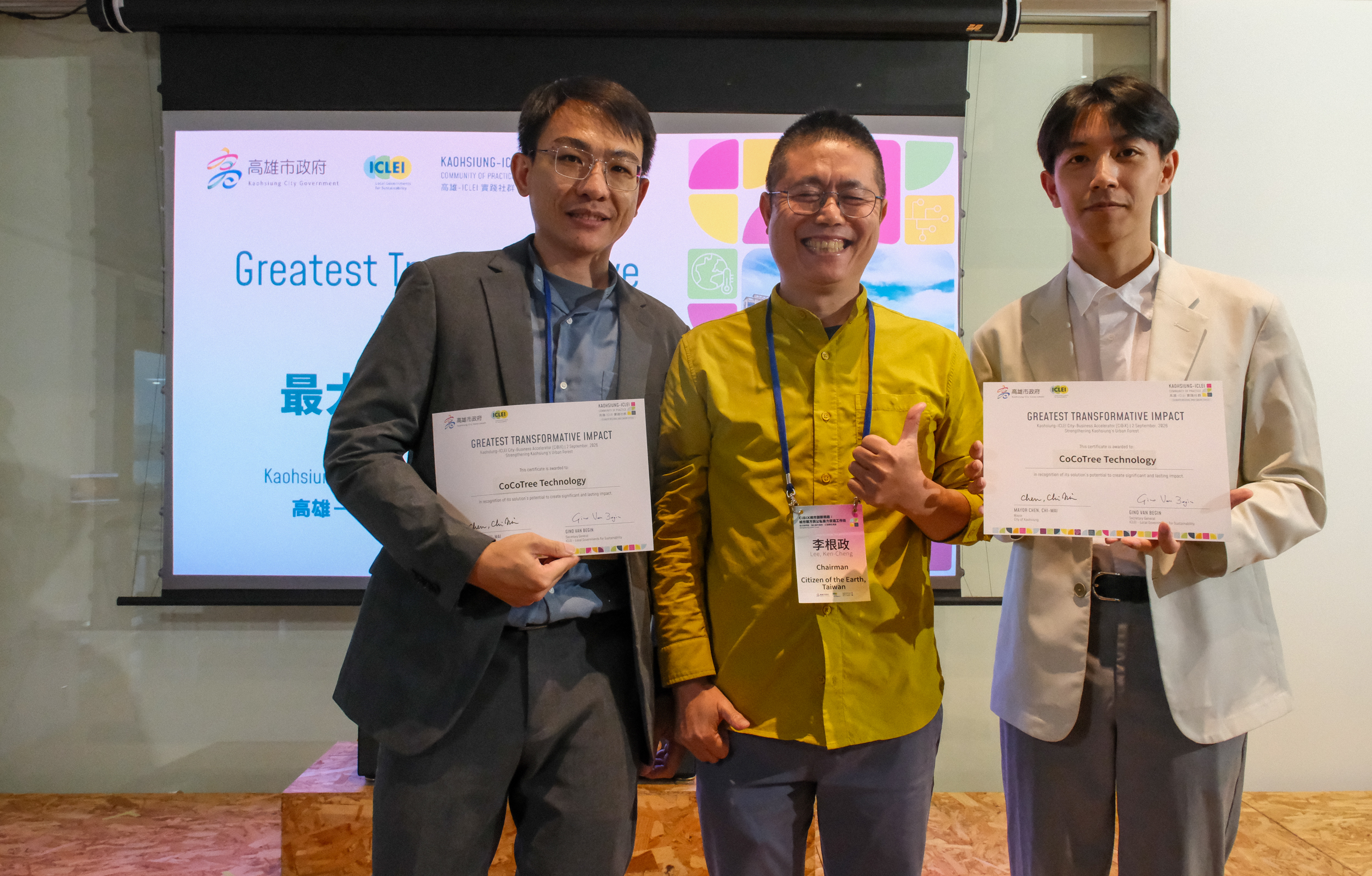
Greatest Transformative Impact, CoCoTree Technology: By combining satellite imagery and digital modelling with information on heat, biodiversity and population demographics, its platform could help Kaohsiung understand not only where trees are, but where urban greening could deliver the greatest benefits for climate, health and biodiversity. The approach also brings an important social dimension. By examining shade and green infrastructure around schools, parks and sidewalks alongside demographic data, the city could identify areas where children, older residents and other communities may be more exposed to heat or have less access to urban nature.
A five-member jury bringing together city, national government, civil society and ICLEI expertise assessed the proposals: Li Gen-Zheng, Chairman of Citizen of the Earth, Taiwan; Luo Cheng-Yuan, Deputy Director of the Parks Office, Public Works Bureau, Kaohsiung City Government; David Jácome-Pólit, Head of Resilient Development at the ICLEI World Secretariat; Yi-Sheng Yang, Executive Director of the ICLEI Kaohsiung Capacity Center; and Hui-Wen Chen, Section Chief in the Adaptation and Resilience Division of Taiwan’s Climate Change Administration, Ministry of Environment.
CiBiX creates a pathway beyond the pitch
Selection, however, is not where CiBiX ends. As Mr. Huang explained, the next step is to connect promising teams with relevant city departments, companies, professional organizations and communities, and explore opportunities for solutions to be tested or demonstrated locally.
This CiBiX edition is part of the Kaohsiung–ICLEI Climate Neutral and Smart Cities Community of Practice, a network of leading cities chaired by Kaohsiung and committed to achieving climate neutrality and advancing innovation and smart city strategies. The workshop also creates opportunities to continue exploring the solutions presented in Kaohsiung through local connections and potential collaboration.
The nine proposals brought different capabilities to the same urban nature challenge, showing that there is no single route to building a thriving urban forest. That diversity is precisely the opportunity CiBiX creates. A city brings a concrete challenge; companies bring different ways of solving it; and direct exchange helps both sides understand what it would take for an innovative solution to work in practice.