
Only 15 percent of SDGs are on track. At the UN High-Level Political Forum, cities showed a way
With less than five years remaining to deliver the 2030 Agenda for Sustainable Development, this year’s United Nations High-Level Political Forum on Sustainable Development (HLPF), convened under the auspices of the Economic and Social Council, marked a pivotal moment for assessing progress and defining what comes next.
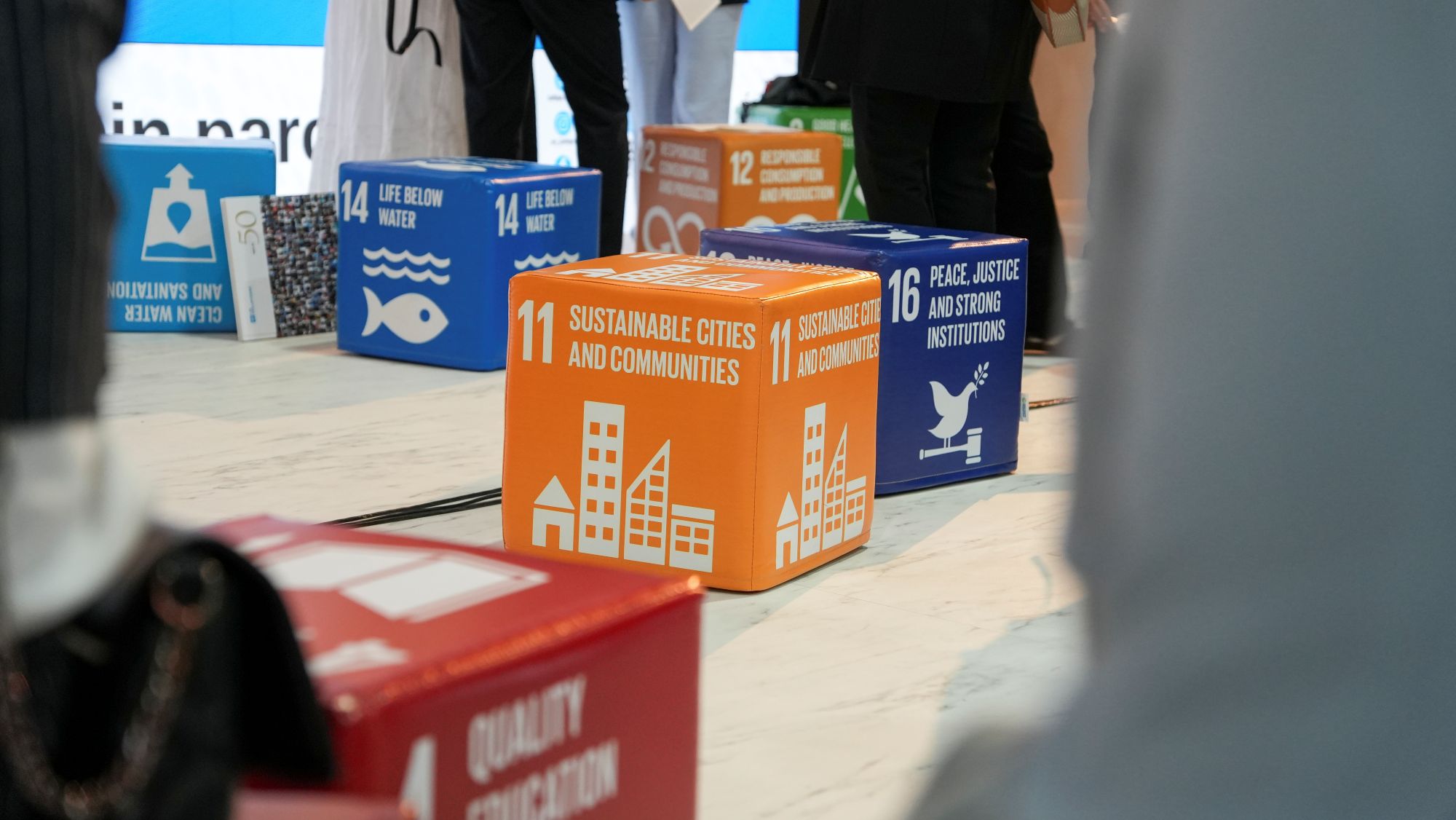
Held under the theme “Transformative, equitable, innovative and coordinated actions for the 2030 Agenda for Sustainable Development and its Sustainable Development Goals (SDGs) for a sustainable future for all,” the Forum (7-15 July, New York City, U.S.) conducted in-depth reviews of SDGs 6 (Clean Water and Sanitation), 7 (Affordable and Clean Energy), 9 (Industry, Innovation and Infrastructure), 11 (Sustainable Cities and Communities) and 17 (Partnerships for the Goals).
Opening the Forum, Annalena Baerbock, President of the 80th Session of the United Nations General Assembly, acknowledged that “we are not on track,” to achieve SDGs. Her statement echoed the findings of the newly launched The Sustainable Development Goals Report 2026, which shows that of the 139 targets with sufficient trend data, only 15 percent are on track.
Ms. Baerbock reminded delegates that “this Forum is a place to share stories on what is working, and work together, and to learn from one another,” emphasizing that accelerating progress will depend on stronger cooperation across all levels of government.
This is exactly the message that ICLEI brought to this high-level space. Represented by a delegation of over 20 mayors and local representatives from Germany, Türkiye, Portugal, Brazil and the United States, alongside ICLEI experts, discussions throughout the week emphasized the indispensable role of cities and regions in delivering global commitments and helping shape the international framework that will succeed them.
From implementers to co-creators
This message came into sharp focus throughout the week’s agenda convened by United Cities and Local Governments (UCLG) and the Global Taskforce of Local and Regional Governments, of which ICLEI has long been a partner helping ensure that the territorial perspective is integrated into global development agendas.
At the Local and Regional Governments Forum for the SDGs (14 July) mayors, governors and international partners explored how subnational governments can play a more substantive role in implementing and shaping the global sustainable development agenda.
Dr. Eckart Würzner, Mayor of Heidelberg, Germany, and Chair of the UN Forum of Mayors highlighted local and regional governments as “a powerhouse of implementation,” while calling for closer collaboration between all levels of government.
Emily Jabbour, Mayor of Hoboken, New Jersey, U.S., drew on Hoboken’s experience building long-term resilience after Hurricane Sandy in 2012 to illustrate how local leadership, backed by financing and multilevel cooperation, can transform global commitments into tangible improvements for communities. She stressed that “cities are where the SDGs become tangible.”
The discussions also looked beyond 2030, arguing that local and regional governments should help co-design the next generation of global sustainable development frameworks rather than simply implement them. Voluntary Local Reviews (VLRs) and Voluntary Subnational Reviews (VSRs) were highlighted as practical tools for strengthening accountability while connecting local action with national and international reporting.
Localizing the SDGs
The case for stronger local leadership was reinforced during Local and Regional Governments Day (15 July), with the launch of the 10th Towards the Localization of the SDGs report by UCLG, on behalf of the Global Taskforce.
The report shows that although local and regional governments are responsible for delivering many of the SDGs, only 15 percent of Voluntary National Reviews meaningfully involve them. At the same time, it documents more than 300 local practices, demonstrating that cities and regions continue to drive implementation worldwide. ICLEI contributed to the paper on housing, mobility and energy (SDGs 11, 7 and 9) and co-authored the paper on localizing water and sanitation (SDG 6), with ICLEI’s experts Anton Earle and Moez Allaoui among the authors.
Presenting the paper, Matthew Bach, Regional Director of the ICLEI European Secretariat, said, “Local and regional governments must be at the heart of global water governance, with the mandate, financing and capacity to deliver. Achieving SDG 6 requires more than consulting them; it requires trusting them and recognizing their legitimate role in decision-making.”
Strengthening collaboration
HLPF also provided opportunities for ICLEI to strengthen partnerships and exchange knowledge with key international and local stakeholders.
Hosted at New York City Hall, ICLEI’s delegation met with Ana María Archila, Commissioner of the New York City Mayor’s Office for International Affairs, alongside other city representatives to exchange perspectives on housing, the energy transition, youth engagement, inclusive governance and the growing role of city diplomacy in addressing global challenges.
Additional bilateral meetings throughout the week, including an exchange with Ms. Baerbock further strengthened collaboration with UN partners and reinforced the importance of sustained cooperation across institutions and levels of government.
“Act with urgency”
HLPF concluded with member states adopting a ministerial declaration that called on governments to “act with urgency” to accelerate implementation of the 2030 Agenda through more transformative, equitable and coordinated action.
As discussions on the post-2030 agenda are already underway, local and regional governments are increasingly demonstrating that they are not only essential implementers of global commitments, but valuable partners in shaping them.
Through their proximity to communities and responsibility for delivering many of the SDGs, they show what progress looks like when global commitments translate into everyday life, and when the interconnected nature of the Goals is reflected in how policies are designed, financed and delivered.
Featured photo credit: ICLEI – Local Governments for Sustainability.


