
Cities are ready to act. What is needed to meet their transformative ambitions?
This blog was written by Jaume Marquès Colom and Barbara Riedemann, with contributions from Maryke van Staden and edited by Matteo Bizzotto, ICLEI World Secretariat.
Local and regional governments across the world, from large states and provinces to small cities, towns, and counties, have shown their climate ambition and are already acting. They are identifying priority projects to transition to clean energy, decarbonize transportation, improve building stock, restore ecosystems, and modernize water and waste systems, while building resilience to a changing climate. Yet many never move beyond the planning stage.
The challenge is ensuring they are supported to act, with finance flowing and finance systems working to enable them. The obstacle is rarely a lack of ambition. More often, it is the difficulty of accessing the technical project preparation support needed to turn ideas into investable projects.
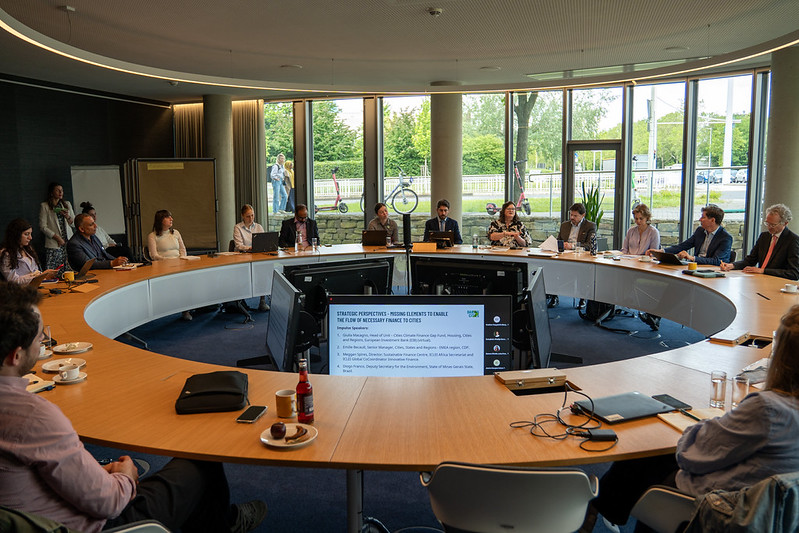
These challenges framed a central discussion at the Daring Cities 2026 Bonn Dialogues. During the “Beyond easy wins: Financing complex urban projects” roundtable, representatives from local and regional governments, development banks, international organizations, and financial institutions explored how climate finance must evolve for cities to deliver on their commitments. Rather than asking how to mobilize more funding, they focused on how to better enable implementation.
The missing link between ambition and implementation
Cities are not short of climate projects. They are short of projects that financial institutions consider investment-ready. As Giulia Macagno, Head of Unit for the Cities Climate Finance Gap Fund at the European Investment Bank, explained: “Good projects generally get financed; and by good projects I’m not saying good projects that are just good ideas, I’m saying well-prepared projects. This is still a key bottleneck.”
Turning local priorities into bankable proposals requires technical expertise, feasibility studies, financial structuring, and institutional capacity that many municipalities, particularly small and intermediary cities, do not have. Project preparation is one of the least visible but most important factors in whether climate ambitions become funded investments. Facilities such as the Cities Climate Finance Gap Fund (Gap Fund) help cities move from early concepts toward implementation, but participants agreed that countries need stronger national mechanisms to support municipalities throughout the process.
Building on this, ICLEI and the Gap Fund have launched a new Toolkit for Early-Stage Project Preparation, developed with cities in Africa and South America through the Gap Fund Step-Up Project. It helps local and regional governments assess capacity and data gaps, map stakeholders and investment risks, develop basic financial models, and create clearer pathways for early-stage project preparation.
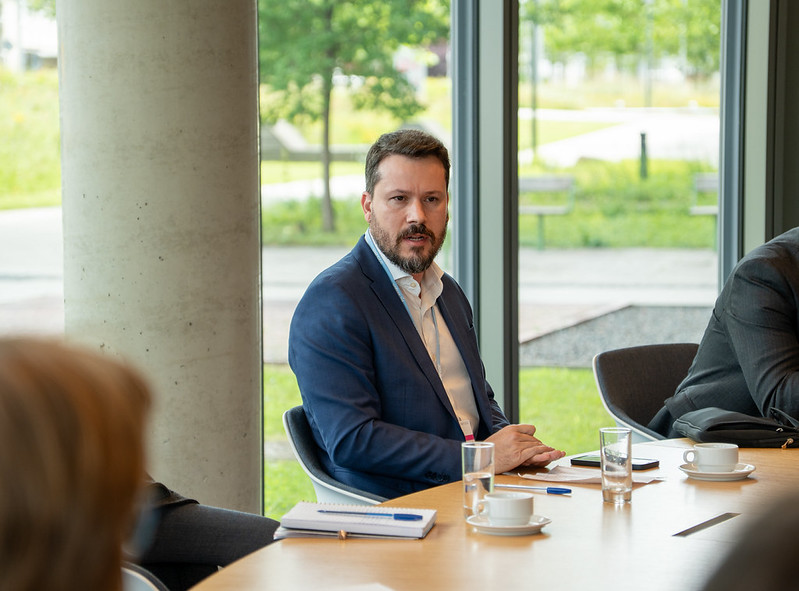
ICLEI Vice President Mohamed Sefiani, Mayor of Chefchaouen, Morocco, and ICLEI Portfolio Holder for Innovative Finance, described how the Gap Fund, with support from the Global Covenant of Mayors and ICLEI, helped his city move from planning to implementation through a pre-feasibility study on turning municipal waste into value. Chefchaouen had identified the project in its climate action plan, but the study provided the technical foundation to move forward. Sefiani stressed that this support is especially critical for intermediary cities in the Global South, where a growing but fragmented ecosystem of support can be hard to navigate. “City networks like ICLEI are really needed to support cities, especially in the Global South.”
At the state level, Diogo Franco, Deputy Secretary for the Environment of Minas Gerais, Brazil, pointed to the same gap: “The greatest challenge for us is to increase the capability of the municipalities in doing projects that fit the criteria for financing.” Working with municipalities and the state development bank, Minas Gerais has helped local governments identify priorities, strengthen technical capacity, and build a pipeline of projects that better meet financing criteria.
It’s not only about more money
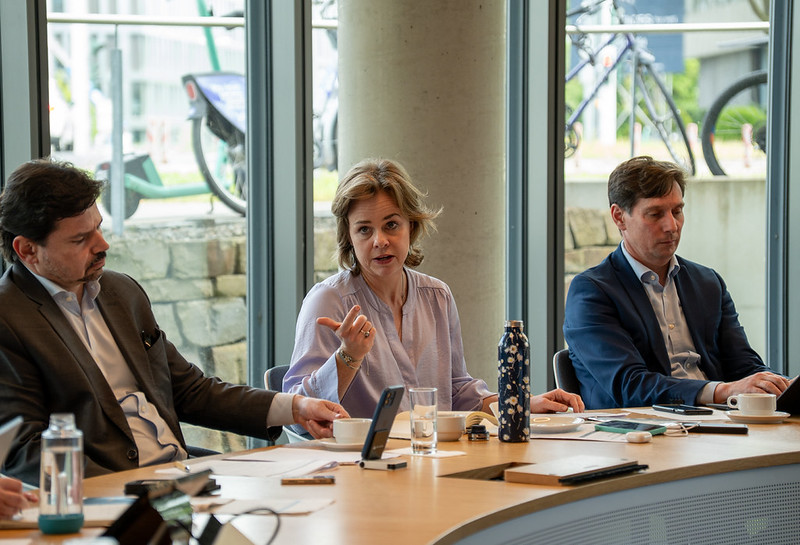
Calls for more climate finance are a recurrent feature of international negotiations, but participants argued the conversation must evolve. The issue is no longer only about mobilizing more resources. It is about ensuring finance reaches cities through mechanisms that reflect local realities and reduce investment risk. As Dr. Meggan Spires, Director of the Sustainable Finance Center at ICLEI Africa, put it: “It’s less about more money. It’s about getting it to the locals. It’s about quality over quantity.”
This requires an active role from the private sector. New approaches must use public resources strategically to unlock much larger private investment. Instruments such as blended finance, guarantees, and first-loss facilities can reduce risk and build confidence among commercial investors.
Dr. Spires illustrated this with Rwanda’s e-mobility project. Working with the Rwanda Development Bank and the Rwanda Green Fund, partners set up a facility that reduced the risk of loans for small and medium-sized enterprises and enabled commercial banks to finance electric motorcycle businesses. A year in, drivers were taking home 50 percent more each month, above the 40 percent the partners had projected. Not all cities have the fiscal and governance frameworks that enable innovative finance, and this is where international support can play a catalytic role.
Financing cities means financing systems
Urban climate action rarely fits neatly into a single sector, because cities function as interconnected systems. Yet financing often still treats projects as isolated investments. Participants argued that financing should instead support projects that deliver systemic environmental, social, and economic benefits.
For example, less than three percent of cities’ direct capital budgets support nature-based solutions, despite their importance for climate resilience. As Ingrid Coetzee, Director of Biodiversity, Nature and Health at ICLEI Africa, warned: “If you don’t address climate and biodiversity together, it can lead to trade-offs, maladaptation, and investments that undermine the very source of life, the ecosystems we depend on and long-term resilience.”
Projects can become more attractive investments when integration delivers multiple benefits. Felicity Spors, Director for Climate Strategy Delivery at the European Bank for Reconstruction and Development, described a river rehabilitation project in Moldova: “During the feasibility study we identified an opportunity for nature-based solutions. So we integrated it in. We did grey infrastructure, green infrastructure and adaptive components that made up the whole. That was more bankable than looking at each of them separately.”
Financiers can lead systemic transformation by investing in integrated, multisectoral projects that meet a broad range of local needs. Although this is a difficult task to bring to fruition, financiers are not alone.
Partnerships that turn projects into progress
Financing urban transformation is not a challenge for financiers alone. National governments, development banks, financiers, insurers, the private sector, city networks, and local and regional governments all have distinct roles in moving projects from concept to implementation. Yet navigating this growing ecosystem of support remains difficult for many municipalities.
Expanding project preparation facilities, building national pipelines of investment-ready projects, and fostering closer collaboration between development banks and city networks all emerged as critical steps. Strengthening multilevel governance was a recurring recommendation: Initiatives such as the Coalition for High Ambition Multilevel Partnerships (CHAMP) can help align national climate priorities with local implementation and keep cities central to climate finance discussions.
Cities have shown that they can identify priorities, develop ambitious climate solutions, and build local partnerships. The next step is ensuring that technical support and financial systems evolve just as quickly. To help bridge the gap between ambition and implementation, ICLEI is expanding its Transformative Actions Program (TAP), which supports local and regional governments in developing investment-ready projects, connecting them with project preparation facilities and financiers, and building partnerships across development banks, national governments, philanthropies, and the private sector.
As attention turns toward implementation on the road to COP31, meeting national and subnational climate ambitions will depend not only on mobilizing more resources, but on creating the pathways that let cities and regions act.
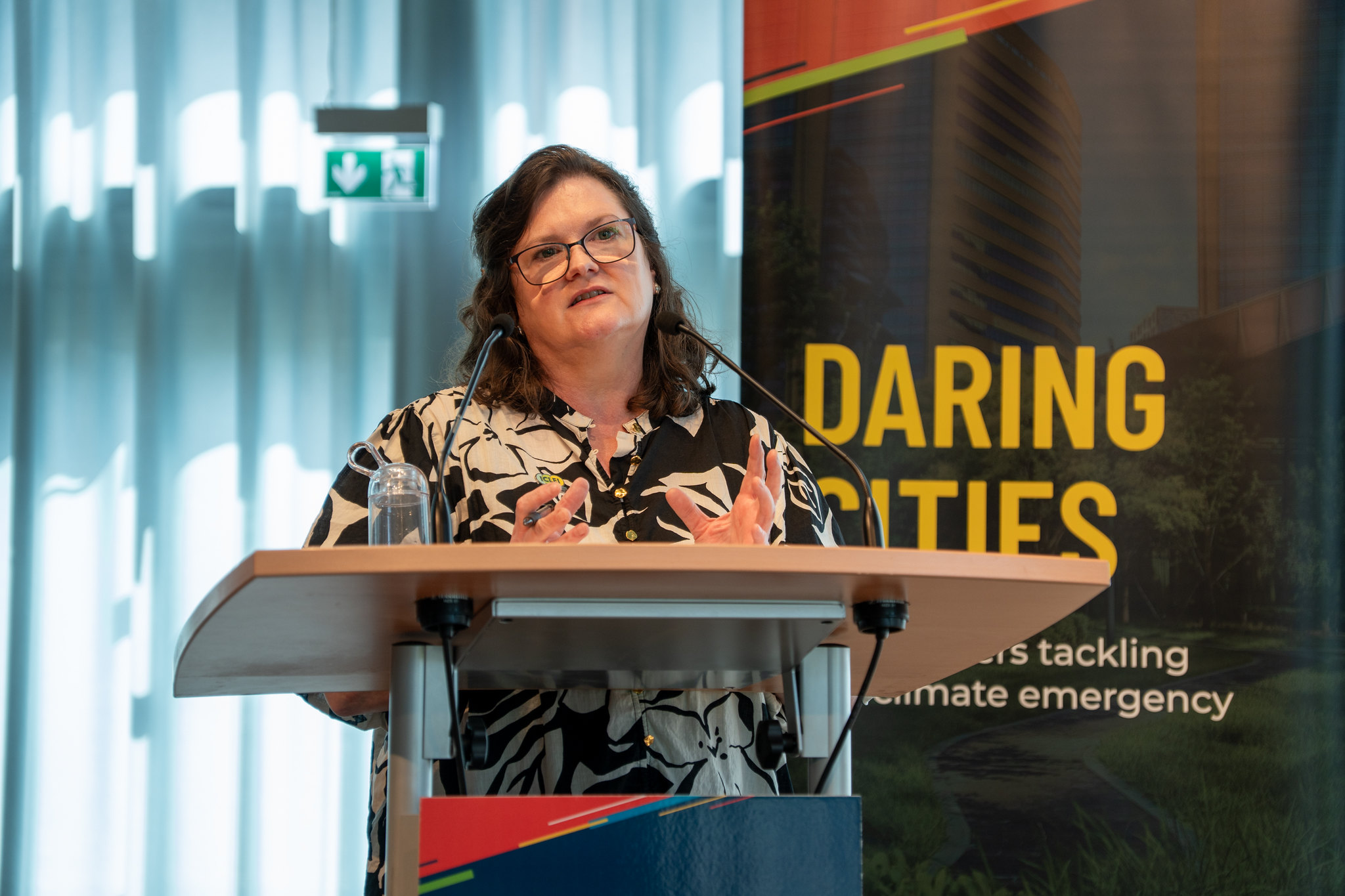
Featured image: Maryke van Staden, Director of ICLEI’s carbonn Climate Center. Photo credit: ICLEI – Local Governments for Sustainability.


