
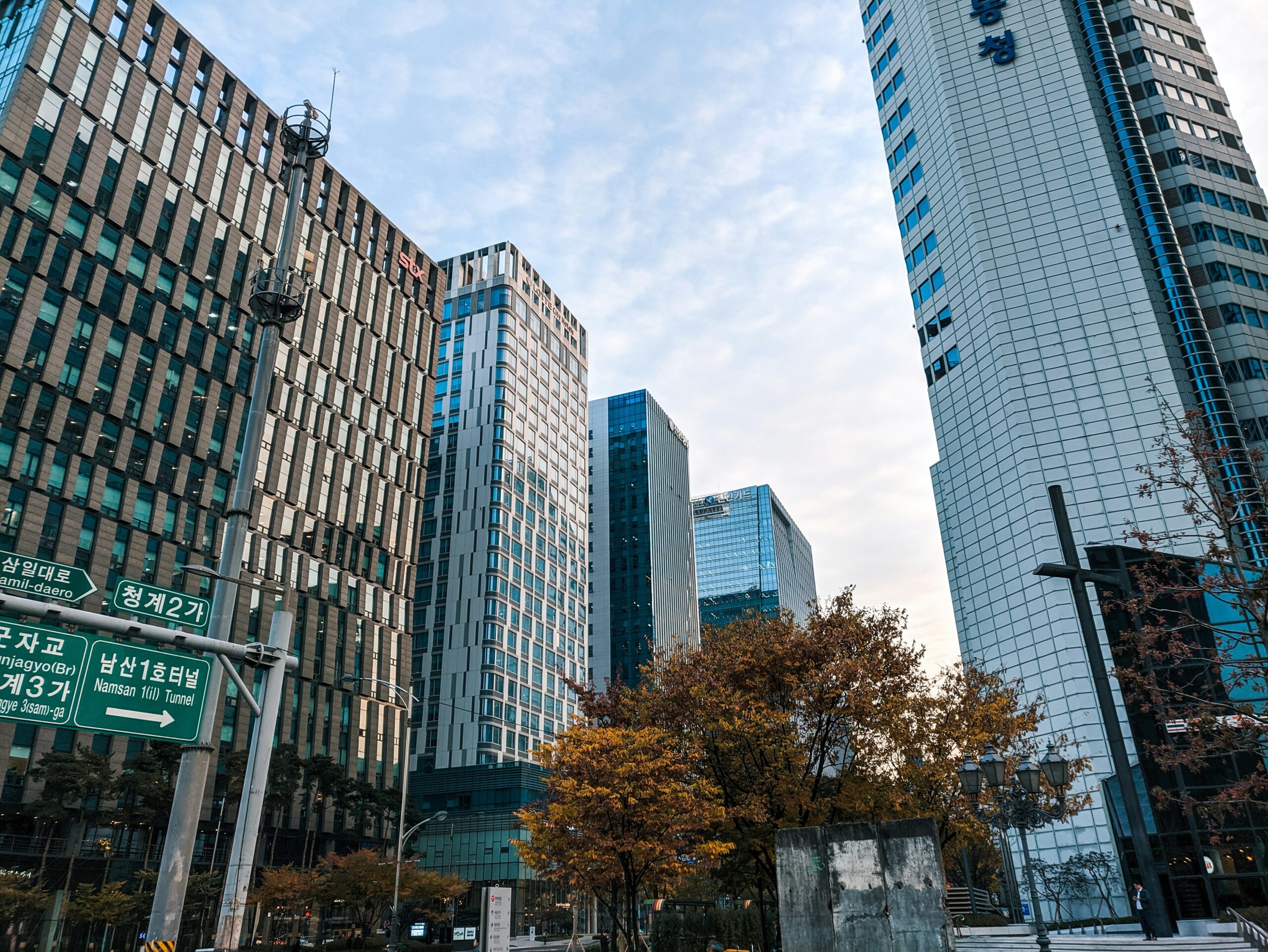
Seoul’s clean energy revolution is happening underground
This blog was written by Xiaoqian Zhou, with support from Yeajin Han, both from ICLEI East Asia Secretariat.
Imagine walking through Seoul on a freezing December morning and realizing the pavement under your feet is being gently warmed by heat pulled from 300 meters beneath the city. That’s not sci-fi. That’s Garak Market — right now.
Seoul is home to 9.7 million people squeezed into just 0.6% of the Republic of Korea’s land, yet it consumes 10% of the nation’s electricity. In a city this dense, every square meter counts. So Seoul stopped dreaming about giant wind farms and desert-scale solar fields. Instead, it’s building a renewable future that hides in plain sight.
Here are the three hidden power sources quietly transforming the city.
1. A power plant 300 meters beneath Seoul
In late 2023, Seoul made a bold bet: Geothermal energy would become one of its most important renewable sources. Why? Because it works 24/7, it needs almost no surface space and turns the Earth itself into a giant battery that never runs out.
- Today: 278 MW installed
- Target 2030: 1,000 MW of city-wide geothermal capacity, enough to heat and cool hundreds of thousands of homes.
The flagship project, Garak Agricultural Wholesale Market, is set to host the Republic of Korea’s Korea’s largest geothermal system. As the country’s largest market for agricultural and seafood products, the complex spans several buildings, including Garak Mall, where geothermal was first introduced in 2015. Since then, it has delivered monthly savings of about KRW 25 million compared to conventional systems and has reduced greenhouse gas emissions by 1,904 tonnes of CO₂ annually.
Subsequently, geothermal heating systems were also installed in other buildings in the market. When the final phase is complete:
- 17.6 MW of geothermal loops hidden underground of the Garak Market
- Vegetable Building 2, completed in 2024, supplies 98% of heating and cooling through eco-friendly energy such as geothermal (3,773 kW) and solar power (1,336 kW)
- 6,302 tonnes of CO₂ saved every year, like taking 1,400 cars off Seoul’s roads forever.
From 2025, every new large non-residential building over 30,000 m² must install geothermal or similar renewable heating for its underground area. And for existing buildings with aging geothermal systems, the city will cover up to 70% of replacement costs.
2. Turning sewage into electricity
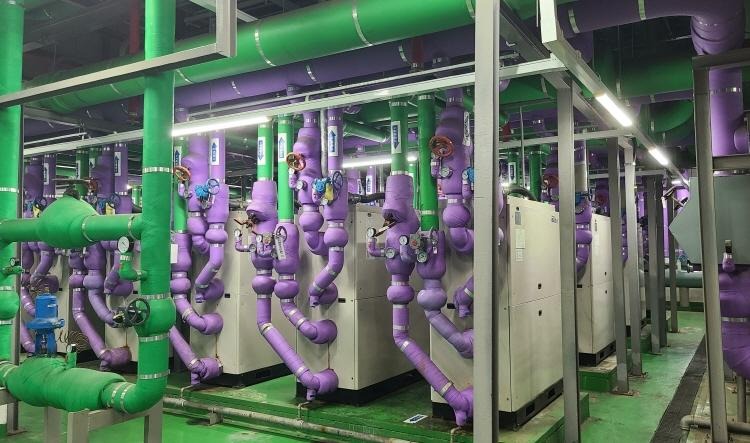
Seoul’s four major water-recycling centers—including Amsa Arisu and Magok—treat millions of liters of wastewater daily and generate significant amounts of biogas in the process. Rather than simply flaring this gas, the city is installing high-efficiency fuel cells. Waste gases from the sewage treatment process are also used to produce green hydrogen, which then fuels the fuel cells that convert biogas directly into electricity and usable heat. In this way, waste becomes a valuable energy resource.
By 2030, these centers alone will host 600 MW of fuel-cell capacity, enough to power hundreds of thousands of homes with genuinely renewable energy and almost zero extra land. The heat stays on-site to keep the treatment process running efficiently, and any surplus power feeds straight into the grid. It’s one of the cleanest, most circular energy systems a megacity can build.
3. Solar that disappears into skyscrapers
Since 2018, Seoul has supported the installation of mini solar power plants on the roofs of homes and buildings. What began as a balcony mini-solar rollout has become a lasting source of household power: today, hundreds of thousands of apartments generate their own electricity with compact panels no larger than a window.
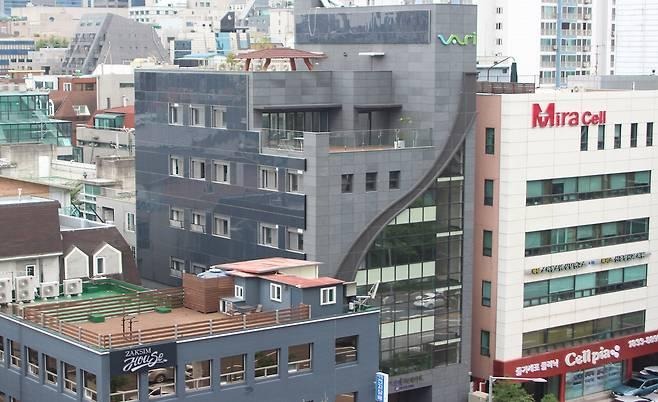
Now, Seoul is taking the next step with Building-Integrated Photovoltaics (BIPV): Photovoltaic cells integrated into the building envelope as structural elements—seamlessly forming windows, walls, and façades.
Since 2020, the city has offered subsidies of up to 80%. Seven buildings already shimmer with invisible solar skin, and three more will join them by 2025.
Lessons for megacities
Seoul’s approach demonstrates to other major cities that you don’t need vast open spaces to embrace sustainability. By focusing on practical solutions, deep-earth heat pumps warming entire markets, biogas-fueled power plants tucked inside wastewater facilities, and solar seamlessly blending into high-rises, the city makes green innovation fit the urban landscape.
This strategy is projected to nearly tripling renewable capacity by 2030 without disrupting daily urban life. This is a blueprint for any dense metropolis: Start with subsidies and mandates, leverage existing infrastructure, and scale up reliable, unobtrusive solutions.
Seoul is also sharing data and lessons learned through global forums, helping other cities adapt similar approaches to their own contexts. In a place with almost no unused land left, it’s a compelling example of how climate solutions can be ambitious, and still feel like a natural part of the skyline.


