The gap that rarely gets counted: Gender data in climate risk and vulnerability assessments
As climate hazards accelerate globally, so does the need for local and regional governments to adapt to these risks. As a precursor to disaster risk management, these governments are increasingly turning to Climate Risk and Vulnerability Assessments (CRVAs) to understand their risk profile and make informed decisions around where limited time, resources, capacity, and budgets are allocated. In other words, it becomes a question of what the local and regional governments’ priorities are and how these powerful tools, used for mapping local hazards, tracking historical data, and evaluating physical or social vulnerabilities, are being used so that the most at-risk groups are not left out of the picture.
But that picture is often incomplete.
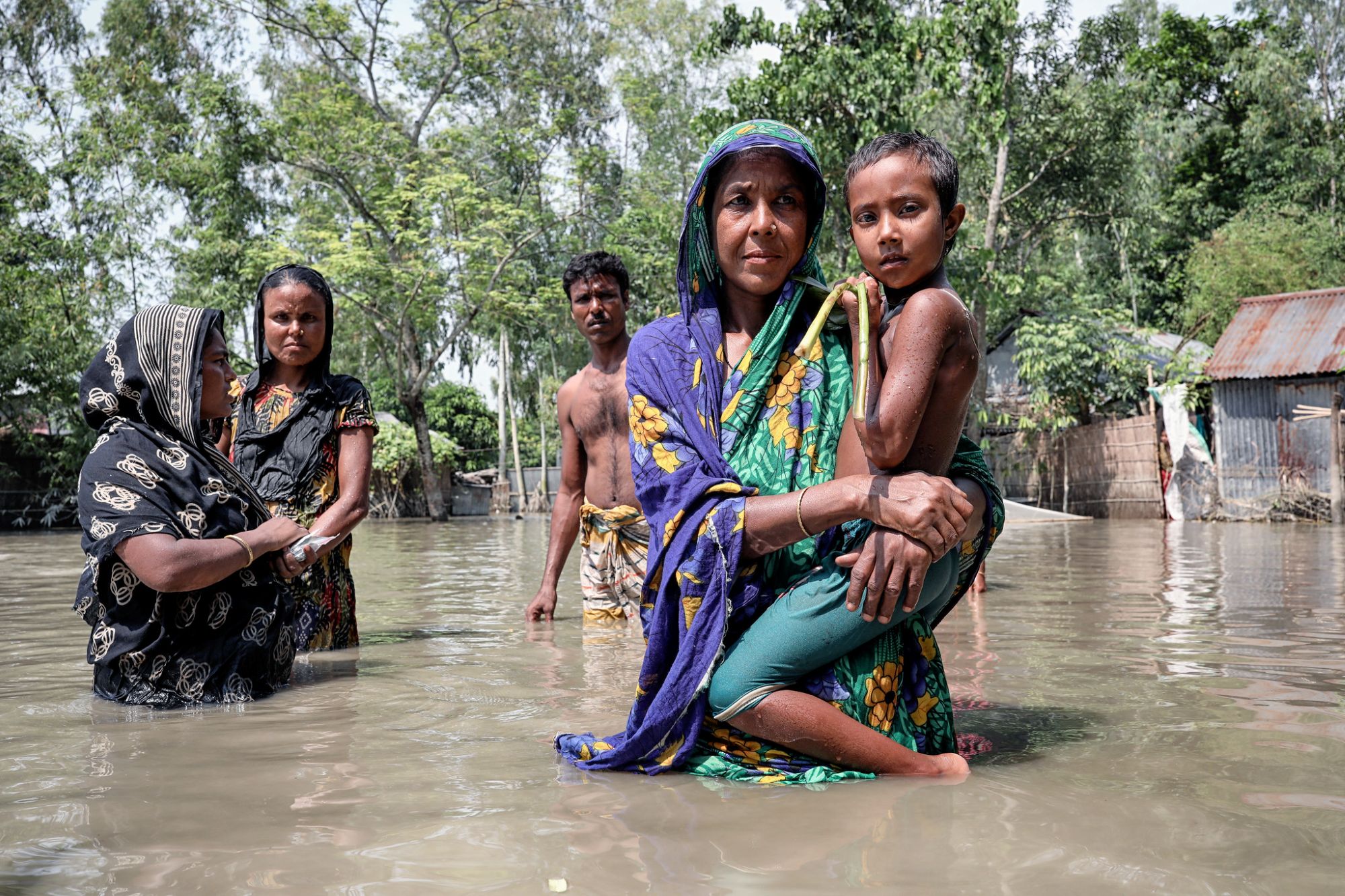
For most CRVAs, the standard has been to treat disasters as gender neutral on the assumption that they affect everyone equally. As a result, all too often these studies conclude with gender-blind results. Except, while climate hazards affect everyone, their impacts are not felt equally. Gender-neutral data cannot account for the power dynamics, socioeconomic structures, and lived experiences that shape how people cope with extreme weather.
Without gender-disaggregated data in CRVAs, local and regional governments run the risk of producing gender-blind adaptation strategies and poor disaster management plans that are not shaped by women’s experiences. As such, long before a climate hazard is on a government’s radar, the existing patriarchal structures have already determined the disaster experiences of urban women.
How the gap shows up
In the ex-ante case, for example, this disparity can be shaped by economic barriers where women are more likely to live in poverty, work in the informal economy, or lack the financial means and resources to evacuate. Gender norms are also a limitation, where women are expected to be the primary caregiver of children, relatives, the elderly, and the disabled.
During the event itself, the lack of gender-disaggregated data can also be embodied in the design of emergency shelters and decision-making. Around the world, women make up 36% of local government officials and only 10% of senior architecture and urban planning positions, which may result in emergency shelters usually being designed without gender-sensitivity in mind. Emergency shelters that don’t account for gender-sensitivity during a crisis can leave women, children, and LGBTQIA+ individuals feeling unsafe and disregarded by a lack of access to basic menstrual products and health services. The lack of safety women feel during a disaster is not limited to the event itself, but extends to the increased gender-based violence that often occurs as a result. In the midst of social disruption during a disaster, domestic violence and female homeless shelters close, emergency services are overwhelmed by casualties, and record-keeping stops . These vulnerabilities are further compounded by intersectionality, where race, ethnicity, age, disability, economic status, sexual orientation, gender identity, and refugee status can intersect and heighten an already precarious situation.
You can’t manage what you don’t measure
The issue with data gaps is that the inequality they produce never gets counted as a reason to change course. In other words, the absence of gender-disaggregated data, due to it being regarded as complicated, costly, or unnecessary, then becomes the justification for not collecting it because those reinforced inequalities are not being measured. You can’t manage what you don’t measure, and without measuring, a baseline can’t be established.
Part of the reason why the dialogue around the gendered impact of climate hazards has become more mainstream is due to the first systematic, quantitative study in 2007, which examined the socio-economic and higher mortality rate for women post-disaster across 141 countries from 1981 to 2002. Up until that point, little information about gender disparities and climate hazards mortality was understood or taken seriously. That changed when the numbers spoke for themselves.
As highlighted by the Sendai Gender Action Plan, good disaster risk management needs good data collection from the beginning. Decisions happen when they are backed up by numbers, and while qualitative data can be a powerful tool for surfacing issues, ultimately narratives aren’t going to be enough to prop up policies and drive change.
Where to start
Quezon City, the Philippines, shows what this looks like in practice. Under its Disaster Risk Reduction and Management Plan (DRRM) 2021-2027, the city has set a quota for girls in its community-based Youth DRRM Program, constructed transitional shelters that are friendly to children, children with disabilities, and women, and has made efforts to provide supplementary food for nutritionally at-risk low-income pregnant women and children.
At the same time, quality data is difficult to collect, and taking into account informal settlements, the figures become even more challenging, time-consuming, and expensive. But why should local and regional governments start from zero or go about this alone? There are several ways to approach this:
1. Local and regional governments can improve the current data infrastructure by building gender-disaggregation into their already existing data collection practices. This can come in the form of updating demographic metrics in their census, informal settlement surveys, or post-disaster damage assessments.
2. Partnerships with the private sector, national statistics offices, academia, and civil society such as women’s, environmental, and community-based organizations can be hugely crucial to bridging the gender data gap. The former is especially relevant as they may possess in-house expertise with internal modeling tools that can calculate proxies in the absence of local, granular data.
3. Budgeting for gender-disaggregated data and treating it as a resilience line item. It’s not only a matter of being accountable to half of a government’s population, but the urgency around gender-disaggregated data is also quickly becoming non-negotiable for accessing finance from International Financial Institutions (IFIs). Looking to support their insufficient budgets with external finance, local and regional governments that prioritize gender-disaggregated data are considerably well-received by IFIs in an increasingly competitive landscape for climate and resilience finance.
Somewhere in the future
At this point in time, the CRVA canvas may not illustrate a complete picture. Beyond the gender-disaggregated data, the intersectionalities, informal “invisible” settlements, and socioeconomic statistics needed to paint a more vigorous, evidence-based image may continue to elude even the most pragmatic. However, local and regional governments should know that creating a more resilient society cannot be achieved without advocating for a more just, equitable one. In a polycrisis world where climate hazards are becoming the norm, robust disaster risk management should be a priority on every mayor’s list, and quality data that overcomes its gender blindness will be vital to taking that step.
Somewhere in the future, risk assessments will standardize this practice, and the question of who gets overlooked in CRVAs will not have an answer.
There won’t need to be one because no one will have been left out to begin with.
Featured photo: UN Women/Mohammad Rakibul Hasan