
What cities need to unlock the net-zero transition: Lessons from the Kaohsiung-ICLEI Community of Practice
Cities consume over 70% of global energy and account for more than 60% of carbon emissions. With accelerating urbanization, cities are a focal point for climate challenges, but are also the core of the solution. Moreover, efforts towards net-zero in cities are unfolding against a backdrop of compounding crises: geopolitical tensions, supply chain disruptions, inflation, and the very real energy security threats embedded in our continued dependence on fossil fuel supply chains.
Across all levels of government, the energy transition is no longer purely an environmental shift, but a question of long-term economic stability. Increasingly, a transition built on domestic renewable resources, energy efficiency, and resilient infrastructure is also a transition toward economic resilience and energy security.
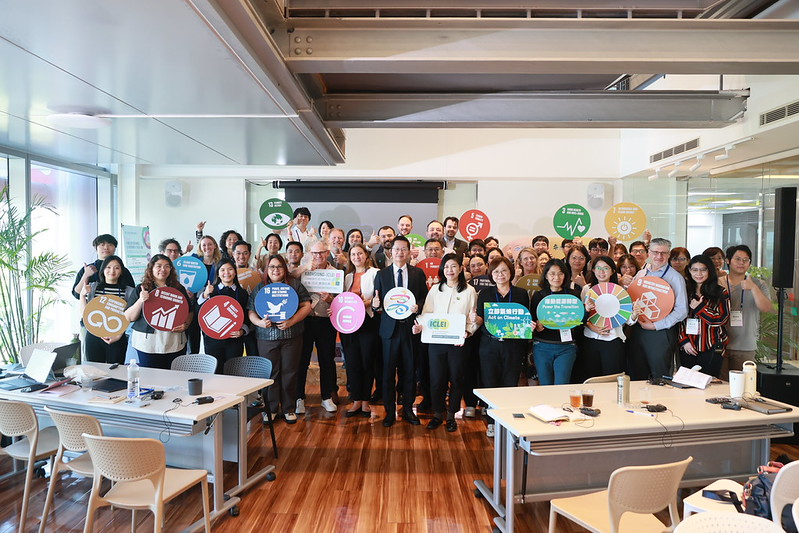
Sitting at the intersection of heavy industrial legacies and rapidly growing clean tech sectors, cities in the Asia-Pacific region are uniquely well placed to show what an effective transformation to net-zero looks like in practice. However, cities cannot do this work alone – this is why cities across the Asia-Pacific region and beyond gathered in Kaohsiung as a part of the Kaohsiung-ICLEI Community of Practice (ComP) third in-person workshop series to discuss AI-supported climate action and implementation of the net-zero energy transition.
This workshop series gathered ten members from the ComP, including Goyang and Gwangmyeong, Republic of Korea; Kyoto, Japan; Adelaide and Newcastle, Australia; Quezon and Pasig, Philippines; Oakland, United States; Penang Island, Malaysia; and ComP host, Kaohsiung. At the second day of the March 2026 workshop series, held at Kaohsiung’s pioneering Net Zero Institute, ComP members exchanged ideas, learned about the latest innovations from global experts, and dove into practical explorations of how they can move from ambition to action amidst shared challenges and complexity.
Renewable energy is now more accessible and affordable than ever, energy-efficiency measures are well understood, and many of the necessary technologies are already available. The Kaohsiung-ICLEI ComP helps local leaders move from ideas to outcomes. The March workshop series emphasized collaboration, pragmatism, and implementation, including through ICLEI’s Sustainable Energy Transition Strategy (SETS) Serious Game exercise. The lessons that emerged can help guide cities globally as they move from ambition to implementation.
1. Renewables alone will not get us there
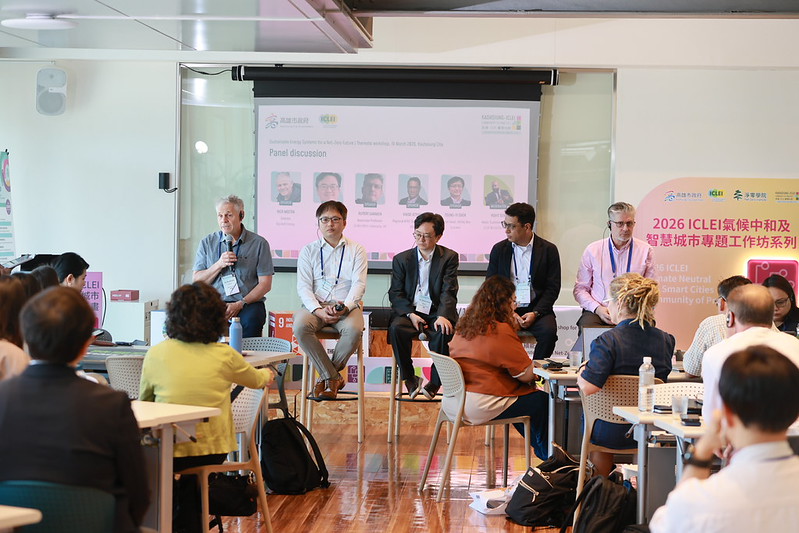
Renewables, such as solar photovoltaics (PV) and wind energy, are essential, but they are not sufficient. Workshop speakers consistently reinforced that a truly sustainable energy transition rests on three interdependent pillars: Renewable energy, energy efficiency, and enabling technologies, such as large-scale storage.
Rupert Gammon, Associate Professor at De Montfort University, UK, made a compelling case for green hydrogen as the critical missing piece for long-duration storage and industrial decarbonization: “Hydrogen is not only an energy storage medium but also a crucial raw material for decarbonizing industries such as semiconductor manufacturing, fertilizer production, and steel.” He framed hydrogen and batteries not as rivals but as complementary tools: Batteries for short-duration, light-load applications; hydrogen for seasonal storage, heavy industry, and long-distance transport.
Meanwhile, Nick Meeten, Managing Director of Applied Energy, New Zealand, offered a striking reframe of urban infrastructure. Cities already possess a hidden thermal energy network running beneath their streets. Wastewater, which stays stable in temperature and aligns closely with peak cooling demand, can become an energy asset rather than a treatment burden. “The biggest advantage is that the infrastructure already exists,” Meeten noted. “Cities simply need to shift their mindset.”
Vinod Jethani, Regional Data Center Lead at ABB, reinforced this message from a different angle. As data centers multiply across Asia driven by artificial intelligence (AI) and cloud services, cities face a fast-growing source of energy demand. His advice was direct: “True net-zero does not mean pursuing 100% green power from the start. Priority should be given to significantly reducing total energy consumption through active and passive measures, with renewable energy covering the remaining load.”
The lesson here for city leaders is that efficiency and enabling technologies must be prioritized in transition planning from the start, not added in later. That said, there is no need to reinvent the wheel. Existing technologies and proven business models can do a lot of heavy lifting, and proven solutions are ready for expansion, offering both short- and long-term benefits.
© ICLEI.
2. Harder-to-decarbonize sectors cannot wait
The Asia-Pacific’s manufacturing backbone means that cities in the region face a challenge many Western counterparts may not: The urgent need to decarbonize heavy industry.
Kaohsiung’s own story is instructive. A city built on steel and petrochemicals since the 1950s, it now carries the island’s heaviest industrial emissions burden. Due to the City of Kaohsiung’s ambitious leadership, it has embedded net-zero into its long-term governance framework, achieving its 1.2 GW solar PV target ahead of schedule.
As Chief Wang Zi-Xuan, Division Chief of Public Utilities at Kaohsiung City Government’s Economic Development Bureau, reflected: “If managed properly, net-zero will no longer be an extra burden but an excellent opportunity to promote urban upgrading, drive industrial transformation, and attract new types of investment.” She highlighted Kaohsiung’s industrial rooftop solar program as a concrete example of that shift in action. Around 3,000 factories in the city have now installed rooftop solar, contributing 848 MW of installed capacity. “Industry is not just a target in Kaohsiung’s transition; it is an active participant,” she said.
Chaiwon Kwon, Director of Korea RE100 Associates, reinforced this point from a market angle. Multinational supply chain requirements are now driving renewable energy adoption faster than many national policies. Climate action, in this framing, becomes a driver of competitiveness.
3. Justice, equity, and community acceptance are non-negotiable
A transition that sidelines communities will stall. This observation ran through every session of the day. Gwangmyeong City, Republic of Korea, offered a powerful example: Its energy cooperative model centers residents not as passive recipients of green infrastructure, but as “active co-constructors” of their city’s energy future. With nearly 500 members across two cooperatives, the model turns renewable energy development into a community asset, generating financial returns, building local ownership, and closing the gap between policy and public trust.
Pingtung County, where Kaohsiung is located, took a similar approach to solar expansion by using geographic information system (GIS) overlay analysis to avoid productive farmland, partnering with disaster-affected communities to transform flood-prone land into solar zones, and acting as a platform of institutional trust between residents and developers. The county achieved its ‘100% RE for domestic use’ goal ahead of schedule. That result came directly from governance that took social acceptance seriously from the outset.
Across participants, the joint takeaways were that sustainable energy transitions must be nature-conscious, socially-sensitive, and context-specific, so that communities don’t have to bear the burdens of the transition without sharing in its benefits.
4. The biggest barrier is governance, not technology
The most consistent message of the day was that “the technologies we need largely exist.” What is missing is the institutional architecture to deploy them coherently. Whether it was siloed data in water utilities blocking wastewater heat recovery or fragmented departmental mandates slowing solar permitting, the major obstacles outlined were largely structural.
Nick Meeten put it plainly: The energy transition today not only demands that local leaders use a whole-system perspective, but that those leaders be empowered them “with sufficient administrative authority” to mandate cross-departmental coordination. Vinod Jethani made the same point from the perspective of large infrastructure investment: “City and local governments must be forward-looking. From the very beginning, mega-projects must be integrated into the city’s overall energy and development planning, rather than reacting only when the grid is strained or community backlash occurs.”
Chaiwon Kwon emphasized the power that local governments can wield; even if most energy policy is driven by central governments, local governments play a critical role in the implementation of energy projects through site development, land use and spatial planning, and cross-sector coordination. They must also facilitate residents’ social acceptance of energy projects and act as the glue between various stakeholders.
Effective net-zero action needs genuine multi-level governance. Local governments can lead on land use, transport, and community engagement, while shifting systemic incentives often requires national momentum.
5. Simulating the transition: A Serious Game that felt very real
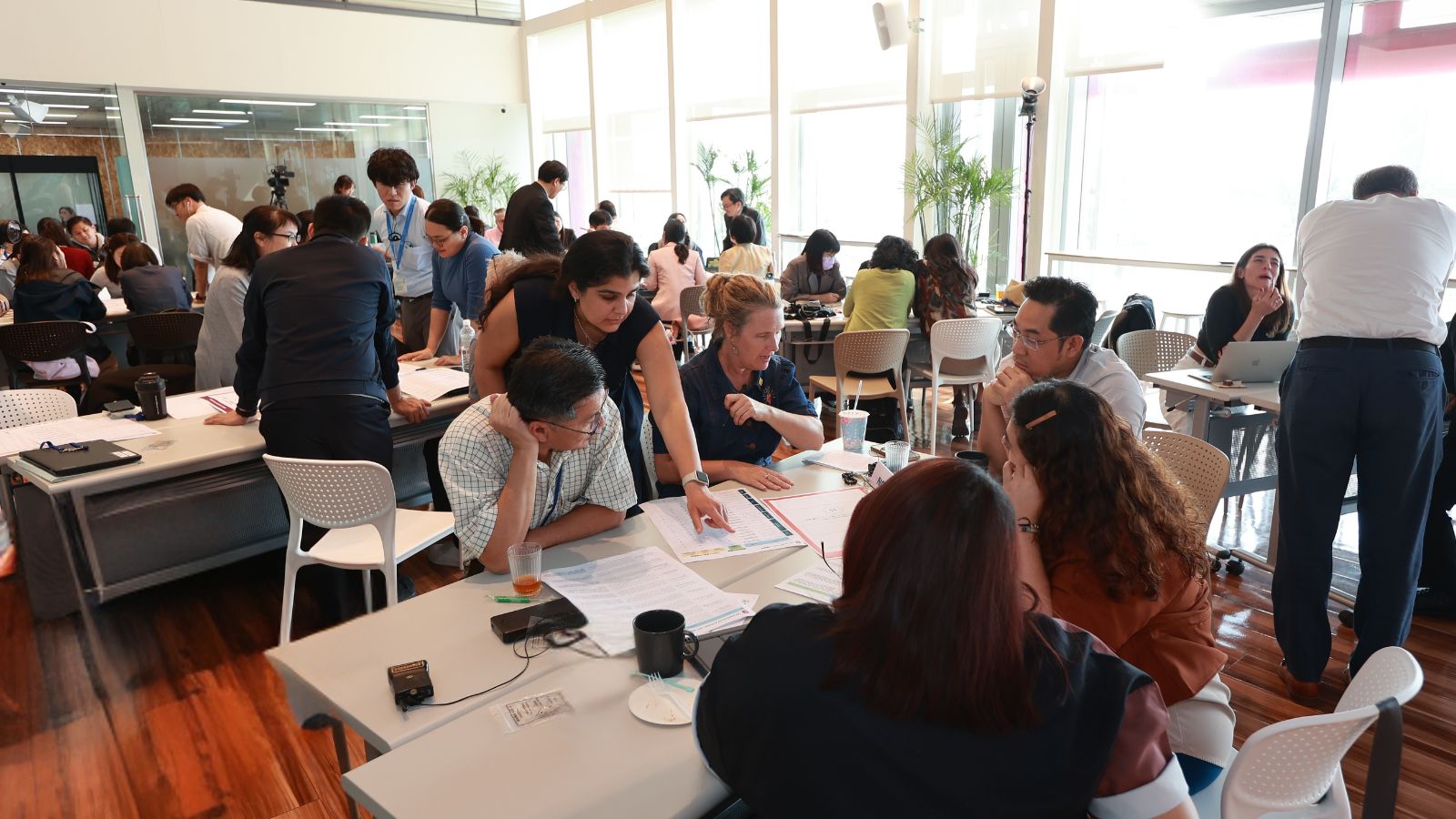
Navigating the complex reality of competing priorities in a fast-changing world requires a new outlook. Games are a great way to explore that complexity, allowing for the exploration of new ideas in a creative environment. The afternoon session used ICLEI’s Sustainable Energy Transition Strategy (SETS) Serious Game to bring these governance realities to life.
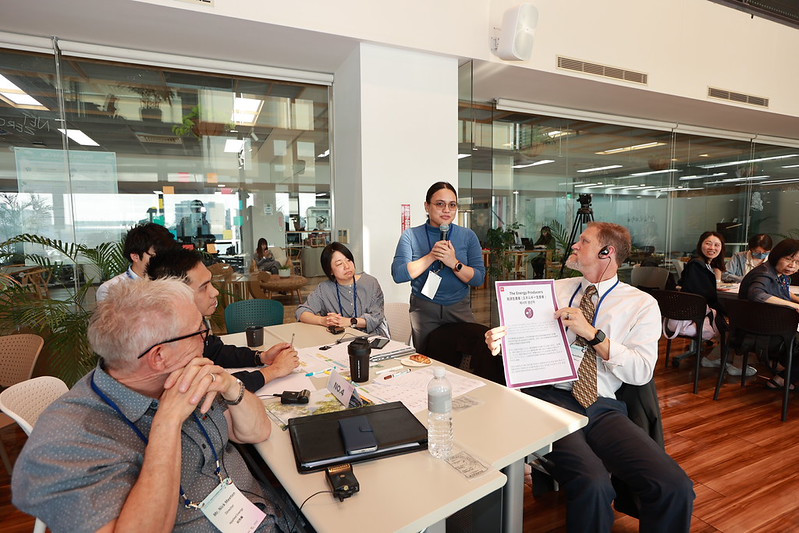
Participants role-played as stakeholders active in the energy transition, including local government, industry, civil society, utilities, and the transportation sector, based in a fictional city. Stakeholder groups then negotiated a pathway to net-zero within the reality of constrained financial and innovation resources.
As a stakeholder consultation and capacity-building mechanism, the Serious Game proved remarkably effective. It brought to the surface, in real-time, aligned interests, potential trade-offs, and the dynamics of governing a complex transition.
The game carried its own lesson: “The greatest hurdle in advancing urban energy transition is often not the technological options themselves. Rather, it is how to negotiate and compromise to forge a consensus-based and feasible pathway amidst limited resources, pressing time constraints, and the diverse interests of multiple roles,” reflected Rohit Sen, Head of Sustainable Energy team, ICLEI World Secretariat.
Moving forward together
The workshop was not an endpoint, but a launchpad. For local leaders and city officials navigating the complex politics of industrial decarbonization, the Kaohsiung-ICLEI ComP has built momentum as an invigorating space for candid exchange, mutual learning, and building the kind of partnerships that make hard transitions possible.
This work also reflects a broader shift: local and regional governments are becoming more involved in energy planning, alongside growing flows of finance and other resources to support implementation. The net-zero transition is not a solo act. As the Serious Game reminded us, either everyone wins together, or no one does.
Keep an eye on the ICLEI channels for more to come from the Kaohsiung-ICLEI Community of Practice.


