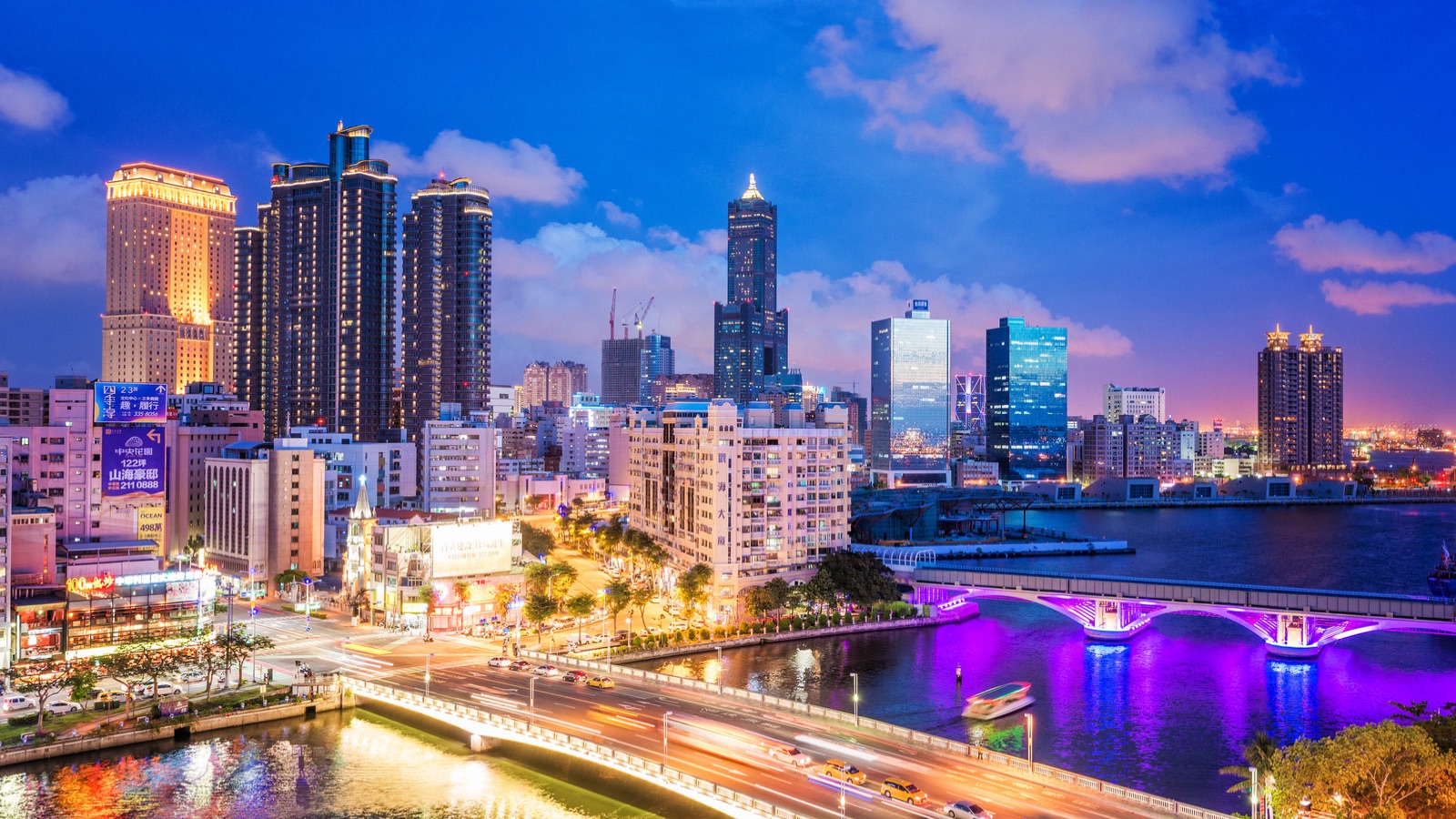
Kaohsiung leads by example through innovation and shared learning
This blog was written by Pourya Salehi, Maryke van Staden and Héctor Herrera from ICLEI World Secretariat
Kaohsiung is combining local climate action with a commitment to helping cities learn from one another. Six new case studies developed through the Kaohsiung-ICLEI Community of Practice share the governance choices and implementation lessons behind its transition, offering practical insights for cities pursuing climate neutrality and better lives for their communities.
Residents need reliable water and energy, accessible transport and opportunities to participate in decisions that shape their communities. Businesses and workers need a viable path through economic and industrial change. For Kaohsiung, a major industrial port city pursuing net-zero emissions by 2050, these priorities are closely connected. Its transition depends on bringing climate objectives into everyday public decisions and working with the people and organizations whose actions will determine the results.
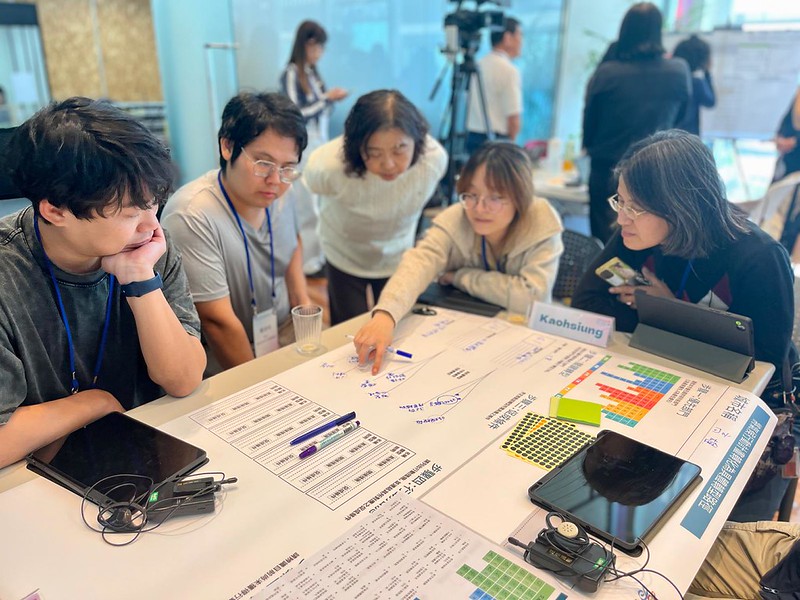
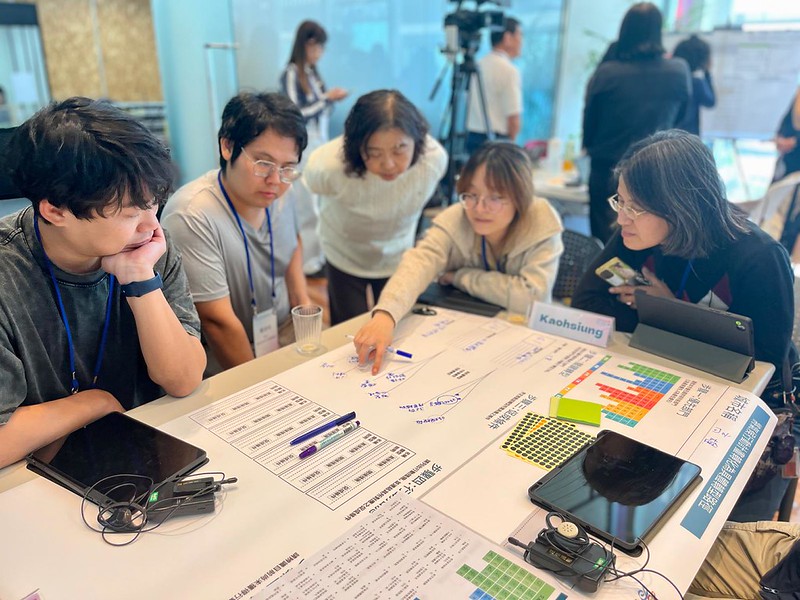
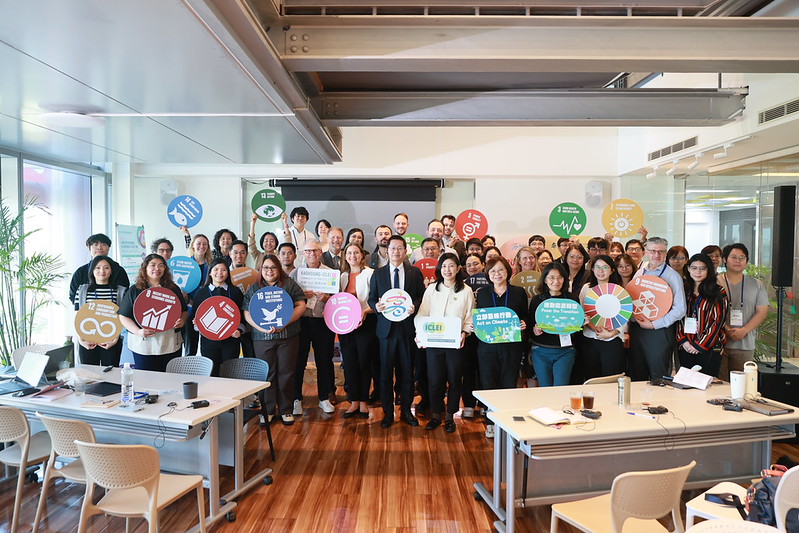
Kaohsiung carries this experience into its role as Chair of the Kaohsiung-ICLEI Climate Neutral and Smart Cities Community of Practice (ComP). Supported by the ICLEI World Secretariat and ICLEI Kaohsiung Capacity Center, the 2024-2026 program connects 15 cities and regions through capacity building and peer learning. It provides a setting for cities to work through shared challenges, including coordinating departments, financing action and engaging communities. Kaohsiung contributes to this exchange both by convening peers and by opening its own approaches to discussion, while learning from the experiences of other participating cities.
Developed through the ComP, this six-part series examines Kaohsiung’s work on carbon budgeting, water reuse, green finance, community action, public transport and energy governance. It complements the Good Practice Series, which draws on approaches across the wider cohort of ComP member cities. Together, the two collections connect a detailed understanding of change within Kaohsiung with the diversity of experience among its peers. They make the knowledge shared through the ComP available to a wider audience of city leaders, practitioners and researchers seeking approaches they can adapt to local priorities.
What the series brings to shared learning
The cases make the ComP’s focus on urban innovation concrete. A carbon budget introduces a process for managing emissions. Green bond refinancing changes how existing public investments are financed. A municipal task force helps agencies work towards shared energy objectives, while community initiatives connect environmental action with local knowledge and participation. These examples give cities practical ways to examine how innovation can improve governance and service delivery.
Their value for peer learning lies in explaining the conditions behind implementation: The responsibilities, partnerships, resources and capabilities that allow an approach to take shape. The cases cover different stages of progress, from established activities to initiatives whose longer-term outcomes are still developing. Sharing this experience gives cities a basis for discussing what is transferable, what needs adaptation and where further learning is needed.
Six case studies from Kaohsiung
Carbon budgeting and industrial decarbonization
Kaohsiung’s first municipal carbon budget, approved by the City Council in 2025, covers the 2025-2026 cycle. It translates climate commitments into sectoral reduction plans, bringing municipal agencies, major emitters, experts and civil society into the process. The approved budget sets a citywide net emissions limit for 2026 of 50.94 million tonnes of carbon dioxide equivalent. Its contribution is a recurring framework for allocating responsibilities and reviewing progress, supported by industry engagement and capacity building. For other industrial cities, the case offers insight into making climate targets part of routine governance.
Read the case study – Kaohsiung’s carbon budget: An innovative, participatory approach to industrial decarbonization
Reclaimed water and industrial water security
The North Kaohsiung Reclaimed Water Promotion Project connects wastewater treatment with industrial demand. The Ciaotou and Nanzi reclaimed water plants are designed to supply industries, including semiconductor manufacturing, with the aim of reducing competition between industrial and domestic water uses during droughts. Their combined planned capacity is 105,000 cubic metres per day, with the plants expected to reach full capacity in 2027 and 2030 respectively. The case provides an entry point for cities seeking to coordinate water reuse, industrial development and adaptation planning, with careful attention to water quality and phased implementation.
Read the case study – North Kaohsiung Reclaimed Water Promotion Project: Ciaotou & Nanzi Reclaimed Water Plants
Green bond refinancing and municipal finance
Kaohsiung’s green bond program illustrates how debt management can support sustainability objectives. Its initial issuance refinanced existing borrowing for the Mass Rapid Transit (MRT) Red and Orange lines at lower cost, creating interest savings that could support further environmental investment. By May 2026, the City Government had issued a cumulative NT$12.1 billion in green bonds. The refinancing approach draws attention to opportunities within existing municipal investments and borrowing arrangements. For cities with eligible assets and access to capital markets, it offers a way to connect debt management with environmental priorities and reduce the cost of financing sustainable infrastructure.
Read the case study – Green bond refinancing: An innovative finance approach for a green transition in the City of Kaohsiung
Sustainable Homeland and the Tangchang community
Tangchang brings the series to the community scale, connecting low-carbon action with environmental education. The community has achieved Silver certification under the Low-Carbon Sustainable Homeland framework and established a certified environmental education facility. Practical initiatives, including rainwater reuse for planted walls, make environmental stewardship tangible in everyday settings. The case illustrates how community initiative and municipal support can reinforce one another. It invites other cities to consider how guidance, learning opportunities and support for locally identified priorities can help residents participate in the transition.
Read the case study – Leveraging national policy to shift local behavior for community benefit: The Tangchang case
Circular Light Rail Transit and everyday access
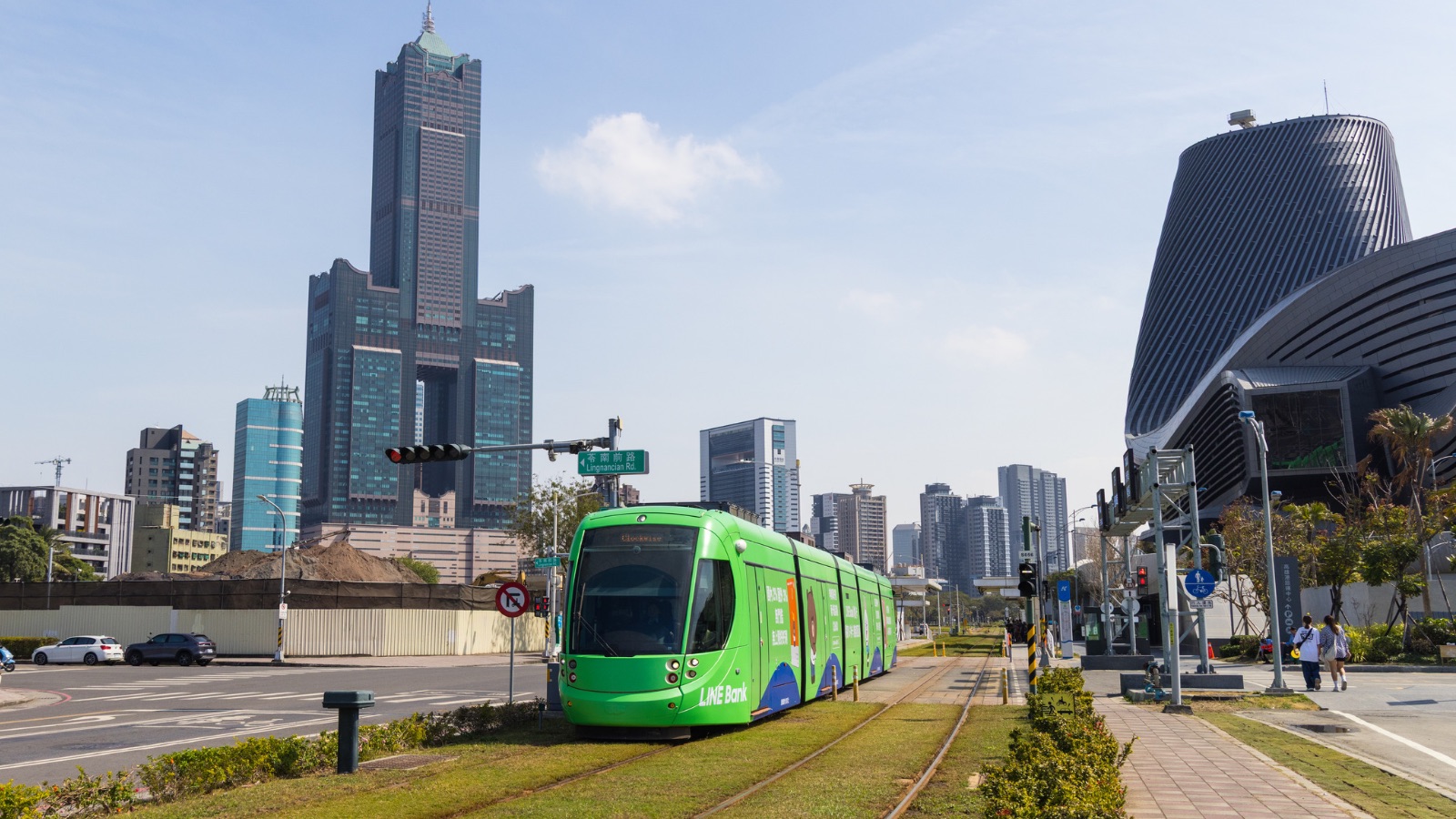
Kaohsiung’s Circular Light Rail Transit system shows how transport investment can connect urban destinations and services. The full 22.1-kilometre loop opened in 2024 with 38 stations, linking residential and commercial areas, healthcare and cultural destinations, and connections to other rail services and public bicycles. Public consultation and design adjustments formed part of its development. The case offers a basis for examining sustainable mobility through the journeys people need to make, the connections between modes and the processes through which infrastructure responds to local concerns.
Read the case study – Reconnecting the city through sustainable mobility: Kaohsiung’s Circular Light Rail Transit (LRT)
The Green Power Promotion Task Force and energy coordination
Kaohsiung’s Green Power Promotion Task Force brings together more than 14 municipal agencies under the Deputy Mayor’s leadership, coordinating work on energy generation, conservation and storage. Its approach combines defined responsibilities with progress tracking, collaboration with external partners and support for implementation. Digital infrastructure also contributes: The Kaohsiung Net Zero and Green Energy Integration Platform brings together energy data from more than 1,000 renewable energy generation sites. The case illustrates how a city can use its coordinating role to advance energy objectives while working with actors whose responsibilities extend beyond municipal authority.
Read the case study – Innovative governance mechanisms to drive the local sustainable energy transition: Insights from Kaohsiung
Lessons for other cities
Across the Case Study Series, climate ambitions become more actionable when they are built into municipal responsibilities and recurring decisions. The carbon budget and Green Power Promotion Task Force show how assigned roles and regular review can connect broad objectives with the work of individual departments and external partners.
Finance and implementation capacity also need to develop together. Green bond refinancing demonstrates a way to reduce the cost of financing existing investments. The energy case highlights complementary work on skills, technical advice and coordination. These experiences encourage cities to examine both how an initiative will be financed and who has the capacity to deliver and sustain it.
Participation takes different forms across the cases. Industrial companies contribute to emissions planning, residents engage with transport proposals, and community initiatives create opportunities for practical environmental learning. These experiences suggest that participation is most useful when it connects people’s knowledge and concerns with decisions they can influence.
The collection also encourages a wider view of climate action’s purpose. Water reuse addresses pressure on scarce resources; public transport connects people with services; community action supports environmental learning. Assessing these outcomes alongside emissions helps cities understand how their transition can respond to human needs and local development priorities. It also requires clear distinctions between targets, planned capacity and demonstrated results.
Building on shared experience
Explore the six case studies as an invitation to connect Kaohsiung’s experience with the priorities of your own city. Consider which approaches could help address a local challenge, who would need to be involved and what conditions would make implementation possible.
Kaohsiung’s climate leadership extends to the knowledge it shares and the collaboration it enables. Through the ComP, its experience becomes a resource that cities can question, refine and build on together, strengthening their collective capacity to pursue climate neutrality and sustainable development.