
What can cities actually do to decarbonize industry? Five approaches in action
Steel mills, petrochemical plants and other major industrial facilities are rarely under the direct control of city governments. Decisions about industrial production often sit with companies and higher levels of government.
So where can cities make a difference? By shaping the conditions around industry.
Local governments can influence energy planning, urban governance, land use and infrastructure, develop skills and institutional capacity, and build partnerships with industry. They can coordinate across sectors and stakeholders, reduce permitting and implementation barriers, and connect local action with national and international frameworks.
Five examples from cities around the world show what these enabling roles can look like in practice.
1. Hang Tuah Jaya, Malaysia: Embed climate goals into the systems around industry
Hang Tuah Jaya’s Climate Action Plan 2030 shows how a local government can establish the foundations for industrial mitigation through integrated urban climate planning.
Rather than focusing on a single industrial decarbonization instrument, the plan integrates lower-carbon development across sectors that shape the local economy, including energy use, transport, waste, land use and municipal operations. These wider urban systems matter because industrial processes also rely on logistics, energy access, mobility, building performance and waste infrastructure.
The plan includes measures that can indirectly but materially affect industrial and commercial activity, such as promoting energy efficiency in facilities and buildings, more sustainable electricity use including solar PV, upcycling industrial waste such as cooking oil, and using grey water.
While the plan is still in the early stages of implementation, Hang Tuah Jaya illustrates how local governments can contribute to industrial mitigation even before sector-specific industrial policy is fully developed, by embedding climate goals into urban systems and governance structures.
2. Kaohsiung, Chinese Taipei: Build skills and partnerships for industrial transition
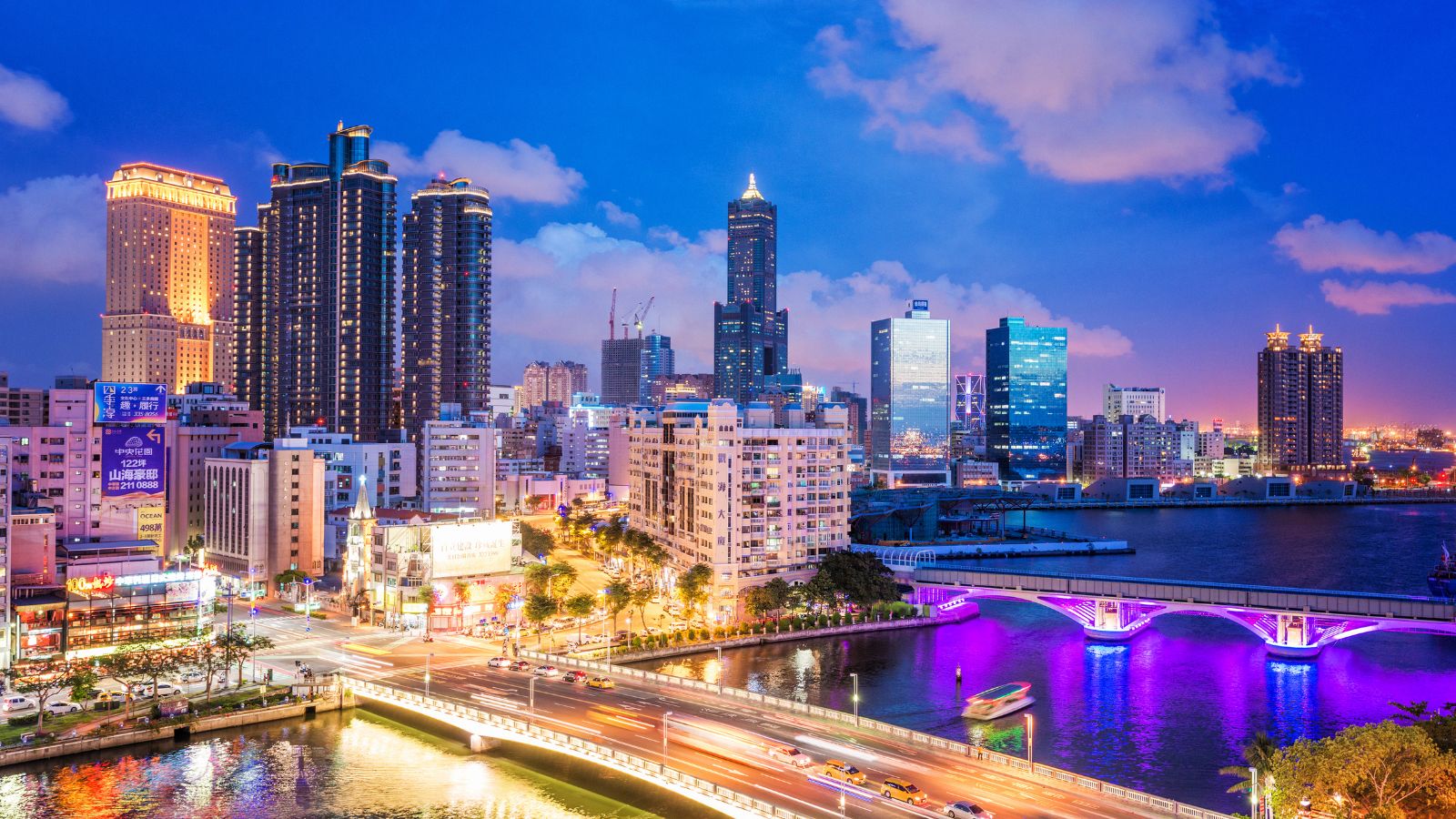
Kaohsiung, Chinese Taipei’s largest industrial city, has an economy shaped by steel, petrochemicals, shipbuilding, electronics and other emissions-intensive sectors. Industry accounts for the majority of the city’s emissions.
Its pioneer Net-Zero Institute, established in November 2023, recognizes that industrial mitigation depends not only on technology and regulation, but also on human capacity. Working with universities, certification bodies and industry partners, Kaohsiung has developed a structured system to train certified professionals, technical experts, public officials and youth in net-zero governance and industrial decarbonization.
The city has also strengthened public-private collaboration through its Net-Zero Industry Alliance, bringing together companies from sectors including steel, petrochemicals, electronics, energy and the circular economy. Larger firms help smaller firms undertake carbon inventories and reduction planning, while participating companies are encouraged to establish medium- and long-term reduction targets.
Through its Green Power Promotion Task Force, Kaohsiung also coordinates city departments and external stakeholders, including utilities, financial institutions and industry associations, around renewable energy generation, conservation and storage.
Kaohsiung’s experience highlights several enablers of industrial mitigation: Political leadership, formal governance structures, partnerships with industry, targeted support for small and medium-sized enterprises, investment in green skills, and alignment with emerging international trade and carbon standards.
3. Pohang, Republic of Korea: Connect industrial transformation with the wider urban transition
Pohang, a major steel city in the Republic of Korea, shows how local governments can support industrial transition by reshaping the broader urban and environmental context in which heavy industry operates.
Through its Greenway Project, Pohang has established dedicated governance structures and a task force, developed participatory mechanisms and used cross-departmental collaboration to create large-scale green corridors, restore ecological spaces and develop new urban forests. Several urban forests created through the project have been registered under the national emissions trading framework.
Since April 2022, Pohang City and Gyeongsangbuk-do Province have also been implementing the Pohang Smart Green Industrial Complex Promotion Project, a multi-year program aimed at digitalizing, decarbonizing and improving energy self-sufficiency in the Pohang Steel Industrial Complex.
Its projects include a smart logistics platform, smart energy platform and workforce training. In 2026, two new projects were added: an AI-transformation initiative for aging steel manufacturers and a resource-circulation system converting steel and battery-industry by-products into reusable materials.
Pohang is also home to POSCO (Pohang Iron and Steel Company), which is pursuing hydrogen-based steelmaking as part of its longer-term pathway to carbon neutrality. While this is a company-led innovation, it underlines the importance of supportive local and national ecosystems for industrial transformation, including access to clean power, infrastructure, skilled labor and long-term policy certainty.
Pohang demonstrates that industrial mitigation is not only about factory-level technology shifts. It also depends on the surrounding urban transition: Governance capacity, public support, spatial planning and investments that improve environmental quality in industrial regions.
4. Kalundborg, Denmark: Enable industrial symbiosis and shared resource systems
Kalundborg offers one of the clearest examples of how local and regional actors can enable industrial mitigation through industrial symbiosis.
Over time, public and private actors in the area have built a network for the exchange of excess heat, water, energy and material by-products across facilities. Rather than relying on a single decarbonization instrument, this model reduces emissions through coordination across multiple resource flows and sectors.
Waste heat recovery, water reuse, energy integration and the use of residual materials require planning, infrastructure, trusted partnerships and institutional coordination. Industrial symbiosis also depends on mapping material and energy flows, aligning infrastructure and logistics, and creating a governance environment in which companies and public authorities can collaborate over time.
Kalundborg shows how local governments can contribute to industrial mitigation by shaping the wider ecosystem in which firms operate. Municipal actors may not control industrial production decisions directly, but they can help create the frameworks, infrastructure connections and collaborative platforms that make circular and low-carbon industrial practices viable at scale.
5. Helsingborg and Umeå, Sweden: Support green hydrogen and industrial symbiosis
Helsingborg and Umeå provide an example of local governments supporting industrial mitigation through innovation-oriented collaboration around green hydrogen and industrial symbiosis.
Through the HYDROSYM-2030 initiative, the cities are exploring how hydrogen-based solutions, waste heat recovery and resource-sharing models can contribute to the decarbonization of industrial activity while strengthening local transition planning.
Some industrial emissions are difficult to address through conventional efficiency measures alone. Emerging solutions such as green hydrogen may therefore play an important role, especially when combined with integrated approaches to energy and material use.
HYDROSYM-2030 also considers the enabling conditions needed for these approaches, including risk-sharing, financing structures and collaboration among local authorities, industry and other stakeholders. These elements matter because industrial mitigation pathways can face barriers not only in cost and technology, but also in coordination, investment readiness and long-term planning.
Hydrogen infrastructure, energy planning, industrial clustering and symbiosis opportunities all depend on local conditions and cross-sector coordination. By helping organize these relationships, cities can support the emergence of industrial ecosystems that are better positioned to adopt low-carbon technologies.
Industrial mitigation happens beyond the factory gate
These five examples show where local and regional governments can make a difference: embedding climate goals into planning, infrastructure and land use; building skills and institutional capacity; convening industry and other stakeholders; enabling renewable energy, energy efficiency and circular economy measures; and coordinating across departments and levels of government.
These real city cases inform ICLEI’s submission to the 2026 UNFCCC Sharm el-Sheikh Mitigation Ambition and Implementation Work Programme Global Dialogue, taking place from 28 to 30 September 2026 in Sydney, Australia and focused on enabling mitigation ambition and implementation in industries. They show that cities do not need to control industrial production to influence its transition. Supporting cities and regions in these roles can accelerate industrial decarbonization while making transitions more inclusive, practical and durable.
Industrial decarbonization may happen inside factories, but cities can help make it possible beyond their gates.


