Five cities rewriting the rules on climate action through plastics circularity
Packaging, artificial turf, wet wipes, straws: Plastic is everywhere in daily life, prized for being cheap, lightweight, durable, and convenient. Yet these benefits come at significant environmental, economic, and social costs, beginning with the extraction of fossil fuels used to produce plastic to the spread of microplastics that contaminate soil, water, and eventually the food chain.
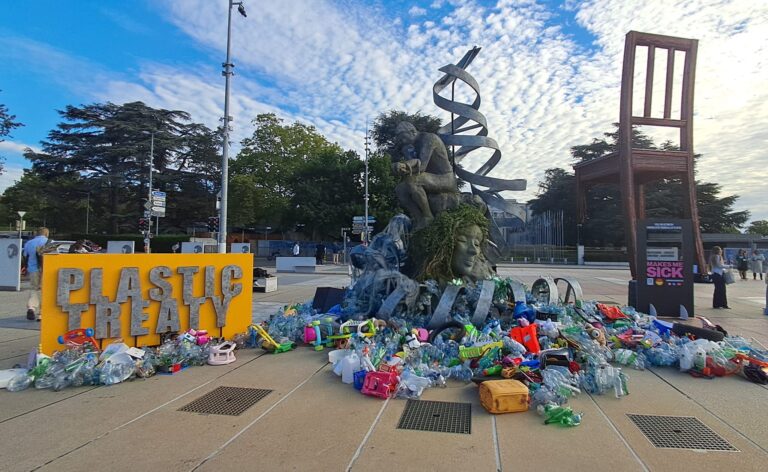
Cities are at the center of this global crisis, serving as major hotspots for both plastic consumption and waste generation. Every day, the equivalent of over 2,000 garbage trucks full of plastic enters our oceans, lakes, and rivers. The problem is often reduced to a waste management issue, but plastics are a far more complex, multidimensional challenge that affects resilience, biodiversity, water, infrastructure, food systems, quality of life, and social justice.
The plastics crisis is a climate crisis. Plastics emit greenhouse gases (GHG) across their lifecycle, especially during production, contributing to the industrial sector’s carbon footprint – one of the largest sources of direct GHG emissions globally. At the same time, plastic pollution weakens cities’ ability to adapt to a changing climate, turning storms into floods and degrading ecosystems’ capacity to buffer heat and absorb water.
How can cities respond to both crises occurring on their doorstep?
ICLEI Circulars propose a solution: Integrating circular plastic actions into urban climate planning. By building on existing frameworks from both sectors, cities can avoid duplication and advance more integrated efforts to address this dual challenge. This works only when communities are meaningfully empowered, especially the groups who live closest to both pollution and climate impacts such as informal waste workers.
Here’s how five cities around the world are putting that lesson into practice, each one echoing an R from ICLEI’s Circular City Actions Framework (Rethink, Regenerate, Reduce, Reuse, Recover).
Tübingen, Germany: A tax to Rethink an urban ecosystem
To tackle its growing plastic waste problem, the City of Tübingen introduced a tax on single-use packaging in 2020. Before the levy took effect, officials sat down with local businesses to explain the rationale and practicalities. Importantly, they paired the tax with real alternatives, connecting businesses with bring-back system providers and subsidizing reuse infrastructure.
Since the levy came into force in 2022, plastic litter has visibly declined, while the adoption of reusable packaging systems has increased. By shrinking single-use plastics within the city, Tübingen has indirectly cut the upstream emissions tied to their production while reducing the risk of sewer blockage during heavy rain events. This demonstrates that Rethinking a system can serve both circularity and climate goals at once.
Panama City, Panama: Acting upstream to Regenerate a coastline
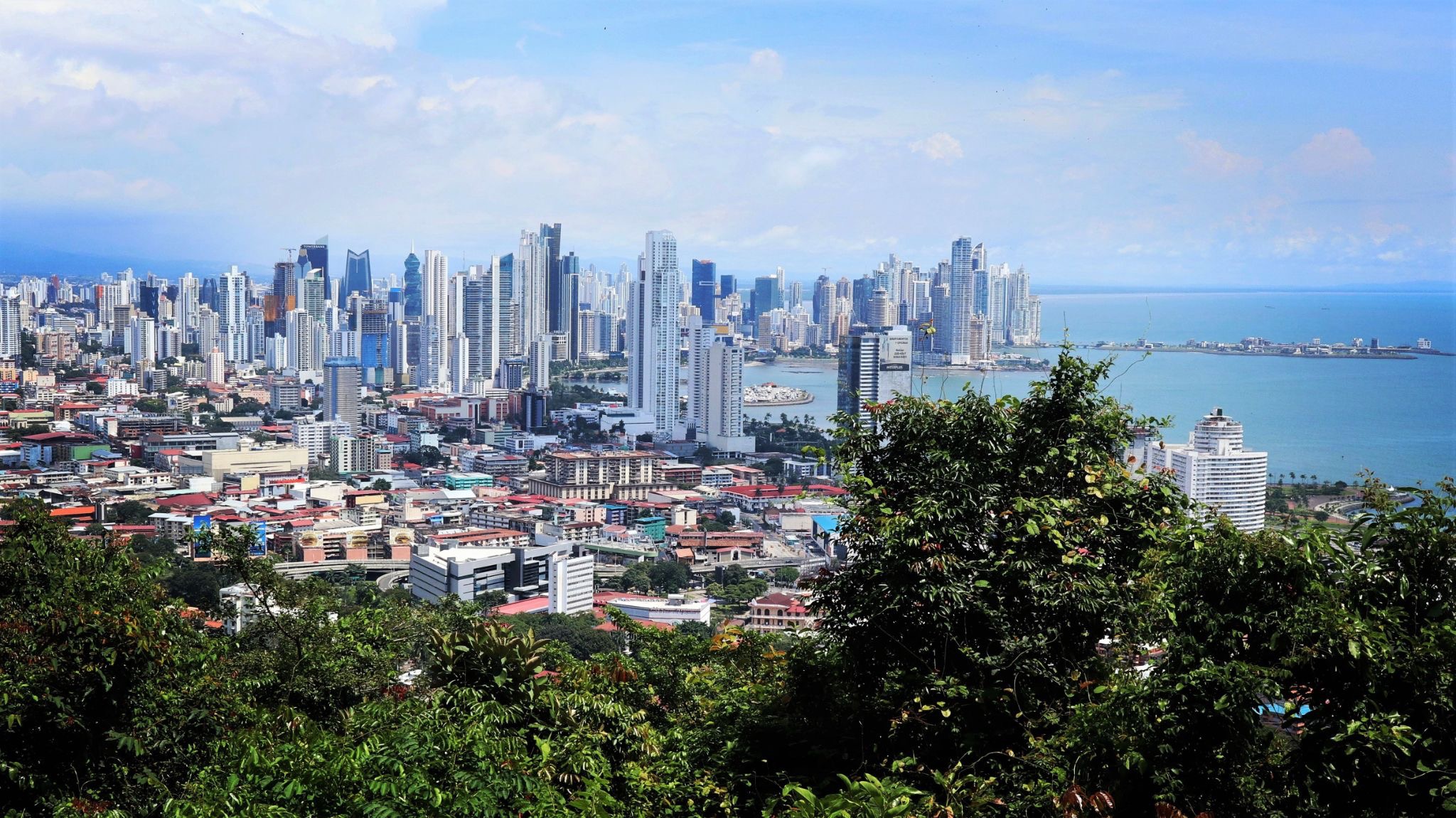
Plastic pollution and deforestation pressures from Panama City are straining Panama Bay, a protected Ramsar wetland that anchors both the region’s rich biodiversity and the local economy.
Since 2024, the Siete Cuencas project has protected this thriving ecosystem by intercepting plastic litter in urban waterways before it reaches the sea. By March 2026, the initiative had recovered over 57 metric tons of waste, safeguarding the Bay’s mangroves and wetlands, and the marine carbon sink. Just as important, the project works with local communities to shift habits around plastic use.
Siete Cuencas demonstrates that regenerating a coastline starts far upstream, in urban waterways, long before pollution ever reaches the sea.
Quezon City, Philippines: A policy recipe to Reduce plastics
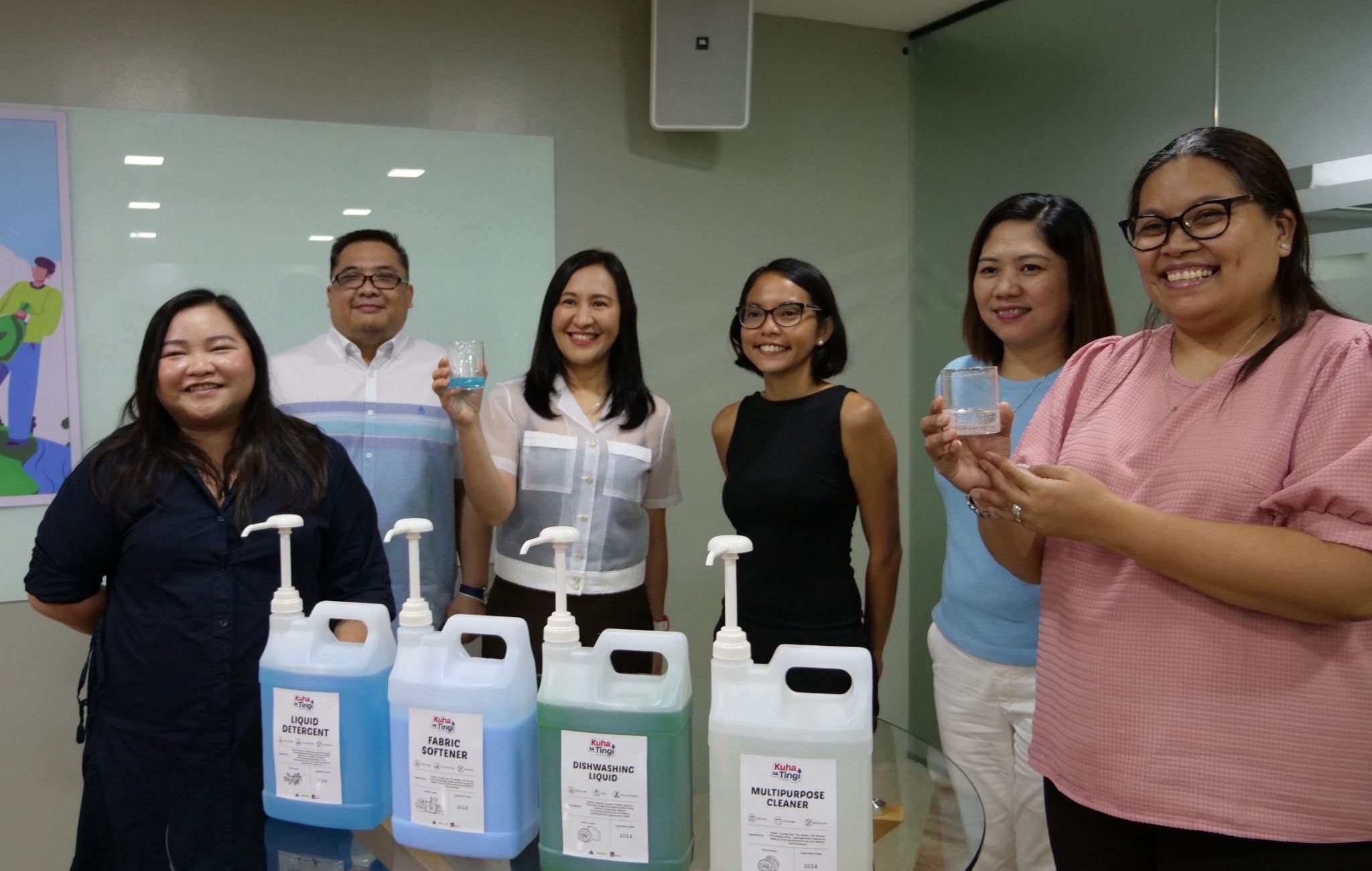
Quezon City relies on a rich toolkit of regulations, incentives, and stakeholder engagement to reduce plastic consumption. Among several initiatives, its 2021 plastic bag ban came paired with free reusable bags at municipal markets so that compliance wouldn’t burden lower-income residents. Meanwhile, in partnership with Greenpeace Philippines and Impact Hub Manila, refill stations for everyday essentials like dishwashing liquid have been installed across thousands of sari-sari stores, small neighborhood shops rooted in Filipino culture, making reuse an everyday habit for residents. People are at the heart of the city’s efforts, with an upcycling program that gives women deprived of liberty a source of income and rehabilitation by turning tarpaulins into reusable bags. Quezon City demonstrates how a community-facing policy package can deliver scalable reductions in plastic consumption while strengthening preparedness for floods by curbing plastic litter that clogs drains.
Bhubaneswar, India: From waste to wealth through Reuse
The City of Bhubaneswar faced a double waste challenge, with 130 tons of low-value plastics and 150 tons of construction and demolition waste generated every day. Without adequate management systems, these streams were mostly incinerated, landfilled, or dumped. The solution came in 2023, when the city piloted a technology to mechanically upcycle these wastes into construction materials, including silica-plastic blocks and resin-free panel boards. This diversion from improper disposal cuts localized emissions and contributes to healthier, cleaner urban environments. Beyond recovering value from waste, the pilot aimed to grow a local green business sector and create a stable income for marginalized communities through upcycling, showing how reuse can become a launchpad for a thriving and inclusive local economy.
Surabaya, Indonesia: Recovering bottles to buy a ride
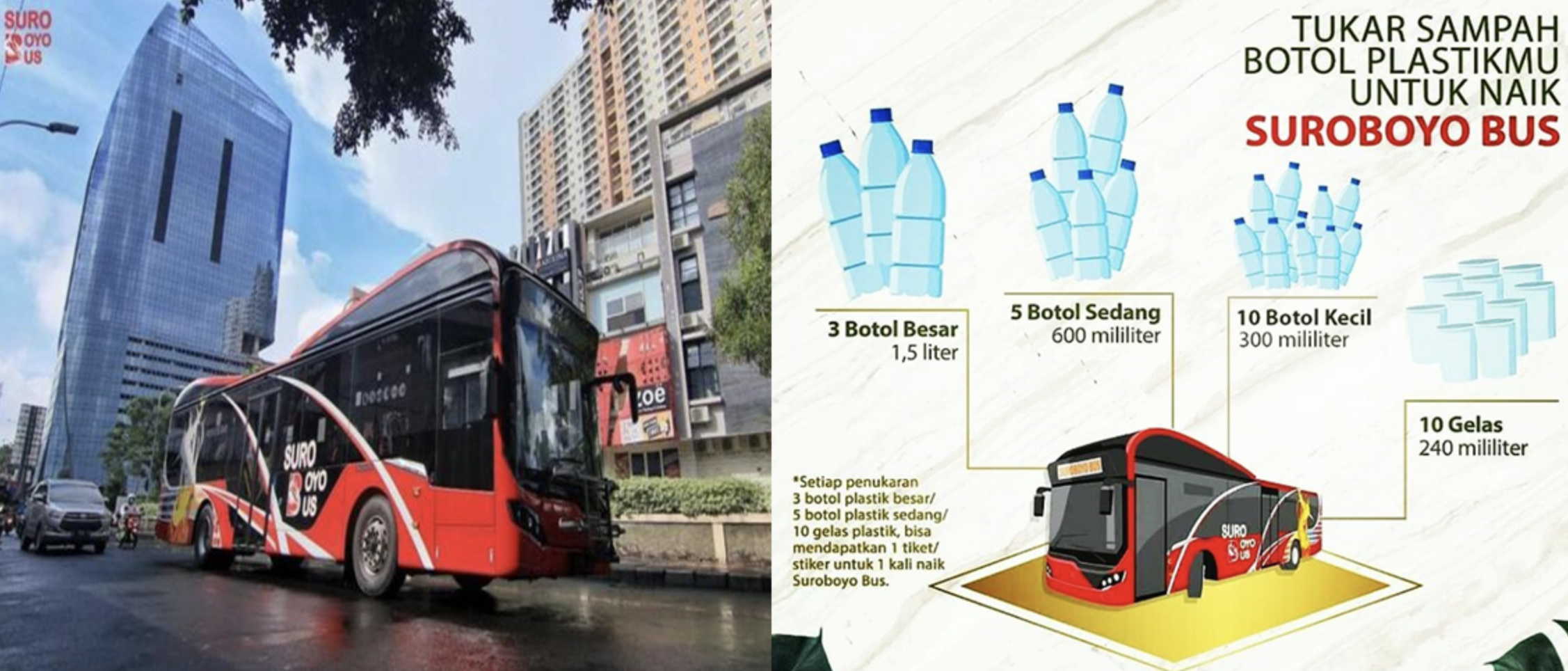
In the City of Surabaya, the unique Suroboyo Bus lets residents pay fares by trading plastic bottles. This successful initiative, launched in 2018 to address poor waste habits and heavy reliance on private vehicles, has evolved over time, as riders can now exchange bottles for tickets or digital transit credits at dedicated exchange points instead of trading them on the bus. Collected plastics are then sold to a waste management company, with the revenues feeding the municipal budget. The program delivers a triple win by recovering a major source of plastic pollution, reducing transport emissions, and making public transport more accessible to lower-income residents. Surabaya shows that recovering plastic is not only a matter of materials, but it can also extend to mobility, equity, and quality of life.
Will your city be next?
A common thread ties Tübingen, Panama City, Quezon City, Bhubaneswar, and Surabaya together: there is no pure technical fix to plastic pollution. Rather, a holistic, community-centered i policy package that leverages all the five Rs of circularity.
Limiting demand for plastics, intercepting plastic litter from waterways, reusing and recovering plastic waste are all ways cities can cut plastic pollution and advance mitigation and resilience, thereby building urban ecosystems that are more inclusive, cleaner, and just.
These five examples are just a glimpse of the actionable city-led initiatives that will be featured in our upcoming Practitioners’ Handbook, designed as a practical starting point for unlocking circular plastic action in urban climate planning.
Subscribe to the Circulars newsletter to be the first to access it.