Unlocking capital for cities: Innovative finance lessons from the Kaohsiung-ICLEI Community of Practice
As the global focus shifts from setting climate goals to the large-scale implementation needed to meet them, one question sits at the center of every city’s strategy: How do we finance change at the speed and scale we need? At COP30, nations agreed to at least triple finance for climate adaptation by 2035, a signal that the global financial landscape must evolve. But for many cities, the challenge is in unlocking resources, building financial literacy, and designing bankable projects that investors can trust.
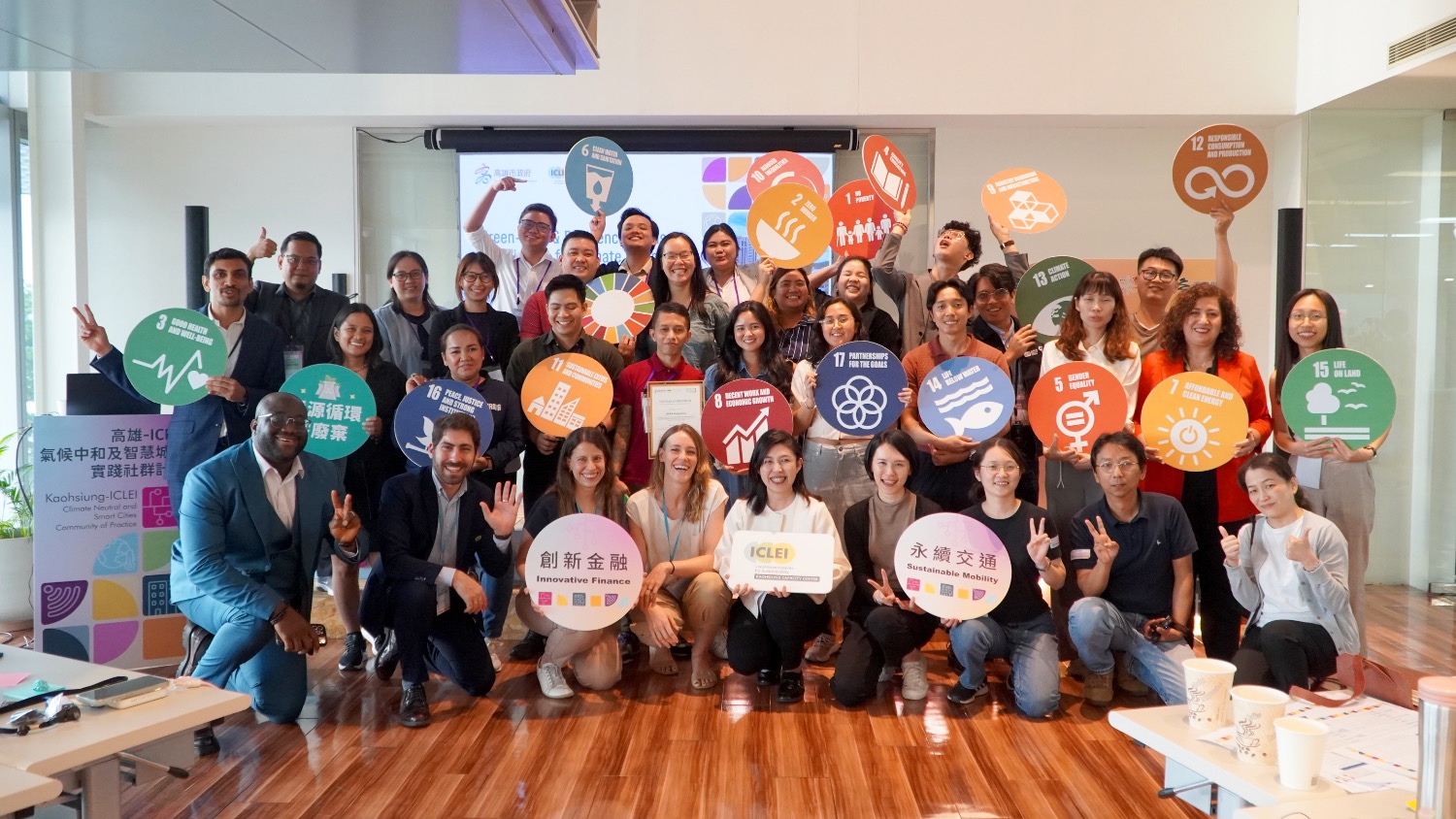
In October 2025, the second workshop series of the Kaohsiung-ICLEI Climate Neutral and Smart Cities Community of Practice was held at Kaohsiung’s pioneering Net Zero Institute. In partnership with the ICLEI-led SPARK project, this critical forum brought together city leaders, private sector innovators, and global experts for a dynamic day of knowledge exchange and capacity-building on the topic of Green-Blue & Resilience Bonds, Blended Finance, and FinTech for Climate Micro-Insurance.
Attendees from Kaohsiung, New Taipei City, Pasig City and Quezon City (Philippines), examined how innovative finance tools and AI-based risk modelling can enable cities to turn their climate strategies into funding-ready projects.
Cities need strong financial literacy to build bankable projects
Across the Asia-Pacific, many local governments still lack practical familiarity with instruments such as concessional loans, sustainability-linked bonds, impact-linked payments, or micro-insurance models. This limits their ability to prepare investment-ready proposals or negotiate effectively with financial institutions.
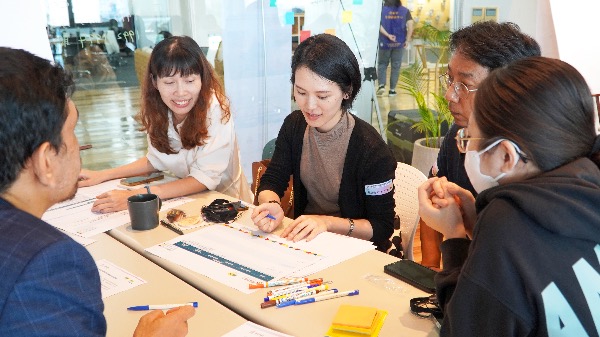
Sasaenia Paul Oluwabunmi, Senior Vice President for Market Tech, Architecture, and Data at Citi Group, shared that to make a project bankable and investable, sound data, robust feasibility studies (including demand estimates), and risk guarantees are essential. Cities must look at creative opportunities to unlock resources for projects through alternative financing approaches such as blended finances, green or sustainability-linked bonds, and private-public partnerships.
Attendees highlighted a critical constraint on that journey: Weak or inconsistent data. Both city participants and global experts noted how data gaps can limit fundability and how AI can bridge that divide. Without standardized and reliable datasets, cities struggle to forecast demand, assess risk, or justify investment. AI-based tools can help cities fill these gaps, improve creditworthiness assessments, and design more resilient projects.
Innovating for impact: Finance as an enabler
Ray Chen, Vice President of the Taiwan Impact Investing Association, joined virtually to introduce emerging trends in Taiwan’s impact investing landscape and highlight opportunities for cities to pilot finance solutions for climate and social impact.
Mr. Chen highlighted, “The impact investing industry has evolved over the past few years in three phases: First, a wave of social entrepreneurship from 2008-2014 allowed a thousand flowers to bloom. Second, the expanded focus on the Sustainable Development Goals (SDGs) from 2015-2020 drove the establishment of a deep ecosystem. Third, the development of intermediaries and organizations from 2021-2025 can be considered a growth phase for impact investing. The biggest driver of innovation is actually Net Zero.”
The discussions about impact captured the importance of leveraging innovative finance to support sustainability – a shift from maximizing profit to maximizing purpose. When ambition is aligned with investment and community needs are aligned with sustainable business models, innovative finance becomes an enabler of impact.
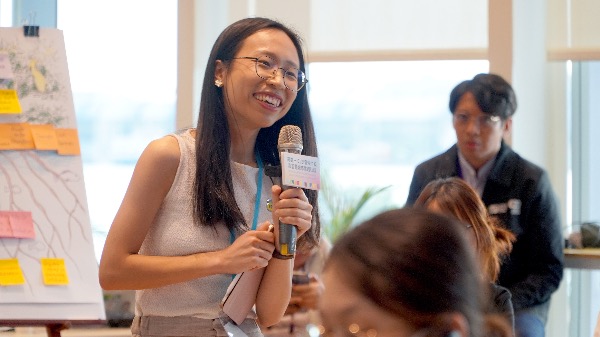
As one participant said, “our projects are very different, but we are all here to use finance as an enabler – to unlock new opportunities, partnerships, and investors.”
Strong institutional coordination accelerates investment
Attendees at the Kaohsiung-ICLEI Community of Practice workshop agreed that fragmented responsibilities between national ministries, regional agencies, and internal departments consistently slow progress. Participants identified a recurring need for clear governance structures that support long-term planning and simplify project preparation.
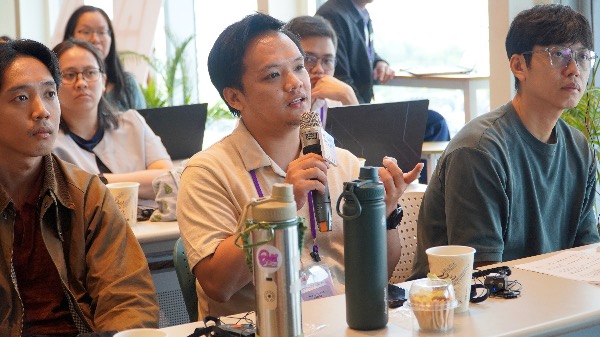
Emerging innovative financing mechanisms are essential for tackling the escalating health and economic effects of climate change. These require robust multi-level governance and collaboration with the private sector for effective implementation.
As Aadit Devanand from Save the Children Global Ventures highlighted in his talk on micro-insurance for vulnerable communities in Vietnam, climate-related health risks (which can cost billions each year in healthcare, lost productivity, and early deaths) cannot be managed by public funds alone.
According to Mr. Devanand, practical solutions include micro-insurance, risk-pooling, and climate-health early warning systems, which help distribute risk, shield vulnerable populations, and attract new investments. The success of these tools ultimately depends on strong government coordination. In Vietnam, he emphasized, cooperation among the health, disease control, agriculture, and environmental sectors has been crucial for validating climate data, ensuring interoperability, and aligning initiatives with national strategies.
Rather than being seen only as destinations for financial support, cities increasingly play an active role in shaping the solutions that drive climate action. Local governments frequently design, trial, and adapt innovations that later inform regional or global practice.
Kaohsiung demonstrates this leadership clearly: Through coordinated action across government levels, the city has helped cultivate the conditions needed for new financing models to emerge, from performance-based bonds to resilience-focused funds and evolving carbon market mechanisms. As Mr. Chen noted, the Kaohsiung City Government has made significant progress in impact investing in recent years, launching the country’s only government initiative to promote green bonds and tapping opportunities to leverage private capital for impact.
Across the region, cities are not waiting for perfect conditions; they are building them together, aligning policy, capital, and community insight to accelerate the transition to climate neutrality. The spirit of shared learning is precisely what defines the Kaohsiung-ICLEI Climate Neutral and Smart Cities Community of Practice: To convene cities throughout the Asia-Pacific region to collaborate and develop solutions that leverage the world’s most innovative ideas to make climate neutrality a reality.