
Reclaiming streets for people: Lessons from the SPARK project in the Philippines
Owning a car is one of the most typical aspirations for many Filipinos. In fact, a nationwide survey revealed that 77% of the population prefer to have their own vehicle, with vehicle ownership being one of their markers of a comfortable life. The sentiment—though counter-intuitive to the tenets of sustainable development—is understandable. Philippine road infrastructure is highly car-centric, with cars taking up 80% of available road space. Ironically, only 6% of households own a four-wheeler. This may also be largely due to the substantial gaps in the mass transit system, as well as the prevailing suburban model of city development.
The good news is all hope is not lost for the country’s sustainable mobility transition. A 2023 study revealed that 36% of Philippine households are cyclists, and the bike-car ownership ratio stands at a whopping 4:1 in favor of pedal power. Moreover, almost 9 out of 10 Filipinos want the government to put pedestrians, bikers, and public commuters first when designing roads and streets. The same number also believe that the city they are living in can be more walking- and cycling-friendly in the future.
But how can cities actually get there?
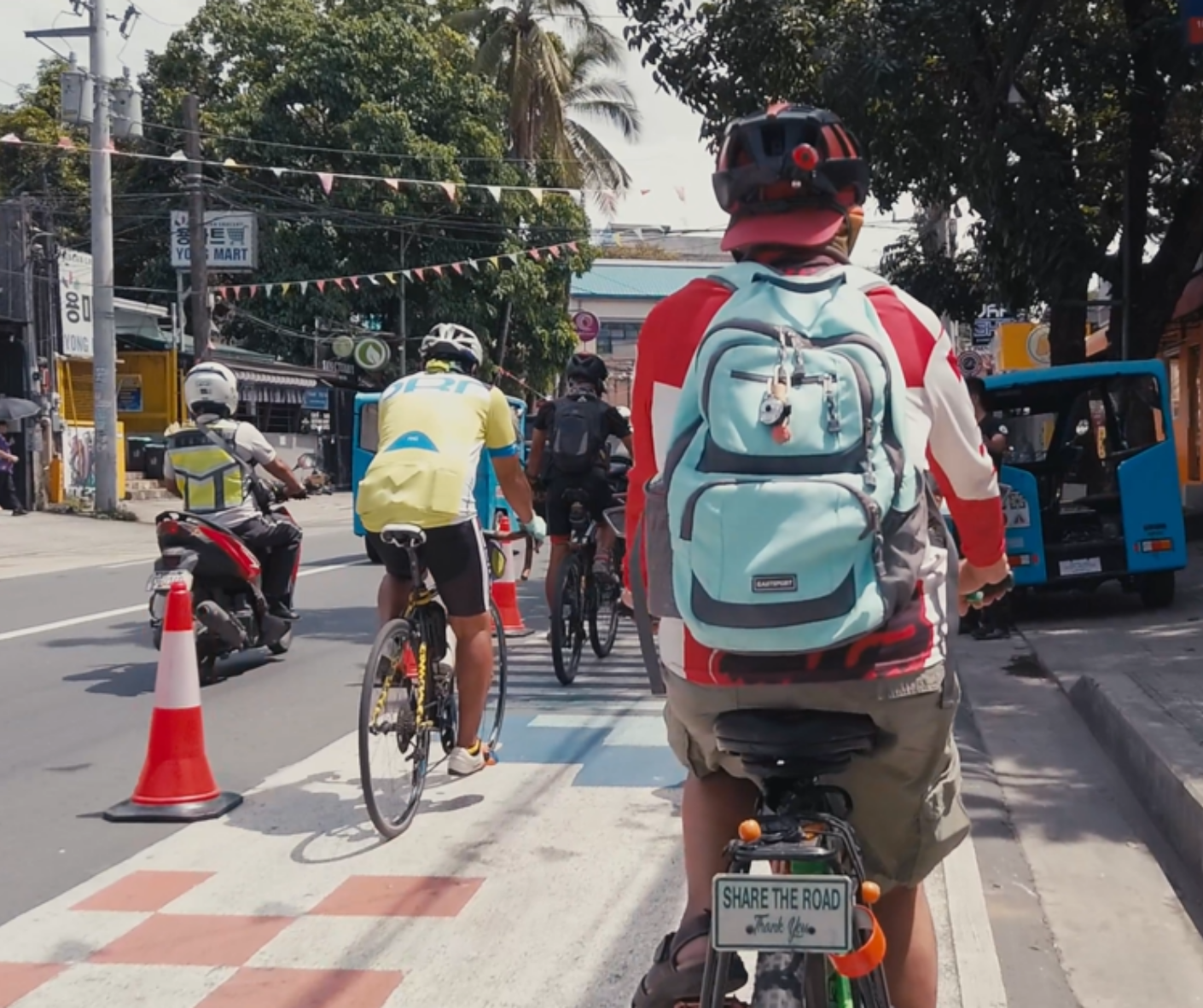
The SPARK project—implemented by ICLEI – Local Governments for Sustainability (ICLEI) and the Institute for Climate and Sustainable Cities (ICSC), and made possible by the German Federal Ministry for Economic Affairs and Climate Action (BMWK) and the Federal Ministry for the Environment, Nature Conservation, Nuclear Safety, and Consumer Protection (BMUV) through its International Climate Initiative (IKI)— answered this question through a three-year journey with the major Philippine cities of Quezon and Pasig. These efforts culminated in a three-month implementation of tactical urbanism interventions in Maginhawa Street, Quezon City and A. Mabini Street, Pasig City, which transformed the streets with short-term, temporary installations such as street murals, dedicated active mobility lanes, and street furniture that served as pedestrian and cycling infrastructure.
Going beyond theory into on-the-ground work, SPARK showed that more walkable and cyclable streets can be achieved through a holistic, multi-level, multi-sectoral, and bottom-up approach driven by tactical urbanism and open data. Below are four key highlights of SPARK’s approach to reclaiming streets from cars for people.
People-first before anything else
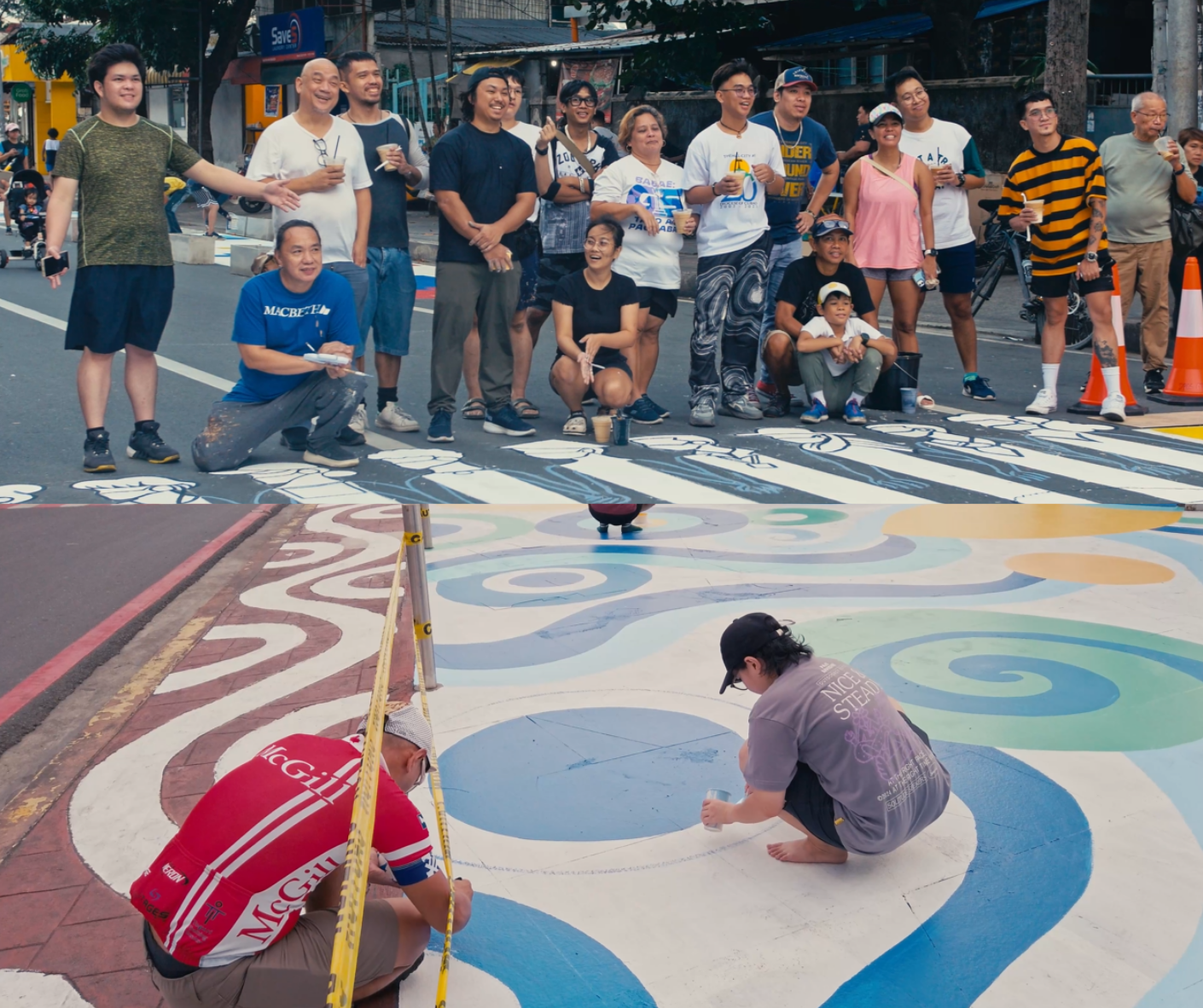
At the core of SPARK’s work is people. Over 200 volunteers and community members were engaged in designing, developing, and bringing the tactical urbanism interventions to life. In Maginhawa Street, over 140 community stakeholders—including students from nearby schools, residents, active mobility advocates, and local business owners—joined the painting days and tactical urbanism installation activities. In A. Mabini, over 60 volunteers took part, including a local group of persons with disabilities, to ground tactical urbanism designs in true accessibility for all.
SPARK also trained 40 national government, local government, and civil society stakeholders in active mobility topics such as inclusive planning, policy development, and street and intersection design workshops, among others. These capacity-building efforts were complemented through several knowledge products meant for easy recall among direct stakeholders and wider use for other subnational and national governments beyond the project cities and beyond the Philippines. These include a tactical urbanism handbook, a guidebook, a best practice guide, and a walkability and cyclability assessment methodology.
Stories from the ground complemented hard data
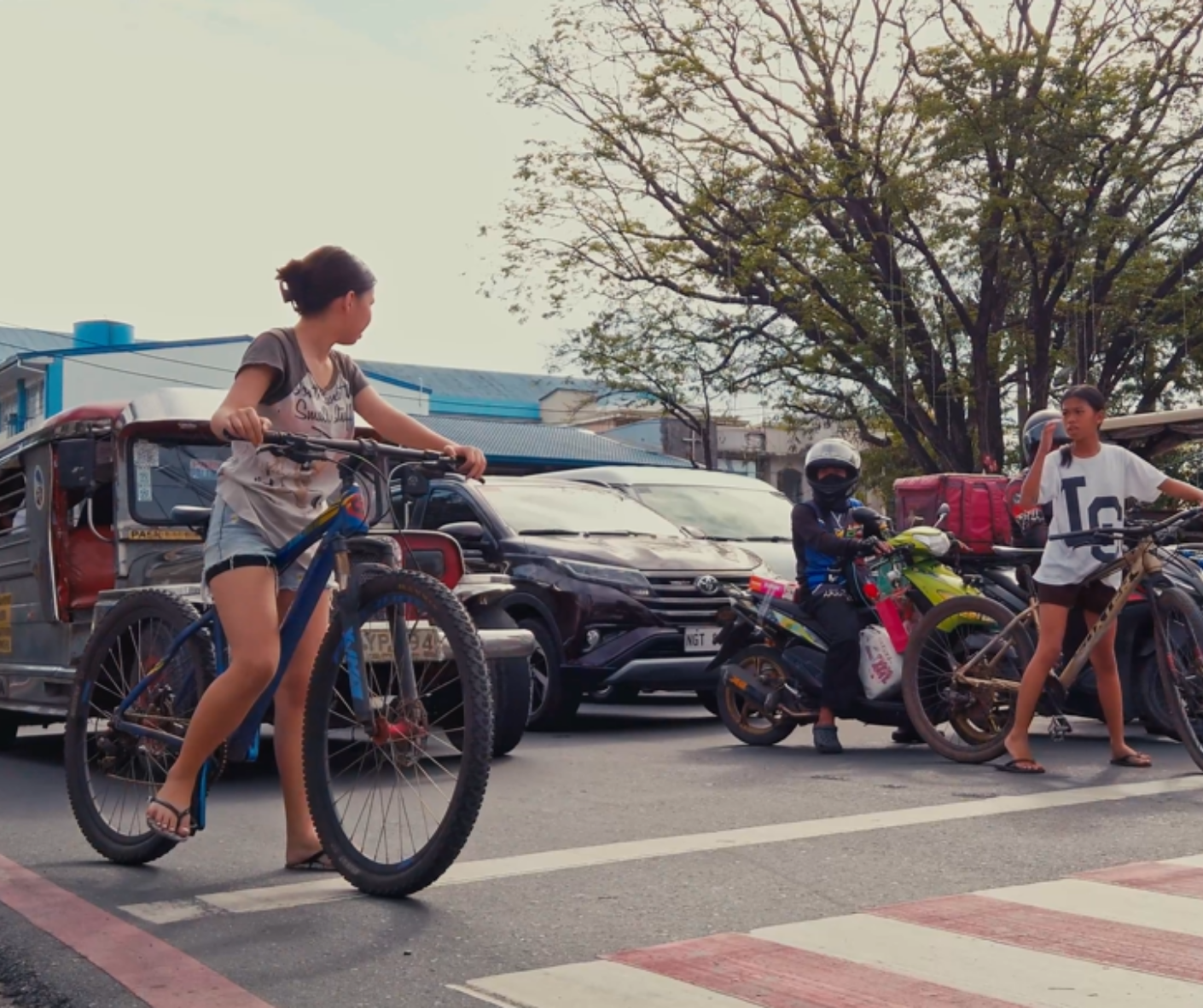
A two-pronged approach of qualitative, people-centered stories and quantitative, data-driven insights heavily informed SPARK’s tactical urbanism interventions. Envisioning and consultation workshops, as well as community mapping initiatives, saw local stakeholders sharing stories of what Maginhawa and A. Mabini were like many years ago, before cars took over. Not only did these resurface what “livable” means for the communities, but they also fostered ownership of the tactical urbanism interventions before and during the three-month pilot period. Beyond this, local leaders from Quezon City and Pasig City shared that due to community involvement throughout the SPARK project, they are more likely to sustain the interventions and advocate for more people-centered streets.
In addition to the stories, SPARK also involved the communities and local advocacy groups in more formal walkability and cyclability assessments to ensure data-backed tactical urbanism interventions. These included policy, institutional, financial, and urban planning analyses related to active transport; land use, activity pattern, and connectivity assessments at the community level; and street intercept surveys, field audits, pedestrian and cyclist counts, and journey mapping exercises.
Moving forward, SPARK turned over AI-based Eco-Counter data collection devices to monitor vehicle, walking, and cycling counts to better analyze mobility trends and inform future policies in two other sites in the project cities.
Marked shifts in travel behavior and emissions
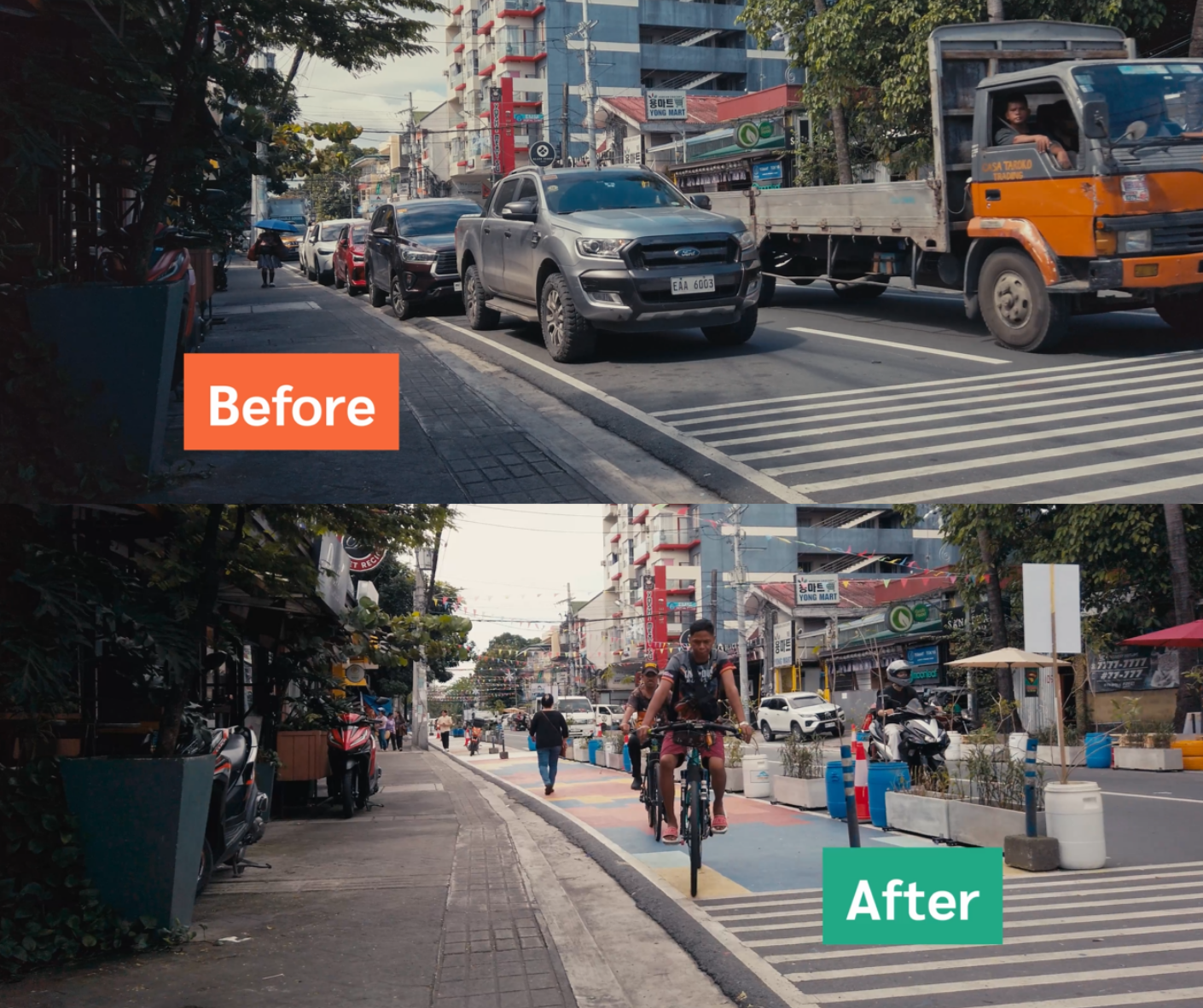
The SPARK tactical urbanism interventions along Maginhawa and A. Mabini were well-received by users, encouraging more pedestrians and cyclists into the key areas. In Maginhawa, the road share of weekend cyclists saw a maximum 32% increase, while there was an almost doubling in the share of weekday cyclists. Pedestrians saw an almost 33% increase throughout the week.
Meanwhile, A. Mabini saw a near doubling of weekday walking and cycling. There was also a co-benefit for public commuters, with tricycle drivers in the area reporting easier navigation and passenger pick-ups. Moreover, weekday traffic declined by 6% and weekend traffic by 12% along A. Mabini.
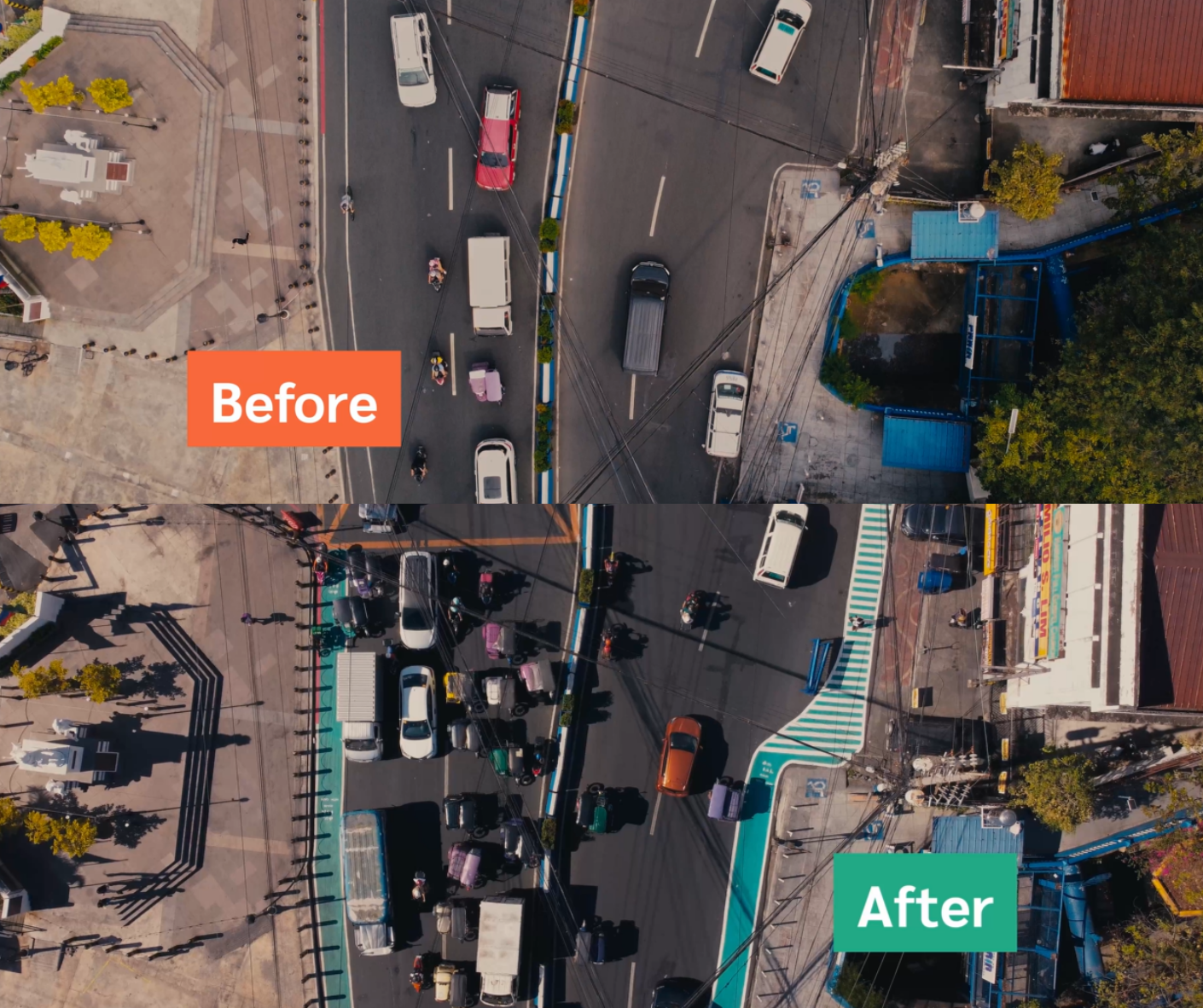
In terms of greenhouse gases, SPARK estimates that fuel consumption lessened, and related emissions dropped 24,946 kgCO₂e and 14,019 kgCO₂e for Maginhawa and A. Mabini, respectively. This is proof-positive that not only can better-designed streets encourage more walking and cycling, but low-cost tactical urbanism interventions such as clear shared pathways, dedicated lanes, and other public space improvements can yield environmental gains.
Sparking the future of sustainable mobility
While the tactical urbanism interventions were designed to be low-cost, short-term proofs of concept, SPARK has also laid the foundation for inclusive active mobility planning moving forward. The above outcomes emphasized the value of community engagement, collaborative problem-solving, and multi-sectoral transport governance among project stakeholders. Its national project advisory group—composed of eight key national and regional agencies—helped align the project with the country’s transport goals, while at the same time sparking discussions on how to scale up and integrate project learnings into future considerations.
The Philippines’ car-centric roads did not emerge overnight, and they will not be undone overnight. However, SPARK’s experience in Quezon City and Pasig City shows one thing: When streets are intentionally redesigned and reclaimed to better serve walking and cycling, for the many rather than the few, there is bright hope for a future where safe, comfortable, and convenient urban mobility and well-being are not defined by car ownership.
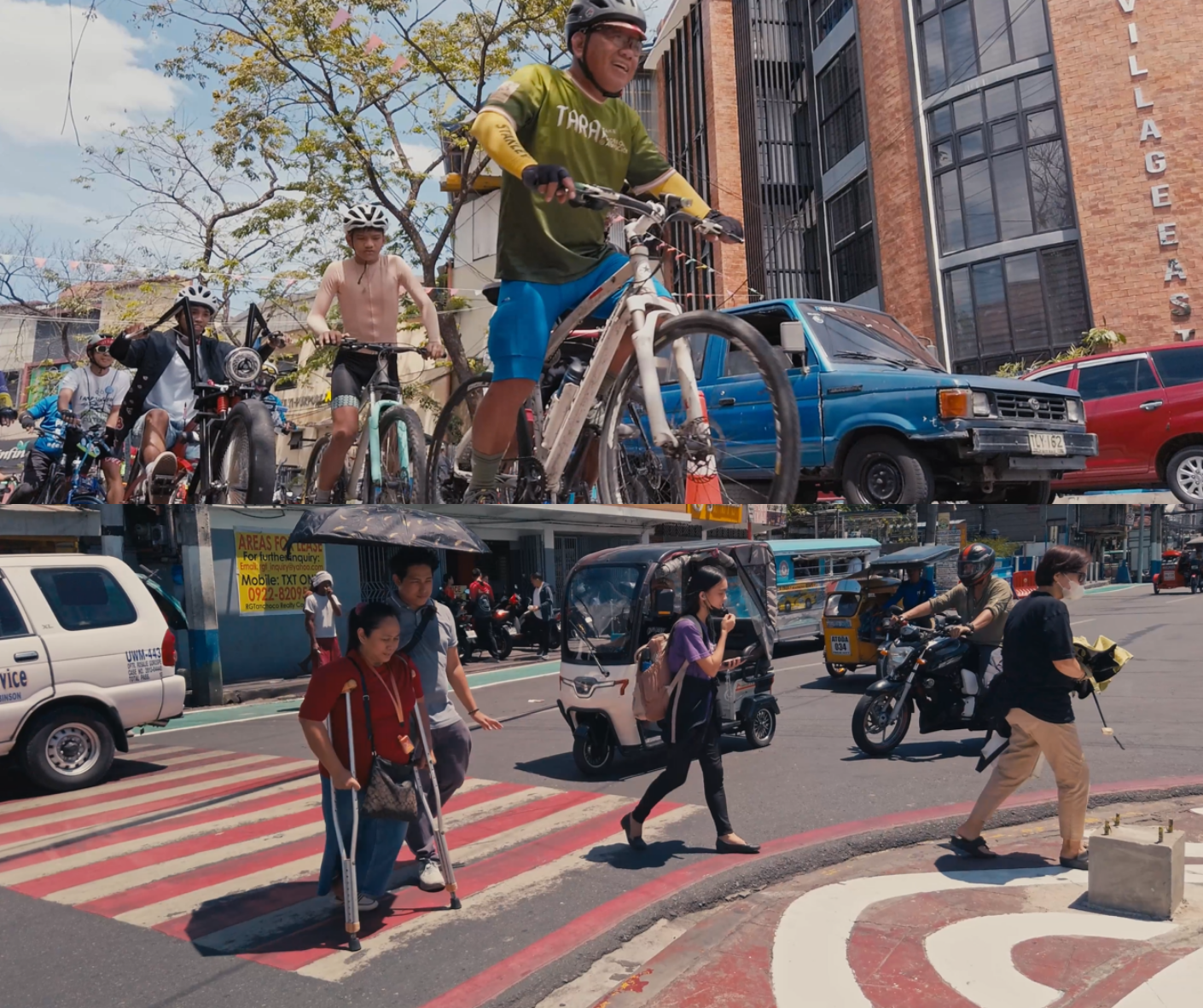
Image credits: Micaela Papa Media Production


